Showing posts with label place. Show all posts

Wednesday, June 12, 2024

On a Poet Laureate’s project(s)

You can thank my Better Half for today’s posting. This morning she sent me a gift link to a Boston Globe article about the upcoming launch, this Friday, June 14, of Ada Limón’s You Are Here project at the Cape Cod National Seashore. We’ve been enjoying and sharing her poems for almost a decade now. We’ve already read the poetry anthology that’s also part of her poet laureate project, You Are Here, Poetry in the Natural World, and intend to reread it more carefully over the summer. I’m finding it challenging to relate some of the more creative poetry forms to my perspectives on nature and want to decide if the issue is with me, the poems, or the combination. I have a strong predilection for plain-spoke poetry and I think that may be the source of my discomfort with some of the selections.

cover of You Are Here, Poetry in the Natural World
You Are Here, Poetry in the Natural World

As an interesting aside, at least to me, none of the seven poems and poets selected to be installed on picnic tables at the seven National Parks are included in the anthology. Perhaps it’s a spread the wealth, broaden the awareness, strategy. I think I’m going to need to print each of the picnic table poems and add those pages to the back of the anthology. What perfectionist OCD? Me? Nah!

I found it silly,, how happy it made me, to be reading about the event scheduled for Provincetown this Friday. Cape Cod in general, and P’town in particular, are part of “home" to me. I only visited the city on a few occasions, but my friends and I regularly fished for stripers off of Race Point most summers for several years before I left New ENgland. Now, if you’ll pardon me, I’m going to go read some poems and wax nostalgic. You can take the boy out of the ocean but you can’t take the ocean out of the boy.


Miracle Fish


I used to pretend to believe in God. Mainly, I liked so much to talk to someone in the dark. Think of how far a voice must have to travel to go beyond the universe. How powerful that voice must be to get there. Once in a small chapel in Chimayo, New Mexico, I knelt in the dirt because I thought that’s what you were supposed to do. That was before I learned to harness that upward motion inside me, before I nested my head in the blood of my body. There was a sign and it said, This earth is blessed. Do not play in it. But I swear I will play on this blessed earth until I die. I relied on a Miracle Fish, once, in New York City, to tell me my fortune. That was before I knew it was my body’s water that moved it, that the massive ocean inside me was what made the fish swim.

Tuesday, January 30, 2024

Walk? Chew gum? Simultaneously?🤣🤣

A growing number of cities have or are eliminating single family zoning to increase density and make housing more affordable and cities more walkable and bikeable. In a comparable effort, Minnesota is considering eliminating minimum parking requirements. Neither of these, not similar efforts, come close to addressing the growing awareness that it benefits people, a lot, to be in direct contact with nature. Creating an appropriate balance between the built and the natural environment, and incorporating that in a  physical design used to be one of the primary purposes of a community's comprehensive plan. These days such plans seem to be focused on meeting legal requirements for state and/or federal funds, unless that involves environmental review.

nature in the city -- equitably distributed?
Photo by J. Harrington

We seem to have lost, or given up, the ability to think coherently and holistically. As further evidence, without mentioning Israel, Ukraine, Jordan, etc., I call to your attention our inability, right here in Minnesota, to resolve what appears to me to be a reasonably straightforward issue regarding School Resource Officers.

Perhaps all these types of irresolvable conflicts can be sorted (sordid?) out once Artificial Intelligence has finished pawing through our private messages to learn how people (not persons) think and feel.

If it appears I’m getting increasingly disgusted and disgruntled with how the contemporary world is (dys)functioning, you’re reasonably perceptive. Worldwide General Strike anyone?


"The world is a beautiful place"

Lawrence Ferlinghetti     1919 – 2021


                The world is a beautiful place 

                                                           to be born into 

if you don’t mind happiness 

                                             not always being 

                                                                        so very much fun 

       if you don’t mind a touch of hell

                                                       now and then

                just when everything is fine

                                                             because even in heaven

                                they don’t sing 

                                                        all the time


             The world is a beautiful place

                                                           to be born into

       if you don’t mind some people dying

                                                                  all the time

                        or maybe only starving

                                                           some of the time

                 which isn’t half so bad

                                                      if it isn’t you


      Oh the world is a beautiful place

                                                          to be born into

               if you don’t much mind

                                                   a few dead minds

                    in the higher places

                                                    or a bomb or two

                            now and then

                                                  in your upturned faces

         or such other improprieties

                                                    as our Name Brand society

                                  is prey to

                                              with its men of distinction

             and its men of extinction

                                                   and its priests

                         and other patrolmen

                                                         and its various segregations

         and congressional investigations

                                                             and other constipations

                        that our fool flesh

                                                     is heir to


Yes the world is the best place of all

                                                           for a lot of such things as

         making the fun scene

                                                and making the love scene

and making the sad scene

                                         and singing low songs of having 

                                                                                      inspirations

and walking around 

                                looking at everything

                                                                  and smelling flowers

and goosing statues

                              and even thinking 

                                                         and kissing people and

     making babies and wearing pants

                                                         and waving hats and

                                     dancing

                                                and going swimming in rivers

                              on picnics

                                       in the middle of the summer

and just generally

                            ‘living it up’


Yes

   but then right in the middle of it

                                                    comes the smiling

                                                                                 mortician


********************************************
Thanks for visiting. Come again when you can.
Please be kind to each other while you can.

Sunday, October 8, 2023

Becoming native to a place

Tomorrow is Indigenous Peoples’ Day. If I’ve read my history correctly, settlement of the “New World” by European colonists was largely justified by the Doctrine of Discovery. Earlier this year, that doctrine was repudiated by the Vatican. A case of too little, too late, but better late than never.

American Indian Cultural Corridor, Minneapolis
Photo by J. Harrington

As the Democrats and Republicans battle for the soul of the US, it is a good time to realize or remember that many of the concepts in the US Constitution are indebted to and derived from the Iroquois Confederacy. In fact, these are times when we should refresh our knowledge of how the country came into existence. One way to do that is to read Heather Cox Richardson’s Democracy Awakening: Notes on the State of America.

Along with that, if you haven’t yet, you probably will want to read Robin Wall Kimmerer’s Braiding Sweetgrass, in which she points out that

“For all of us, becoming indigenous to a place means living as if your children's future mattered, to take care of the land as if our lives, both material and spiritual, depended on it.”

― Robin Wall Kimmerer, Braiding Sweetgrass 

Another way to honor and celebrate Indigenous Peoples’ Day is to


Remember

by Joy Harjo


Remember the sky that you were born under,
know each of the star’s stories.
Remember the moon, know who she is.
Remember the sun’s birth at dawn, that is the
strongest point of time. Remember sundown
and the giving away to night.
Remember your birth, how your mother struggled
to give you form and breath. You are evidence of
her life, and her mother’s, and hers.
Remember your father. He is your life, also.
Remember the earth whose skin you are:
red earth, black earth, yellow earth, white earth
brown earth, we are earth.
Remember the plants, trees, animal life who all have their
tribes, their families, their histories, too. Talk to them,
listen to them. They are alive poems.
Remember the wind. Remember her voice. She knows the
origin of this universe.
Remember you are all people and all people
are you.
Remember you are this universe and this
universe is you.
Remember all is in motion, is growing, is you.
Remember language comes from this.
Remember the dance language is, that life is.
Remember.


********************************************
Thanks for visiting. Come again when you can.
Please be kind to each other while you can.

Tuesday, August 8, 2023

Gee! Oh! Poetics?

Canada is once again smoke-bombing the Midwest. We’re under an air quality alert until noon tomorrow. I’m once again deferring burning fallen, dead branches so I don’t contribute to the problem of fine particulates. By the time winter approaches, I have no doubt our neighbors to the north and west will be only to ready to share a different kind of particulate with US. Obviously, we can’t all live upwind or upstream, right?

summer turkey flock
summer turkey flock
Photo by J. Harrington

This morning a flock of more than eight wild turkeys, all or mostly hens, some poults(?), pecked their way through the back yard. I’m not sure what they were feeding on, but they’re welcome to the ticks and beetles we’ve been dealing with all season. Goldenrod blooms are appearing in more and more places. Remember, it’s more ragweed than goldenrod that triggers hay fever outbreaks.

Several weeks or so ago I was unaware of the existence of the field of geopoetics, at least by that name. I’ve been interested in bioregionalism for some time. More recently I’ve become enamored of a growing genre know as literary field guides. I had read that the first of that genre is The Sonoran Desert, co-edited by Eric Magrane. Magrane is also a co-editor of Geopoetics in Practice. If you visit us from time to time, you may well be interested in the projects Magrane has been involved in. Here’s a link to the projects page of his web site.

One of Magrane’s co-editors of Geopoetics is Linda Russo, who also has some fascinating work on her web site. I hope you’ll visit each of these sites and poke around. It’s encouraging, I find, to discover folks who are working on alternative ways in which we can relate to and cocreate the world around us. It’s pretty obvious that the way we’ve been doing it through colonial capitalism isn’t working out all that well.


Various Instructions for the Practice of Poetic Field Research

By Eric Magrane


These instructions were created by poet, naturalist, and Spiral Orb editor Eric Magrane in celebration of National Poetry Month 2012, and in conjunction with Spiral Orb Five: A Poetic Inventory of Saguaro National Park and a reading by the same name that took place at the Poetry Center on April 16, 2012 (listen to the event on Voca).

They are designed to get you out into any given environment and enhance your awareness of that given environment in unexpected ways.


1. Note your elevation above sea level. What poems occur here?

2. Map the ¼ mile radius around your home in a poem.

3. Draw a line. On one side of the line, note observations. On the other side, write responses to those observations. Which is which?

4. Choose an object in your field. Make the object the title. Make it the title three times. Write three pieces with this title.

5. List everything that is alive around you. List everything that is not alive around you.

6. Go to a different elevation. What poems occur here?

7. Choose a species you know little about but that lives in your ecosystem. Learn everything you can about that species. Then, go find the species. Write what happens.

8. The first object-poem (see #4) will be your control. Analyze the second and third against the control. What are your conclusions?

9. Find an urban ecotone. Stand there. Write a poem from the dual space.

10. Imagine a rise in sea level. How will that affect your elevation poem?

11. List everything that is natural around you. List everything that is not natural around you.

12. Observe lists #5 and #11. Why did you organize them as you did? Is there such a thing?

13. Stand up and put your arms out. The length of your arms is the circle of the poem.

14. Choose a field you know little about. Find someone in that field to interview. Research the person’s work beforehand, so that you can ask relevant questions. Conduct the interview, then write a poem.

15. Write a poem that takes place over 4.5 billion years.

16. Write a poem that is 3 degrees Celsius warmer than it is now.


********************************************
Thanks for visiting. Come again when you can.
Please be kind to each other while you can.

Saturday, July 8, 2023

Which way to turn

Those who read this blog with any regularity have probably realized that Joy Harjo is one of my favorite poets and writers. Today I encountered an epigram from her works in Natalie Diaz’ Postcolonial Love Poem:

I am singing a song that can only be born after losing a country.   JOY HARJO

Curious about which of Harjo’s works was the source, I entered the phrase into an internet search engine. The answer is that the epigram is from Conflict Resolution for Holy Beings, although I’m not sure from which poem. The pleasant surprise is that the answer was first found in a section of the web site of the National Trust for Historic Preservation: U.S. Poet Laureate Joy Harjo: A Life in Four Directions.

Conflict Resolution for Holy Beings  Joy Harjo
Conflict Resolution for Holy Beings
 Joy Harjo

It is very improbable I would have found the section linked above were it not for searching for the epigram. Having quickly skimmed through the National Trust section, I’ll be returning to it for a slower, more careful read sometime in the near future. I’m also curious about Harjo’s use of the four cardinal directions compared with their role in the Druidry material I’m reading. How much overlap is there between her indigenous perspective and that of the European ancients as currently interpreted and presented? As political winds continue to howl, and climate weirding intensifies, and other human induced disruptions occur with increasing frequency, I feel a growing need to determine a direction to face to keep from spinning around.


Once the World Was Perfect


Once the world was perfect, and we were happy in that world.
Then we took it for granted.
Discontent began a small rumble in the earthly mind.
Then Doubt pushed through with its spiked head.
And once Doubt ruptured the web,
All manner of demon thoughts
Jumped through—
We destroyed the world we had been given
For inspiration, for life—
Each stone of jealousy, each stone
Of fear, greed, envy, and hatred, put out the light.
No one was without a stone in his or her hand.
There we were,
Right back where we had started.
We were bumping into each other
In the dark.
And now we had no place to live, since we didn’t know
How to live with each other.
Then one of the stumbling ones took pity on another
And shared a blanket.
A spark of kindness made a light.
The light made an opening in the darkness.
Everyone worked together to make a ladder.
A Wind Clan person climbed out first into the next world,
And then the other clans, the children of those clans, their children,
And their children, all the way through time—
To now, into this morning light to you.


********************************************
Thanks for visiting. Come again when you can.
Please be kind to each other while you can.

Saturday, June 24, 2023

In praise of poets laureate

The elderberry bush growing in the “wet spot”in the back yard is coming into flower. More orange day lilies, plus one scarlet one, have started to bloom along the road ditch. One of the azaleas hydrangeas [the Better Half informed me my  plant i.d. was incorrect] and peonies we planted behind the house is each developing a flower. Yesterday we got enough rain to settle the dust, but not much more. Today offers additional possibilities. We’ll see if the clouds actually deliver or again pass us by. The local paper is now reporting that we’re experiencing the “Driest spring in 5 decades ...” 

June dawn, Sunrise River pools
Photo by J. Harrington

Among other volumes recently, I’ve been reading Michael Garrigan’s poetry. One of his redeeming perspectives is that he “believes that every watershed should have a Poet Laureate.” I think that’s one of the better ideas I’ve run across in a while and think the St. Croix, between Minnesota and Wisconsin, would be a wonderful place to begin. We already have a number of Poets of Place from last year’s Big Read. The selection process raises the question of what level of watershed are we talking about. I’d like to see a laureate for each 10 digit or 12 digit watershed like our own Sunrise River, but we should have one for no less than watersheds as large as the St. Croix. Poetry can grow community in a place like a watershed. It can also capture the horror of a watershed misused and abused.


Watershed


200 cows         more than 600 hilly acres

            property would have been even larger
had  J not sold 66 acres to DuPont for
                      waste from its Washington Works factory
where J was employed        
                                                did not want to sell
            but needed money   poor health         
mysterious ailments

Not long after the sale cattle began to act
deranged     
                          footage shot on a camcorder
grainy               intercut with static         
Images jump repeat      sound accelerates        
      slows down          
                    quality of a horror movie

the rippling shallow water       the white ash
      trees shedding their leaves 
                                                      a large pipe
discharging green water      
                                                  a skinny red cow
hair missing      back humped  
                                               
a dead black calf in snow         its eye
      a brilliant chemical blue    

                                            a calf’s bisected head       
      liver     heart    stomachs    kidneys           
              gall bladder      some dark      some green                  

cows with stringy tails         malformed hooves           
      lesions      red receded eyes        suffering   slobbering       
                  staggering like drunks

It don’t look like
                               anything I’ve been into before


I began rising through the ceiling of each floor in the hospital as though I were being pulled by some force outside my own volition. I continued rising until I passed through the roof itself and found myself in the sky. I began to move much more quickly past the mountain range near the hospital and over the city. I was swept away by some unknown force, and started to move at an enormous speed. Just moving like a thunderbolt through a darkness. 


R’s taking on the case I found to be inconceivable

It just felt like the right thing to do
                                                                   a great
opportunity to use my background for people who
                                really needed it          

                                R: filed a federal suit 
                                         pulled permits  
                                             land deeds    
                                                     a letter that mentioned
a substance at the landfill     
                                                 PFOA          
                               perfluorooctanoic acid

a soap-like agent used in
                                              ScotchgardTM
                                                                         TeflonTM

PFOA:                 was to be incinerated or
                              sent to chemical waste facilities     
                                    not to be flushed into water or sewers

DuPont:
                 pumped hundreds of thousands of pounds
                          into the Ohio River    
                 dumped tons of PFOA sludge
                          into open unlined pits 

PFOA:
               increased the size of the liver in rats and rabbits         
                                  (results replicated in dogs)
               caused birth defects in rats      
               caused cancerous testicular pancreatic and
                             liver tumors in lab animals      
               possible DNA damage from exposure 
               bound to plasma proteins in blood     
               was found circulating through each organ       
               high concentrations in the blood of factory workers   
               children of pregnant employees had eye defects          
               dust vented from factory chimneys settled well-beyond
                            the property line
               entered the water table
               concentration in drinking water 3x international safety limit
               study of workers linked exposure with prostate cancer
               worth $1 billion in annual profit
 

(It don’t look like anything I’ve been into before)      


Every individual thing glowed with life. Bands of energy were being dispersed from a huge universal heartbeat, faster than a raging river. I found I could move as fast as I could think. 


DuPont:
               did not make this information public
               declined to disclose this finding       
               considered switching to new compound that appeared less toxic
                        and stayed in the body for a much shorter duration of time
               decided against it
               decided it needed to find a landfill for toxic sludge
               bought 66 acres from a low-level employee
                        at the Washington Works facility
 

(J needed money         
                                         had been in poor health     
a dead black calf              
                                         its eye chemical blue          
cows slobbering               
                                         staggering like drunks)


I could perceive the Earth, outer space, and humanity from a spacious and indescribable ‘God’s eye view.’ I saw a planet to my left covered with vegetation of many colors no signs of mankind or any familiar shorelines. The waters were living waters, the grass was living, the trees and the animals were more alive than on earth.

                                   
D’s first husband had been a chemist
                                                                          When you
worked at DuPont in this town you could have
everything you wanted
                                       DuPont paid for his education          
secured him a mortgage           paid a generous salary 
even gave him a free supply of PFOA


He explained that the planet we call Earth really has a proper name, has its own energy, is a true living being, was very strong but has been weakened considerably.
 

                                                              which she used
as soap in the family’s dishwasher       


I could feel Earth’s desperate situation. Her aura appeared to be very strange, made me wonder if it was radioactivity. It was bleak, faded in color, and its sound was heart wrenching.


                                                Sometimes
her husband came home sick—fever, nausea, diarrhea,
vomiting—‘Teflon flu’

             an emergency hysterectomy
                                                                   a second surgery          


I could tell the Doctor everything he did upon my arrival down to the minute details of accompanying the nurse to the basement of the hospital to get the plasma for me; everything he did while also being instructed and shown around in Heaven.
 

Clients called R to say they had received diagnoses of cancer
         or that a family member had died

                  W who had cancer had died of a heart attack

            Two years later W’s wife died of cancer

They knew this stuff was harmful
            and they put it in the water anyway
 

I suspect that Earth may be a place of education.
 

PFOA detected in:
                                American blood banks    
                                blood or vital organs of:
                                                                            Atlantic salmon
                                                                            swordfish
                                                                            striped mullet
                                                                            gray seals
                                                                            common cormorants
                                                                            Alaskan polar bears
                                                                            brown pelicans
                                                                            sea turtles
                                                                            sea eagles
                                                                            California sea lions      
                                                                            Laysan albatrosses on a wildlife refuge
                                                                                          in the middle of the North Pacific       Ocean;>


Viewing the myriad human faces with an indescribable, intimate, and profound love. This love was all around me, it was everywhere, but at the same time it was also me.


                                      We see a situation

        that has gone

                                from Washington Works
 

All that was important in life was the love we felt.
 

                                                                                          to statewide
 

All that was made, said, done, or even thought without love was undone. 


                                     to everywhere
 

                  it’s global


In my particular case, God took the form of a luminous warm water. It does not mean that a luminous warm water is God. It is just that, for me, it was experiencing the luminous warm water that I felt the most connection with the eternal.


********************************************
Thanks for visiting. Come again when you can.
Please be kind to each other while you can.

Wednesday, October 5, 2022

Putting Place in its place

I spent an interesting and educational lunchtime today participating in an online nature writing course using Zoom. [Our crappy internet service via frontier only screwed things up three or four times due to limited bandwidth.] The theme is nature writing focused on place and its relation to people and culture and issues. Today’s guest writer was Cal Flyn. I hadn’t thought for quite awhile about the writer’s craft in consciously controlling the level of detail in written  descriptions, so there’s some cruft knocked off.

There are four more sessions for the next four Wednesdays. This is the second series of Writing from the  Roots. If you find the concept appealing, I think it’s still possible to register for the course,

a welcome change from all green
Photo by J. Harrington

One of the things I’ve been noticing as autumn’s colors have become more prominent on the landscape is an increased awareness of how briefly we get to enjoy them each year. The greening up in spring (often May in the North Country) is such a hopeful replacement of winter’s whiteness that I takes until mid-summer before I begin to become bored with the monotony of green, green, green. And yet I do desire a certain amount of certainty and constancy in my life. I’ve not yet come close to figuring out how to attain and maintain a happy balance of change and stability in my life.

I did come away from today’s session happier and better adjusted than after spending a comparable amount of time doom-scrolling social media and/or reading newspapers etc. Waaayyy back in school, I was taught that the proper definition of a problem is half the solution. If you follow Donella Meadows’ Dancing with Systems, you’ll find that structuring a proper definition is often a lot more complicated than it would seem to be at first glance.

The preceding is in alignment with my intent to honor arts and humanities this month. Remember, if you add Arts to STEM you get STEAM!


Wild Horses Drink from the River of History


Hours before dark, I follow the stony path
from the parking lot to the river bank. 
Along the shore I look for crushed branches and trampled grass,
the clearing where wild horses are said to appear.
Then, I hide behind a mesquite tree, hold my breath.
I want to know their secrets.

Finally the mares and foals emerge from the woods
and stand, ankle deep, among the dense reeds.
At once the entire herd bows their heads,
laps the cool water, takes the river into themselves. 

If I were brave, if I’d forget 
to move past the brokenness of my own family,
I’d approach these unclaimed, unnamed creatures.
I’d stroke their brown manes, 
feed them sugar apples and snow peas.
We’d share one fearless story.

Now the Mustangs dig their feet under the tall grass.
I step forward, snap a few pictures,
as if the camera could capture 
when my unsettled heart and theirs became one.
Overhead, the whir of helicopter blades
cuts through a questioning sky.

Suddenly there’s a thousand echoes,
galloping hooves ringing over badlands.
I turn and look back to the river
which flows on, relentlessly, carrying with it
every story of who or what has come and gone.

And the sun sets, dropping behind the mountain,
leaving a blue ridge, a dimming thread of gold.
I get into my car, head up switchbacks
that lead me to the open highway and down towards the city
where lights shimmer like the past of distant stars.


********************************************
Thanks for visiting. Come again when you can.
Please be kind to each other while you can.

Tuesday, March 8, 2022

for International Women’s Day: St. Croix Women Poets of Place

Today is International Women’s Day. By a fortuitous circumstance, there is a significant overlap between today’s celebration and the participants in next month’s NEA Big Read in the St. Croix Valley.

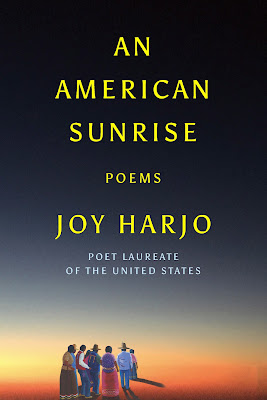
First, the author of the Big Read’s book, An American Sunrise, is Joy Harjo.

Second, “This year’s NEA Big Read in the St. Croix Valley programming will feature a touring exhibit of poetry and fiber art by Minnesota Poet Laureate and quilt artist Gwen Westerman.” 

Third, three of the local Poets of Place affiliated with this year’s Big Read are women. The ArtSpace web site didn’t include links to any individual Poets of Place so we spent a little time this morning poking about the corners of the interwebs. (We’ll get to the two men Poets of Place one day soon.)

We look forward to reading some of the works of these local artists and to becoming more involved in local arts-related activities in the weeks ahead, even though we hope, by next month, to be sorely tempted to spend all our time outdoors in warm, sunny weather. No doubt there’ll be the occasional rainy day mixed in.

Irish soda bread
Irish soda bread
Photo by J. Harrington

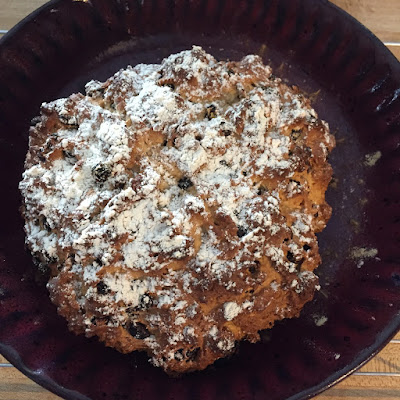
On the home front, we baked a loaf of Irish soda bread this morning and will bake a loaf of artisan sourdough bread with Irish flour this afternoon. St. Patrick’s Day is little more than a week away. But now, back to an extraordinary woman and today’s poem.


Still I Rise

 - 1928-2014


You may write me down in history
With your bitter, twisted lies,
You may trod me in the very dirt
But still, like dust, I’ll rise.

Does my sassiness upset you?
Why are you beset with gloom?
’Cause I walk like I’ve got oil wells
Pumping in my living room.
Just like moons and like suns,
With the certainty of tides,
Just like hopes springing high,
Still I’ll rise.

Did you want to see me broken?
Bowed head and lowered eyes?
Shoulders falling down like teardrops,
Weakened by my soulful cries?

Does my haughtiness offend you?
Don’t you take it awful hard
’Cause I laugh like I’ve got gold mines
Diggin’ in my own backyard.

You may shoot me with your words,
You may cut me with your eyes,
You may kill me with your hatefulness,
But still, like air, I’ll rise.

Does my sexiness upset you?
Does it come as a surprise
That I dance like I’ve got diamonds
At the meeting of my thighs?

Out of the huts of history’s shame
I rise
Up from a past that’s rooted in pain
I rise
I’m a black ocean, leaping and wide,
Welling and swelling I bear in the tide.

Leaving behind nights of terror and fear
I rise
Into a daybreak that’s wondrously clear
I rise
Bringing the gifts that my ancestors gave,
I am the dream and the hope of the slave.
I rise
I rise
I rise.


********************************************
Thanks for visiting. Come again when you can.
Please be kind to each other while you can.

Saturday, February 26, 2022

A Big Read is coming up

 I first read Joy Harjo’s An American Sunrise in 2019. By April of this year I’ll have reread it because it’s the NEA Big Read in the St. Croix Valley. I believe I’ve read, at least once, most of what Harjo has written, She is one of my favorite poets / writers and I’m looking forward to participating in whatever events get programmed.

An American Sunrise cover

The fact that one or more of the events involves a handful of local poets of place also pleases me no end. This has the potential to be one of the better Aprils in the fifty of so years I’ve lived in Minnesota. It will be even better if by April 1 the ground is bare of snow and no April blizzards occur during the month.

The Better Half and I are going to try a new local restaurant’s fare this evening, as a take-out order. The Daughter Person and Son-In-Law have recommended it a couple of times so it would probably be impolite to continue to resist sampling. We’ll share the name and our assessment if, and only if, it turns out we agree with the recommendations. If we don’t like it we can let it die the death of a thousand silences. My parents phrased that “If you can’t say anything good about it, don’t say anything at all.” Might'nt social media be a better place to hang out if more folks followed that dictum?

In recognition of events occurring in the Ukraine as this is being written, today’s poem, from An American Sunrise, is:


How to Write a Poem in a Time of War

 - 1951-


You can’t begin just anywhere. It’s a wreck.

                                                                             Shrapnel and the eye

Of a house, a row of houses. There’s a rat scrambling

From light with fleshy trash in its mouth. A baby strapped

to its mother’s back, cut loose.
                                                                       Soldiers crawl the city,

the river, the town, the village,

                                the bedroom, our kitchen. They eat everything.
Or burn it.

They kill what they cannot take. They rape. What they cannot kill
                                                                                        they take.

Rumors fall like rain.

                                   Like bombs.

Like mother and father tears

swallowed for restless peace.

Like sunset slanting toward a moonless midnight.

Like a train blown free of its destination.                      Like a seed

fallen where

there is no chance of trees          or anyplace       for birds to live.


No, start here.                    Deer peer from the edge of the woods.


                                                         We used to see woodpeckers

The size of the sun, and were greeted

by chickadees with their good morning songs.

We’d started to cook outside, slippery with dew and laughter,

                                    ah those smoky sweet sunrises.

We tried to pretend war wasn’t going to happen.

Though they began building their houses all around us

                                         and demanding 
more.

They started teaching our children their god’s story,

A story in which we’d always be slaves.

No. Not here.

You can’t begin here.

This is memory shredded because it is impossible to hold with words,

even poetry.

These memories were left here with the trees:

The torn pocket of your daughter’s hand-sewn dress,

the sash, the lace.

The baby’s delicately beaded moccasin still connected to the foot,

A young man’s note of promise to his beloved—
 

No! This is not the best place to begin.


Everyone was asleep, despite the distant bombs.

                                        Terror had become the familiar stranger.

Our beloved twin girls curled up in their nightgowns,

                                                                 next to their father and me.

If we begin here, none of us will make it to the end

Of the poem.

Someone has to make it out alive, sang a grandfather

to his grandson, his granddaughter,

as he blew his most powerful song into the hearts of the children.

There it would be hidden from the soldiers,

Who would take them miles, rivers, mountains

                                     from the navel cord place of the origin story.

He knew one day, far day, the grandchildren would return, 


generations later over slick highways, constructed over old trails

Through walls of laws meant to hamper or destroy, over stones

bearing libraries of the winds.

He sang us back

to our home place from which we were stolen

in these smoky green hills.

Yes, begin here.


********************************************
Thanks for visiting. Come again when you can.
Please be kind to each other while you can.

Monday, November 22, 2021

In memoriam Robert Bly

It may be particularly appropriate that this Thanksgiving week, although we are saddened to learn that the poet Robert Bly has walked on, we can, should be, and are grateful that "Robert Bly was appointed the first official Minnesota poet laureate February 27, 2008.” [Library of Congress link re “official” laureate]

Almost exactly two years ago, on November 15, 2019, we posted this:

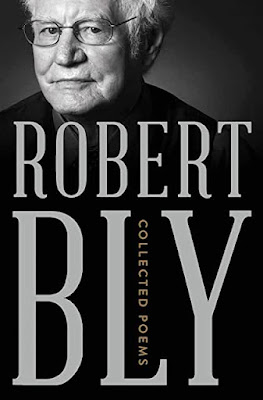
Robert Bly Collected Poems

This morning I finished reading Robert Bly's Collected Poems, all 500+ pages. I'm thankful I lived long enough to read them all. Some of his poems left me confused; others I felt like I understood. Since Bly has been described as “one of the legends of contemporary poetry,” according to David Biespel, “the prototypical non-modernist the one who set in motion a poetics of intensity for generations to come.”, and is Minnesota's second (not first) poet laureate, I wanted to become acquainted with all of his poetry. The fact that I've taken a few poetry courses at the Loft Literary Center with someone who has edited several books on Robert Bly probably has something to do with my undertaking. Also, in fairness, I've read most of the volumes of poetry written by Joyce Sutphen, our current poet laureate of Minnesota but had only skimmed through a few of Bly's separate volumes. I do find most of Sutphen's work more comprehensible but can't say whether that says more about the poets, their poems, or the reader. Perhaps that's as it should be. In any case, I'm thankful to live somewhere that produces such poets of note and noteworthiness. I'm also thankful to have been able to explore so much of the country in Minnesota captured in Bly's and Sutphen's poetry.

 As with too many things these days, it’s fitting that we remember the guidance “Don’t cry because it’s over, smile because it happened.” In his own way and his own words, such as those in today’s poem, Bly acknowledged that such a perspective can be essential.

Robbert Bly In This World

If you’re interested in learning more about Robert Bly's life and writings, I suggest you look for one or more of the books edited by Thomas R. Smith. A list is here [scroll down].


What Things Want


 - 1926-2021


You have to let things
Occupy their own space.
This room is small,
But the green settee

Likes to be here.
The big marsh reeds,
Crowding out the slough,
Find the world good.

You have to let things
Be as they are.
Who knows which of us
Deserves the world more?


********************************************
Thanks for visiting. Come again when you can.
Please be kind to each other while you can.

Saturday, October 10, 2020

Let us walk you through it!

With leaf color at, or just past, peak, there are few things these days more enjoyable than cruising country roads. We've been taking lots of back roads as we've been getting errands done and have felt much the better for it. I can think of nothing in the evolutionary history of humans that might have conditioned us to the "joys(?)" of travel at 60 or 70 mph. Humans preferred walking speed is about 3 mph. Horses walk at about 4 mph. Admittedly, the only place you're likely to find me driving that slowly is the driveway. I, undoubtedly, should spend more time remembering Gandhi's observation that “There is more to life than simply increasing its speed.”


a township gravel road in October
Photo by J. Harrington


Since speed is measured by the distance traveled in a given time, there's a relationship between preferred human speed and "human scale." There's also a relationship between speed of travel and details observable. I've been pondering about these themes as I try to understand what relationship(s) exist between bioregional scale and place, especially home place, as experienced by humans.

This morning I spent some time dragging a harrow over  the pocket gopher and mole mounds in the back yard. Leveling such mounds saves wear and tear on the mower blades. Shorter grass seems less attractive to ticks. Ticks carry diseases we'd like to avoid. If we spent all our time in the back yard riding the tractor that we use to pull the harrow, we'd be less concerned about grass length and ticks, etc. But next year we hope to get out and practice our fly-casting in the back yard. That means more walking around in grass short enough to not tangle a fly line and leader. Something we meant to do this year but couldn't convince the wind to accommodate our schedule. Anyhow, I'm trying to move beyond a middle-class, property-value maintaining, keep the homeowners association happy mentality on yard upkeep, which has opened many more questions than I'd anticipated, but then I never anticipated coming across a book like In Praise of Walking by Shane O’Mara.


Walking on Tiptoe


Long ago we quit lifting our heels
like the others—horse, dog, and tiger—
though we thrill to their speed
as they flee. Even the mouse
bearing the great weight of a nugget
of dog food is enviably graceful.
There is little spring to our walk,
we are so burdened with responsibility,
all of the disciplinary actions
that have fallen to us, the punishments,
the killings, and all with our feet
bound stiff in the skins of the conquered.
But sometimes, in the early hours,
we can feel what it must have been like
to be one of them, up on our toes,
stealing past doors where others are sleeping,
and suddenly able to see in the dark.


********************************************
Thanks for visiting. Come again when you can.
Please be kind to each other while you can.