Showing posts with label sun. Show all posts

Sunday, December 21, 2025

Winter Solstice – Alban Arthan

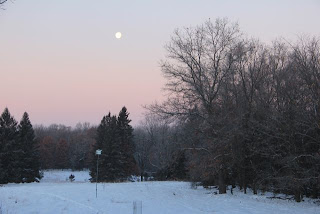
Tonight is the longest night of the year. Soon the days will begin to lengthen as the sun returns to our northern skies, followed, many weeks later, by the return of warmth. But first comes Christmas and the New Year. And we have an extra celebration on Christmas because it is also the birthday of our very own son. Our Christmas ends at noon after which the festivities become our son's birthday celebration.

as the sun turns northward
Photo by J. Harrington

For too much of the world, including US, the past year has been too dark. Although resisters and rebels have had their moments, the Dark Side of The Force has prevailed too often. After Santa's visit, may the New Year bring a return of Yoda, Han Solo, and Luke Skywalker, and may the Democrats find Jedi Knights to lead their rebel alliance to brighter days. What more could we ask for this holiday season?

This week I am expecting early presents from Mother Nature, temperatures above freezing scattered over several days between Solstice and New Year. There's even the threat of sunshine in the forecast. May the forecast portend better days  ahead.

This will be our last posting before Christmas. We hope each of you has a happy, healthy, holiday, full of hope, warmth and love that continues through 2026.


The Shortest Day by Susan Cooper 


So the shortest day came, and the year died,

And everywhere down the centuries of the snow-white world

Came people singing, dancing,

To drive the dark away.

They lighted candles in the winter trees;

They hung their homes with evergreen;

They burned beseeching fires all night long

To keep the year alive,

And when the new year’s sunshine blazed awake

They shouted, reveling.

Through all the frosty ages you can hear them

Echoing behind us—Listen!!

All the long echoes sing the same delight,

This shortest day,

As promise wakens in the sleeping land:

They carol, feast, give thanks,

And dearly love their friends,

And hope for peace.

And so do we, here, now,

This year and every year.

Welcome Yule!


********************************************
Thanks for visiting. Come again when you can.
Please be kind to each other while you can.

Sunday, April 16, 2023

Spring arrives in stuttersteps

A pathetic robin skittered across the snow-covered yard this morning, wondering how to find a worm under the snow. The dame’s rocket leaves we noticed greening the ground in the woods yesterday are now under a layer of snow. We’re still trying to figure out how to adapt or adjust to weather conditions that go from snow too deep to look for skunk cabbage to temperatures to hot to look for skunk cabbage and back to snow cover again, all in less than a week. Give us a couple of months and we’ll probably be complaining about the heat again, but by then it will be seasonal.

It looks as though we may get away with letting Mother Nature clean up her own mess this time. Roads are in decent shape so far. The driveway’s easily passible and doesn’t need clearing. Unless we get a lot more snow overnight, locally we seem to have dodged this bullet. Meanwhile, water is way up almost everywhere locally and there are more flocks of coots in the local marshes than I think I’ve seen ever before at one time, but perhaps not. We did finally see a red-winged blackbird.

many trees are starting to look like this
Photo by J. Harrington

This is the week we're going to ease into Spring. There's rain in the forecast but we've got boots and a rain jacket. There's lots of tidying to be done after winter's winds and storms. The dogs can get to run around in their run again. I think I need to shop for a few more "gopher” traps before we get overrun or undermined. Driving home from a visit with our son, we noticed lots of trees, especially poplars, have budburst, the beginning of leaf out, and or catkins. We’re going to act as though spring is finally here to stay, regardless of the current snow showers or any that pop up in the forecast. Wasn’t it one of the romantic poets who claimed “If Spring is here, can Winter be far behind?” or something like that?


national poetry month


Morning Warming


sun
sunwarm
sunwarm on back
sunwarm on back legs
sunwarm on back legs loosens
            my heart
            my heart beats
            my heart beats faster
            in sunwarm my heart beats faster
                        I flex
                        I flex legs
                        I flex legs loose with sunwarm
                        I drink dew from dripping leaves
                        I beat
                                    flex
                                                crouch
                        leap!
 
                                                What am I?  
(grasshopper)


********************************************
Thanks for visiting. Come again when you can.
Please be kind to each other while you can.

Wednesday, April 14, 2021

As the days brighten

I spent part of the morning getting my eyes examined. [I know, getting my head examined would probably have accomplished more.] The computer screen's glare is uncomfortable on my still dilated eyes, and, of course, with my eyes dilated, for the first time in eons, the sun has come out from behind layer after layer of rain and snow clouds. We hope and expect to return tomorrow to our normal programming, on the Ides of April. For now, we'll sign of with a poem we've not enjoyed for too long.


country sunrise
country sunrise
Photo by J. Harrington


national poetry month


[Sidebar: we prefer Richie Havens' rendition]


The Beatles – Here Comes The Sun Lyrics


from album: Abbey Road (1969) 


Here comes the sun, here comes the sun,
And I say it's all right

Little darling, it's been a long cold lonely winter
Little darling, it feels like years since it's been here
Here comes the sun, here comes the sun
And I say it's all right

Little darling, the smiles returning to their faces
Little darling, it seems like years since it's been here
Here comes the sun, here comes the sun
And I say it's all right

Sun, sun, sun, here it comes...

Little darling, I feel that ice is slowly melting
Little darling, it seems like years since it's been clear
Here comes the sun, here comes the sun,
And I say it's all right
Here comes the sun, here comes the sun,
It's all right, it's all right 


********************************************
Thanks for visiting. Come again when you can.
Please be kind to each other while you can.

Friday, January 10, 2020

Beginning to see the light

Today we enjoy the full wolf moon (although I prefer the phrase wolf full moon). It's January's full moon. We watched one version early this morning as we walked SiSi. If the clouds thin and break enough, we'll see another this afternoon and tonight or tomorrow morning. I'm never sure whether the full moon is counted from moon rise or moon set times or if that makes no difference. If I cheat and look it up, it appears the official full moon occurs between this morning's setting and this afternoon's rising. Now I'm even more confused. Time to just relax and enjoy the beauty.

wolf full moon with cloud ring
Photo by J. Harrington

Something I've noticed about Winter, even with our distressing number of dreary days, is that, when there is sunlight, its quality is often more attractive that I've noticed in Summer. I think that has to do with the lower angle of the sunlight. Here's an example from a few years ago.

sunlight looks different in Winter
Photo by J. Harrington

A different example, that we no longer enjoy since we've replaced the windows along with the siding some years back, is frost on windowpanes. Although the increased warmth is desirable, from time to time I miss the old fashioned beauty of frost on the glass. Some tradeoffs are tough to make.

sunlight highlighting frosted windowpane
Photo by J. Harrington

If you can manage to slow down or take even a brief break from today's consistently hectic pace, take a look and see if you notice a different quality of light during the days of these darker months. By the way, we've gained almost 16 minutes of daylight since last December's shortest day. Soon we'll be able again to see sunshine on open water.

John Denver


"Sunshine On My Shoulders"


Sunshine on my shoulders makes me happy, sunshine in my eyes can make me cry.
Sunshine on the water looks so lovely, sunshine almost always makes me high.
If I had a day that I could give you, I'd give to you the day just like today.
If I had a song that I could sing for you, I'd sing a song to make you feel this way.

Sunshine on my shoulders makes me happy, sunshine in my eyes can make me cry.
Sunshine on the water looks so lovely, sunshine almost always makes me high.
If I had a tale that I could tell you, I'd tell a tale sure to make you smile.
If I had a wish that I could wish for you, I'd make a wish for sunshine for all the while.

Sunshine on my shoulders makes me happy, sunshine in my eyes can make me cry.
Sunshine on the water looks so lovely, sunshine almost always makes me high.
Sunshine on my shoulders makes me happy, sunshine in my eyes can make me cry.
Sunshine on the water looks so lovely, sunshine almost always makes me high.
Sunshine almost all the time makes me high. Sunshine almost always:


********************************************
Thanks for visiting. Come again when you can.
Please be kind to each other while you can.

Saturday, March 16, 2019

Marching past the Ides

Unlike Caesar, we have once again made it through the Ides of March. The best parts of this year are now ahead of us, at least as far as weather and activities are involved. A dash of the outdoors makes just about everything better. Today's sunshine is melting the ice at the East (road) end of the drive. The rest of the drive is shaded by enough trees that we may need to exchange our yak-tax for skate blades this year.

the drive / skating rink
Photo by J. Harrington

We know hedgehogs are not indigenous to North America, although they are native to Ireland and so fit in with this Irish weekend. Plus, we've developed a fondness for them after seeing so many cute pictures of them online. Since our primary chocolatier makes chocolate hedgehogs as Easter/Spring decorations, we once again have one sitting on the dining room table. [The seam in this year's version isn't noticeable.] Would that we were so easily pleased in all things.

our very own hedgehog
Photo by J. Harrington

This morning we baked some oats and barley scones. Tomorrow it will be Irish soda bread. All in honor of St. Patrick's Day and our Irish heritage. The Better Half is planning on corned beef and cabbage for tomorrow's dinner. We're reminiscing about marching in the Boston St. Patrick's day parade, back when we were in the equivalent of junior high (7th and 8th grade). This year the weather  back East is slightly warmer than ours and both places are doing much better than the folks in Nebraska, Iowa and environs. At this time of year, many of us would love to be at a cabin on Innisfree.

The Lake Isle of Innisfree


I will arise and go now, and go to Innisfree,
And a small cabin build there, of clay and wattles made;
Nine bean-rows will I have there, a hive for the honey-bee,
And live alone in the bee-loud glade.

And I shall have some peace there, for peace comes dropping slow,
Dropping from the veils of the morning to where the cricket sings;
There midnight’s all a glimmer, and noon a purple glow,
And evening full of the linnet’s wings.

I will arise and go now, for always night and day
I hear lake water lapping with low sounds by the shore;
While I stand on the roadway, or on the pavements grey,
I hear it in the deep heart’s core.


********************************************
Thanks for visiting. Come again when you can.
Please be kind to each other while you can.

Monday, December 3, 2018

For a "perfect" holiday

As far back as we can remember, we've tended toward being a perfectionist. (We suspect the Better Half might claim we've succeeded in our tendency.) Age has crept up on us, so we're considering the disadvantages and limitations of seeking perfection in a world that often seems to be able to barely function. ("Doctor, it hurts when I bang my head like this." "Don't bang your head like that.") Today, in what we can only conclude is an early Christmas present, we found (actually, it found us) and read A Thanksgiving Meditation in the Face of a Changing Climate. We can honestly, and ruefully, say we've never been aware of much of what's in the meditation, to our detriment. Here's a few choice excerpts:
  • The Universe is not perfect, and that’s why you exist. 

  • Every single speck of light you’ve ever seen in the nighttime sky is evidence of the Universe’s flaws.

  • Everything you’ve ever eaten or drunk, every move you’ve ever made, every beautiful thing you’ve ever seen is because of a mediocre star in an unexceptional galaxy.

  • There have been five mass extinctions. You are living through the sixth. You helped cause it, which means you have the power to stop it. You are not an asteroid or a volcano.
the beauty of imperfection
Photo by J. Harrington

Each of the children we share with the Better Half  was born during the Christmas season. Our son was actually born on Christmas day. With the exception of those two Christmas presences, reading the "Thanksgiving Meditation" this morning may have been the best and most appropriate Christmas present we've ever received. It certainly helps us enjoy the fact that we exist to enjoy the season and share it with loved ones and friends. If you haven't already, please go back and click on the link and read the mediation. If you have read it, it probably wouldn't hurt to read it again.

a star or a snowflake?
Photo by J. Harrington

On a related note, this morning the Better Half sent us a link to 2018 Hubble Space Telescope Advent Calendar. If we understand the Meditation, the photos show us evidence of an imperfect universe. We're not sure how perfection could improve on what's in the pictures. What do you think?


For the Children


Gary Snyder


The rising hills, the slopes,
of statistics
lie before us.
The steep climb
of everything, going up,
up, as we all
go down.

In the next century
or the one beyond that,
they say,
are valleys, pastures,
we can meet there in peace
if we make it.

To climb these coming crests
one word to you, to
you and your children:

stay together
learn the flowers
go light


********************************************
Thanks for visiting. Come again when you can.
Please be kind to each other while you can.

Monday, August 21, 2017

Eclipsing the eclipse

Minnesota: 100% cloud cover

The good news is we didn't travel 500 or 1,000 miles to have cloud cover obscure the eclipse. The bad news is cloud cover is obscuring our eclipse. It'll be interesting to see if the degree and type of darkness triggers any noticeable aberrant behavior among the local critters.

an August full moon
an August full moon
Photo by J. Harrington

We walked down the drive with a pair of eclipse glasses in hand. Trees surrounding the house interrupted a direct line of sight exposure to the sun. Through the clouds we could see a bright light, like the sun behind clouds. To protect our eyes, we put on the eclipse glasses, looked up, and saw --- nothing! It was as black as a coal bin at midnight or, for those of you who never had coal bins, as black as the inside of an upside-down oil barrel. The movies and television coverage of the eclipse are fascinating, but I think I'll wait to read the book. It is getting darker, about the way it would look if a thunderstorm were in the neighborhood.

wolf pup exploring
wolf pup exploring
Photo by J. Harrington

Since we're not going to have any photos of the eclipse we can share, we want to offer something visual, more than just cloud cover. The first photo above is of the full moon from exactly two years ago today. The second is of a Wildlife Science Center wolf pup from a visit a little more than one year ago. The pup hadn't yet mastered howling at the moon but I bet it's doing better these days. It may even be howling at the eclipse, if the clouds ever break up.

A Solar Eclipse


In that great journey of the stars through space
     About the mighty, all-directing Sun,
     The pallid, faithful Moon, has been the one
Companion of the Earth. Her tender face,
Pale with the swift, keen purpose of that race,
     Which at Time’s natal hour was first begun,
     Shines ever on her lover as they run
And lights his orbit with her silvery smile.
Sometimes such passionate love doth in her rise,
     Down from her beaten path she softly slips,
And with her mantle veils the Sun’s bold eyes,
     Then in the gloaming finds her lover’s lips.
While far and near the men our world call wise
     See only that the Sun is in eclipse.


********************************************
Thanks for visiting. Come again when you can.
Please be kind to each other while you can.

Thursday, January 5, 2017

Deep freeze done? #phenology

I'm going way out on a limb and speculate that today will be the nadir of the Winter of 2016 / 2017, at least as far as temperatures go. The weather forecast calls for a gradual but erratic improvement in temperatures for the next ten days or so, which include, by the way, a Friday the 13th a week from tomorrow. The days are lengthening, on the rare occasion that the wind stops blowing at the same time the sky isn't cloudy, a bit of warmth from the sun comes through the atmosphere. Let's just keep telling ourselves that Spring is inevitable even if the journey there is excruciatingly slow.

one of the local red squirrels
Photo by J. Harrington

The red squirrels seem to really appreciate the (heated) bird bath as a water source. The suet feeder is keeping woodpeckers, black-capped chickadees and nuthatches happy. Someone, probably the Pileated Woodpecker, stressed and bent one of the hinges on the suet feeder door, so that got fixed before a fresh chunk of suet was inserted. I'm not sure where the goldfinches have gone this Winter, few, if any, have been seen, and still no sign of Cardinals.

male Pileated Woodpecker
Photo by J. Harrington

Watching the front feeder this morning, it was pretty well abandoned until about 10 am. By then the sun was up and the wind was down, at least a little. I'm hoping that delaying the dog walks until past mid-afternoon will make them less uncomfortable for all involved.

The snow cover is shallow enough that the deer should be able to move around, but so far there are few tracks behind the house and only one brief early morning siting this year. None of the neighborhood turkeys have been seen this winter either. Much as I enjoy reading, I'd rather spend my days watching wildlife. As the weather warms, maybe we'll see more and I'll be able to get some fresh photos without risking severe frostbite.

Winter


Behold the gloomy tyrant’s awful form
Binding the captive earth in icy chains;
His chilling breath sweeps o’er the watery plains,
Howls in the blast, and swells the rising storm.

See from its centre bends the rifted tower,
Threat’ning the lowly vale with frowning pride,
O’er the scared flocks that seek its sheltering side,
A fearful ruin o’er their heads to pour.

While to the cheerful hearth and social board
Content and ease repair, the sons of want
Receive from niggard fate their pittance scant;
And where some shed bleak covert may afford,
Wan poverty, amidst her meagre host
Casts round her haggard eyes, and shivers at the frost.


********************************************
Thanks for visiting. Come again when you can.
Please be kind to each other while you can.

Thursday, September 1, 2016

Welcome to meteorological Autumn #phenology

If you visit this blog with any regularity, you've probably noticed that turkeys are regular visitors to "The Property" we call home and so, are often mentioned in My Minnesota. They have been for the more than twenty years we've lived here. Yesterday morning a small flock did something for the first time as far as we know.

turkeys sunning themselves
Photo by J. Harrington

We didn't notice if the small flock came across the fields or out of the woods. We did see them sunning themselves at the edge of the woods on top of the back yard's far slope. They weren't actively feeding, as they often are, nor were they headed from point A to point B. They were just kind of squatting and stretching and soaking up the sun. After fifteen or twenty minutes, they gathered themselves together and started pecking and feeding their way south toward the pine plantation at the boundary of The Property. As far as I can recall, it was the first time ever that I've seen a turkey loafing. My suspicion, but it's only speculation, is that the recent combination of extended cloudy weather, plus lots of rain or thunderstorms, had the birds feeling a need to soak up some Autumnal sunshine and warmth while they could. Rain's back in the forecast for next week. Could it be that humans aren't the only two-legged creatures that anticipates enjoying this interlude before temperatures start a noteworthy decline?

The Tree Sparrows


We suffer through blinding equatorial heat,
refusing to unfold the suspended bamboo shade
nested by a pair of hardworking, cheerless sparrows.
We’ve watched them fly in-and-out of their double
entryways, dried grass, twigs clamped in their beaks.
They skip, nestle in their woodsy tunnel punctured
with light, we presume, not total darkness, their eggs
aglow like lunar orbs. What is a home? How easily
it can be destroyed: the untying of traditional ropes,
pull, the scroll-unraveling. For want of a sweltering
living room to be thrown into relief by shadow.

The sunning couple perch open-winged, tube lofty
as in Aristophanes’ city of birds, home made sturdy
by creature logic and faith that it will all remain afloat.


********************************************
Thanks for visiting. Come again when you can.
Please be kind to each other while you can.

Sunday, July 12, 2015

A mellow yellow time of year

Midday, blue skies, warm with a moderate breeze that keeps down the deer flies but makes photography of long-stemmed wildflowers a challenge, regardless of the f-stop setting. Out of focus is out-of-focus even with an increased depth of field. I don't have any studies to document this, but it seems to me that we're moving from a time of year dominated by purple flowers to one saturated with yellows. Today we saw the first goldenrod in bloom, at least that's what I think it was. Goat's beard, Hawksbeard, Birdsfoot trefoil, Black-eyed Susans and Evening primrose are all blooming along local roads. Not all is a shade of saffron, though. May's goslings are becoming August's geese.

Yellow Goat's Beard (Tragopogon dubius) seed head
Photo by J. Harrington

Common Evening Primrose (Oenothera biennis)
Photo by J. Harrington

Narrow-leaf Hawksbeard (Crepis tectorum)
Photo by J. Harrington

Birds-foot Trefoil (Lotus corniculatus)
Photo by J. Harrington

For those of us who think of Summer as the sunny season, a preponderance of yellow flowers at this time of year is entirely appropriate and doesn't diminish in the least the attractiveness of fields full of Boneset and and Hoary Alyssum, looking like arrangements of Baby's breath.

common milkweed starting to flower
Photo by J. Harrington

One of this Summer's puzzlements is that the milkweed on our property is just beginning to come into flower, while much of that down the road a mile and a half or so started blooming more than a week ago. Generally speaking all the plants should be getting about the same amount of daily sunlight and rain. I'm doubtful that being located a mile or so South of our property would make that much of a difference, unlike the 15 to 20 mile separation we noted last Spring with skunk cabbage. I suppose it's time to remember that "life is a mystery to be lived, not a problem to be solved" [various sources, maybe Kierkegaard?]. Time to kick back, put feet up and enjoy the warmth of yellow over our heads and under our feet.

Yellow Glove

By Naomi Shihab Nye 
What can a yellow glove mean in a world of motorcars and governments?

I was small, like everyone. Life was a string of precautions: Don’t kiss the squirrel before you bury him, don’t suck candy, pop balloons, drop watermelons, watch TV. When the new gloves appeared one Christmas, tucked in soft tissue, I heard it trailing me: Don’t lose the yellow gloves.

I was small, there was too much to remember. One day, waving at a stream—the ice had cracked, winter chipping down, soon we would sail boats and roll into ditches—I let a glove go. Into the stream, sucked under the street. Since when did streets have mouths? I walked home on a desperate road. Gloves cost money. We didn’t have much. I would tell no one. I would wear the yellow glove that was left and keep the other hand in a pocket. I knew my mother’s eyes had tears they had not cried yet, I didn’t want to be the one to make them flow. It was the prayer I spoke secretly, folding socks, lining up donkeys in windowsills. To be good, a promise made to the roaches who scouted my closet at night. If you don’t get in my bed, I will be good. And they listened. I had a lot to fulfill.

The months rolled down like towels out of a machine. I sang and drew and fattened the cat. Don’t scream, don’t lie, don’t cheat, don’t fight—you could hear it anywhere. A pebble could show you how to be smooth, tell the truth. A field could show how to sleep without walls. A stream could remember how to drift and change—next June I was stirring the stream like a soup, telling my brother dinner would be ready if he’d only hurry up with the bread, when I saw it. The yellow glove draped on a twig. A muddy survivor. A quiet flag.

Where had it been in the three gone months? I could wash it, fold it in my winter drawer with its sister, no one in that world would ever know. There were miracles on Harvey Street. Children walked home in yellow light. Trees were reborn and gloves traveled far, but returned. A thousand miles later, what can a yellow glove mean in a world of bankbooks and stereos?

Part of the difference between floating and going down.     


********************************************
Thanks for visiting. Come again when you can.
Please be kind to each other while you can.

Sunday, March 22, 2015

Managing expectations

It's midday on a cloudy, cold March Sunday in Minnesota. The forecast snow hasn't yet started and, looking at last year's snow fall photos, we're several weeks from consistently bare ground. Two steps forward, one step back, rather than a continuous, gradual transition is how we do Spring in Minnesota, at least for now. I have no idea what Anthropogenic Climate Disruption may do to how our seasons transition. Maybe the ride will become even bumpier. At the risk of depressing you, here's what I photographed last Spring.

March 27, 2014 snowfall
March 27, 2014 snowfall
Photo by J. Harrington
April 4, 2014 snowfall
April 4, 2014 snowfall
Photo by J. Harrington
April 16, 2014 snowfall
Photo by J. Harrington

Fortunately, at this time of year, melting occurred quickly enough that we had bare ground reappear and open water continue between snowfalls. After all, Minnesota has reached a point where I think July is the only month when we haven't had at least a trace of snowfall. I've now depressed myself enough that this week it's going to be time to buy a bunch of forsythia, since I don't expect ours to leaf out for several weeks and have doubts about whether they'll actually blossom this year. I expect Spring to look like this, no matter how rarely it happens in my yard.

cut forsythia in bloom
Photo by J. Harrington
Campbell McGrath's prose poem does, I think, a masterful job describing transitions of weather and other.

The Prose Poem

On the map it is precise and rectilinear as a chessboard, though driving past you would hardly notice it, this boundary line or ragged margin, a shallow swale that cups a simple trickle of water, less rill than rivulet, more gully than dell, a tangled ditch grown up throughout with a fearsome assortment of wildflowers and bracken. There is no fence, though here and there a weathered post asserts a former claim, strands of fallen wire taken by the dust. To the left a cornfield carries into the distance, dips and rises to the blue sky, a rolling plain of green and healthy plants aligned in close order, row upon row upon row. To the right, a field of wheat, a field of hay, young grasses breaking the soil, filling their allotted land with the rich, slow-waving spectacle of their grain. As for the farmers, they are, for the most part, indistinguishable: here the tractor is red, there yellow; here a pair of dirty hands, there a pair of dirty hands. They are cultivators of the soil. They grow crops by pattern, by acre, by foresight, by habit. What corn is to one, wheat is to the other, and though to some eyes the similarities outweigh the differences it would be as unthinkable for the second to commence planting corn as for the first to switch over to wheat. What happens in the gully between them is no concern of theirs, they say, so long as the plough stays out, the weeds stay in the ditch where they belong, though anyone would notice the wind-sewn cornstalks poking up their shaggy ears like young lovers run off into the bushes, and the kinship of these wild grasses with those the farmer cultivates is too obvious to mention, sage and dun-colored stalks hanging their noble heads, hoarding exotic burrs and seeds, and yet it is neither corn nor wheat that truly flourishes there, nor some jackalopian hybrid of the two. What grows in that place is possessed of a beauty all its own, ramshackle and unexpected, even in winter, when the wind hangs icicles from the skeletons of briars and small tracks cross the snow in search of forgotten grain; in the spring the little trickle of water swells to welcome frogs and minnows, a muskrat, a family of turtles, nesting doves in the verdant grass; in summer it is a thoroughfare for raccoons and opossums, field mice, swallows and black birds, migrating egrets, a passing fox; in autumn the geese avoid its abundance, seeking out windrows of toppled stalks, fatter grain more quickly discerned, more easily digested. Of those that travel the local road, few pay that fertile hollow any mind, even those with an eye for what blossoms, vetch and timothy, early forsythia, the fatted calf in the fallow field, the rabbit running for cover, the hawk’s descent from the lightning-struck tree. You’ve passed this way yourself many times, and can tell me, if you would, do the formal fields end where the valley begins, or does everything that surrounds us emerge from its embrace?


********************************************
Thanks for visiting. Come again when you can.
Please be kind to each other while you can.

Tuesday, January 13, 2015

Winter's cold, cold heart

I'm sitting in a comfortable recliner with my laptop in my lap, staring out the window at a clear, blue sky and looking forward to the January thaw that's supposed to start day after tomorrow. This morning's dog walk took place at 20 below. It was a brief walk. When we came inside, the coffee was perked. The aroma of hot coffee on a cold, cold morning is special. I hate watery coffee, but beyond that I'm more of a gourmand than a gourmet.

sun column at Spring sunset (2013)
Photo by J. Harrington

So far this Winter I haven't noticed or heard of a local outbreak of aurora borealis and it's been so cloudy so much of the time that there's been no sign of sun dogs or sun columns. Of course, we're still about two months from Spring equinox, so there's plenty of time, but doesn't it sound good just to say "Spring?" Never mind, I have to work on being mindful in the present, even if the present is a very, very cold Now in January. The moon today and tonight is in its last quarter. A week from now we'll have a new moon. To be honest, neither SiSi nor I pay much attention to the moon when it's as cold as it's been. The upcoming thaw will give us more of an opportunity to sky-stare, if the clouds permit, and, if so, perhaps to nod in the sun.

Futility

By Wilfred Owen 

Move him into the sun—
Gently its touch awoke him once,
At home, whispering of fields half-sown.
Always it woke him, even in France,
Until this morning and this snow.
If anything might rouse him now
The kind old sun will know.

Think how it wakes the seeds—
Woke once the clays of a cold star.
Are limbs, so dear-achieved, are sides
Full-nerved, still warm, too hard to stir?
Was it for this the clay grew tall?
—O what made fatuous sunbeams toil
To break earth's sleep at all?


********************************************
Thanks for visiting. Come again when you can.
Please be kind to each other while you can.

Monday, December 29, 2014

Time's up

Are you looking forward to next year? I am. 2014 has been a pretty good year for us so far, but some things that I started this year I hope will really come together in 2015. Some opportunities I missed this year will reappear next. (Who knew the Hinckley Fire Museum closed during the Winter?) I'll admit to not having made the most of each and every moment this past year, but I'm improving. One of the discoveries I've made is that achieving a balance between repeatedly doing things I know I'll enjoy and starting new things I haven't yet tried is a pretty constant challenge. With the cold returned this morning and the cloud cover mostly gone, I did notice that today's sunrise looked a lot like the one from about this time last year.

late December, Winter sunrise
Photo by J. Harrington

Recently, I checked Alan Lightman's book, The Accidental Universe: The World You Thought You Knew, out of the library and started reading it. In his essay on The Temporary Universe, he mentions a duration of "ten billion billion years," which may or may not be little more than theoretically interesting, since our sun has but some 5 billion years to go before it flames out. I'm reading the book and thinking about time as part of an effort to try to understand what we can realistically mean by "sustainable." Loosely, it means we can continue doing something forever, which is more than "ten billion billion years." Clearly, that has essentially no meaning in human terms. Conversely, I believe we're also doing ourselves and our descendants irreparable harm with our fixation on short term profits, measured each three months. The wisdom of the Native American--Onondaga Nation focus on having "always in view not only the present but also the coming generations" -- which has been phrased as "...to make every decision that we make relate to the welfare and well-being of the seventh generation to come. . . ." is starting to become apparent. It gives us a time frame of about 140 to 175 years, sustainable for less than forever, but within a framework we humans can try to comprehend. If each succeeding generation uses the same time frame for its decisions, we humans might be around long enough to watch our sun grow cold. If not, ..? Something to think about next year, right? Or while we read Ms. Dickenson's lines.

Forever – is composed of Nows – (690)

By Emily Dickinson 

Forever – is composed of Nows –
‘Tis not a different time –
Except for Infiniteness –
And Latitude of Home –

From this – experienced Here –
Remove the Dates – to These –
Let Months dissolve in further Months –
And Years – exhale in Years –

Without Debate – or Pause –
Or Celebrated Days –
No different Our Years would be
From Anno Dominies –


********************************************
Thanks for visiting. Come again when you can.
Please be kind to each other while you can.

Thursday, September 5, 2013

North by ...

photo of moon setting in the West
© harrington
Hello. Thanks for dropping by. I told you today's question from Where you at would be fairly easy. Here's question "19.    From where you’re reading this, point north." Now, we all know (don't we?) that both the sun and the moon rise in the east and set in the west (approximately). The picture above is of a setting moon off the back of the house. The front of the house faces east. As I look toward the west, north is to my right. Looking out the kitchen and dining room windows means I'm looking approximately north. I bet you can figure out a similar scheme where you're at. I think if we were in the southern hemisphere, it would still work pretty much the same. Here's a poem by Sherwin Bitsui with much to say about north.

Blankets of Bark
  by Sherwin Bitsui

Point north, north where they walk
in long blankets of curled bark,
dividing a line in the sand, smelling like cracked shell,
desert wind, river where they left you
calling wolves from the hills,
            a list of names
growling from within the whirlwind. 

Woman from the north,
lost sister who clapped at rain clouds.
We were once there
holding lightning bolts above the heads of sleeping snakes. 

Woman, sister, the cave wants our skin back,
it wants to shake our legs free from salt
and untwist our hair into strands of yarn
pulled rootless from the pocket of a man
who barks when he is reminded of the setting sun. 

At 5 A.M., crickets gather in the doorway,
each of them a handful of smoke,
crawling to the house of a weeping woman,
breaking rocks on the thigh of a man stretching,
ordering us to drop coins into her shadow,
saying, "There, that is where we were born." 

Born with leaves under our coats,
two years of solitude,
the sky never sailed from us,
we rowed toward it,
only to find a shell,
                    a house,
                          and a weeping woman.
Tomorrow's question, the last one, is unseasonable, but what are we going to do? Here it is "20.    What spring wildflower is consistently among the first to bloom where you live?

Tuesday, June 4, 2013

Clement? Si, soon! (say it really fast)

photo of rain clouds
© harrington
Welcome to another June day here at My Minnesota. Thanks for stopping. Obviously, some of us have really upset the weather gods. The rest of us are really upset by what the weather gods are doing to remind some of us to not upset them. If this weather were more enticing, we could describe it as fifty shades of gray. Clearly, the weather is dominant and we've become submissive. If excess moisture can cause wood to rot, it's probably doing the same to my brain. On the other hand, I think I've seen more variety of wildlife in the past few weeks than during prior late Spring, early Summer periods. I don't think it's because I've been doing a better job of paying attention, although that's one of the side benefits of blogging on a daily basis. In addition to swans, geese, turkeys, deer, chipmunks, squirrels, rabbits, sandhill cranes, miscellaneous robins and blue jays, a bear, scarlet tanagers, baltimore orioles, rose-breasted grosbeaks, goldfinches, chickadees, hummingbirds and what all, there was a report that the neighborhood raccoon showed up on the deck last night. He, or she, flipped the have-a-heart trap that had been set for a mangy (literally) red squirrel and ate the sunflower seeds used for bait. Maybe, if the sun were out more and the temperature broke 70, the local inhabitants would still be out and about, but yours truly would be much more likely to be curled up in a warm, sunny corner, taking a nap like a contented cat. How's that for a laid back ambition? Don't let this weather rain on your parade. As someone I once knew used to say, make it be a good day, whether (weather?) it wants to or not. Thanks for listening. Come again when you can. Rants, raves and reflections served here daily.