Showing posts with label habitat. Show all posts

Tuesday, July 25, 2023

Lammas loaf

Lammas, or Lughnasadh, is celebrated one week from today, on August 1. In its honor, I have a sourdough loaf in the oven. It’s been months since I last baked bread and the house’s AC is coping with having the oven on while outside the temperature is exceeding 90℉. This year, between spring burning prohibitions and summer drought, and skies smoke filled from Canada, we’ve not been able to work celebratory bonfires into our schedule at appropriate times. I know it’s early for “baking season,” but it feels good to be getting back into the routine.

sliced sourdough loaf
Photo by J. Harrington

Now, it’s not my intent to do a “bread and fishes” routine with this posting, but earlier today I (re)discovered an organization known as the Native Fish Coalition which is developing an approach for holistic stream restoration. The pilot is on a stream in my state of origin, Massachusetts. The target species is brook trout. This serendipitous sequence has re-enthused my waning interest in fly fishing, brookies, and habitat restoration. Those interests had, like bread baking, drifted to the wayside over the past few months. Summer ennui?

As a long-time member of Trout Unlimited, I was curious to learn TU’s perspective on native fish conservation. Turns out TU has a National Workgroup on the subject. I hadn’t picked up on that over the years. Now I’m going to do some reading on what each organization has accomplished and hopes to achieve in the future, particularly regarding brook trout, and see what volunteer opportunities that presents. Not bad for a sultry summer weekday.

We hope you keep cool during our hot spell and that the thunderstorms we’re expecting don’t become another severe weather alert. However, since I’m not doing bread and fishes today, I’m not above casting (some of) my bread upon the waters, if we get enough waters. If not, I may see what happens if I cast a fly upon them. (I know. I’m ashamed. The heat’s got to me.)


Bread


Each night, in a space he’d make
between waking and purpose,
my grandfather donned his one
suit, in our still dark house, and drove
through Brooklyn’s deserted streets
following trolley tracks to the bakery.

There he’d change into white
linen work clothes and cap,
and in the absence of women,
his hands were both loving, well
into dawn and throughout the day—
kneading, rolling out, shaping

each astonishing moment
of yeasty predictability
in that windowless world lit
by slightly swaying naked bulbs,
where the shadows staggered, woozy
with the aromatic warmth of the work.

Then, the suit and drive, again.
At our table, graced by a loaf
that steamed when we sliced it,
softened the butter and leavened
the very air we’d breathe,
he’d count us blessed.


********************************************
Thanks for visiting. Come again when you can.
Please be kind to each other while you can.

Wednesday, July 12, 2023

Going with the flow

I’ve been playing in and around, and working on and for, rivers, streams and oceans for more than half a century. I keep finding that my knowledge of water quality, hydrology, land use and pollution abatement could always stand more breadth and depth. I probably would benefit from a better understanding of human psychology, too.

Somehow, I’ve not yet read any of Luna Leopold’s books, nor have I read any of the tomes on riparian zones. One of my earliest reads was The Ecology of Running Water plus several photo essays on rivers. Then there’s the classic A River Runs Through It and multitudes of volumes on trout, trout streams, aquatic invertebrates, hatch matching, fly casting, and the ever critical “reading the water.”

heron in a riparian zone
Photo by J. Harrington

All the preceding is a lead in to a recent discovery of the only book like it I’ve come across: Field Guide to Wisconsin Streams:  Plants, Fishes, Invertebrates, Amphibians, and Reptiles. The book originally sold for $30.00. Most copies I can find these days are being offered for anywhere from $1,000 to $3,000. (Most stocks wish they appreciated like that.) The original publisher notes they don’t know when it will be available again.

This leads me to (leaves me and you with) several questions:

  • What would it take for the University of Wisconsin to republish / reprint the volume at a reasonablle price? There seems to be a market.
  • Why aren’t comparable volumes available for the other states?
  • Should Trout Unlimited and its chapters be encouraged to create comparable volumes to accompany the Trout in the Classroom program and stream restoration projects such as DARE? 


Damselfly, Trout, Heron


The damselfly folds its wings
over its body when at rest. Captured,
it should not be killed
in cyanide, but allowed to die
slowly: then the colors,
especially the reds and blues,
will last. In the hand
it crushes easily into a rosy
slime. Its powers of flight
are weak. The trout

feeds on the living damselfly.
The trout leaps up from the water,
and if there is sun you see
the briefest shiver of gold,
and then the river again.         
When the trout dies
it turns its white belly
to the mirror of the sky.
The heron fishes for the trout

in the gravelly shallows on the far
side of the stream. The heron
is the exact blue of the shadows
the sun makes of trees on water.
When you hold the heron most clearly
in your eye, you are least certain
it is there. When the blue heron dies,
it lies beyond reach
on the far side of the river.


********************************************
Thanks for visiting. Come again when you can.
Please be kind to each other while you can.

Monday, April 17, 2023

It’s complicated!

Several times we’ve posted about respecting and following the recommendations for “No Mow May.” We were, therefore, more than a little annoyed when we saw a reference to What not mowing in May could mean for your lawn, guidance from UMN Extension. Today we took time to read (skim through) the whole article for these take-aways:

  • The idea of not mowing a lawn during the month of May in order to promote flowers for early season pollinators was first promoted by a research paper that has since been retracted. 
  • The lawn folks at UMN talked with the Bee lab folks about pollinators and lawn care 
  • If you are interested in promoting pollinators in your lawn year round, we have several resources on planting and maintaining a bee lawn.

Quick facts

  • Bee lawns have flowers mixed in with turfgrasses such as fine fescues and Kentucky bluegrass.
  • The flowers of a bee lawn provide food (nectar and pollen) for pollinators.
  • Bee lawns are environmentally friendly because they are managed using low-input methods that generally use less fertilizer and pesticides.
  • Bee lawns can still be used recreationally by your household like a regular lawn.
  • A bee lawn can attract over 50 species of native bees.

The folks at the Xerces Society and at Bee City are now referring to No Mow May; No Mow April; and Low Mow Spring. They also note that “Though no organization officially oversees No Mow May, many Bee City USA and Bee Campus USA affiliates choose to participate. And while not mowing in May isn’t right for everyone or every region, the campaign can be a good tool for getting new people involved in pollinator conservation.” 

bee on dame’s rocket
Photo by J. Harrington

I should have suspected that a less work, less thinking, more loafing approach to conservation might be way too good to be true. Turns out it is. If you’ll excuse me now, I have more reading to do. At least that’s less strain inducing than mowing (or blowing snow, for that matter.) I am in favor of pollinator conservation since I like berries, fruits and butterflies [and many other conservation dependent activities like fishing]. For now, I’ll read as I wait for the last of yesterday’s snow to melt. Then the ground has to dry out some before I’ll even think of mowing. Besides, almost everything that passes for lawn around here is still mostly flattened from winter’s snows.


national poetry month


The Tuft of Flowers

 - 1874-1963


I went to turn the grass once after one
Who mowed it in the dew before the sun.

The dew was gone that made his blade so keen
Before I came to view the levelled scene.

I looked for him behind an isle of trees;
I listened for his whetstone on the breeze.

But he had gone his way, the grass all mown,
And I must be, as he had been,—alone,

‘As all must be,’ I said within my heart,
‘Whether they work together or apart.’

But as I said it, swift there passed me by
On noiseless wing a ’wildered butterfly,

Seeking with memories grown dim o’er night
Some resting flower of yesterday’s delight.

And once I marked his flight go round and round,
As where some flower lay withering on the ground.

And then he flew as far as eye could see,
And then on tremulous wing came back to me.

I thought of questions that have no reply,
And would have turned to toss the grass to dry;

But he turned first, and led my eye to look
At a tall tuft of flowers beside a brook,

A leaping tongue of bloom the scythe had spared
Beside a reedy brook the scythe had bared.

I left my place to know them by their name, 
Finding them butterfly weed when I came.

The mower in the dew had loved them thus,
By leaving them to flourish, not for us,

Nor yet to draw one thought of ours to him.
But from sheer morning gladness at the brim.

The butterfly and I had lit upon,
Nevertheless, a message from the dawn,

That made me here the wakening birds around,
And hear his long scythe whispering to the ground,

And feel a spirit kindred to my own;
So that henceforth I worked no more alone;

But glad with him, I worked as with his aid,
And weary, sought at noon with him the shade;

And dreaming, as it were, held brotherly speech
With one whose thought I had not hoped to reach.

‘Men work together.’ I told him from the heart,
‘Whether they work together or apart.’


********************************************
Thanks for visiting. Come again when you can.
Please be kind to each other while you can.

Sunday, October 23, 2022

As we fall out of autumn

 The day-lily garden is mulched. When we get a favorable wind, we’ll leaf blow the drive with our electric leaf blower. At least we’re going through the motions of preparing for the changes from falling leaves to falling snowflakes.

In a week or so a crew should arrive to take down the big pine in front of the house. We’ll miss it but it got hit with something this past summer that killed it. Several other pines in the neighborhood have also been stripped of their needles and died but they’re not in a position to land on the house or garage if they fall. Meanwhile, we’re looking ahead to a week of mostly seasonable temperatures and peak leaf fall.

leaf fall, Upper St. Croix River, October
Photo by J. Harrington

This is the time of year when falling leaves also get blown onto area rivers, where they become habitat to and sustenance for aquatic macroinvertebrates. Over the winter I’m going to spend time reviewing the Xerces Society’s guidance on Nesting & Overwintering Habitat For Pollinators & Other Beneficial Insects. Much of our property is wooded and much of it is open fields that have been enjoying benign neglect for at least a decade. To be candid, I’m as motivated by a desire to minimize yard work as I am providing habitat. That said, I’d like to “do it right!” If anyone has suggestions for resources to maintain a “naturalized landscape,” please share in a comment.

UPDATE: LET FALLEN LEAVES LIE


A Short Story of Falling


It is the story of the falling rain
to turn into a leaf and fall again

it is the secret of a summer shower
to steal the light and hide it in a flower

and every flower a tiny tributary
that from the ground flows green and momentary

is one of water's wishes and this tale
hangs in a seed-head smaller than my thumbnail

if only I a passerby could pass
as clear as water through a plume of grass

to find the sunlight hidden at the tip
turning to seed a kind of lifting rain drip

then I might know like water how to balance
the weight of hope against the light of patience

water which is so raw so earthy-strong
and lurks in cast-iron tanks and leaks along

drawn under gravity towards my tongue
to cool and fill the pipe-work of this song

which is the story of the falling rain
that rises to the light and falls again


********************************************
Thanks for visiting. Come again when you can.
Please be kind to each other while you can.

Sunday, October 16, 2022

Swans’ song time?

Compared to most prior years, we’ve seen very few swans this year. Perhaps those that migrated north last spring haven’t yet returned. That would be consistent with  the fact that we’ve seen few waterfowl in the Carlos Avery Wildlife Management Area pools all summer. Years past, there were often many Canada geese and a handful of swans. I’ve no idea what’s going on, or not going on for that matter. There is a location on the lower St. Croix river where flocks of swans often spend the winter. Maybe we need to take a drive and check out that place some day soon.

swans at Carlos Avery WMA
Photo by J. Harrington

We have been seeing more pheasants in the area fields during the past few years. Maybe their range is slowly increasing to the north as climate breakdown continues? There seem to be lots of changes in habitats and ranges as the effects of climate weirding continue. I know that one nearby major wetland complex is practically dry.  That could well affect both pheasants and waterfowl; better(?) for the former, worse for the latter.

I’m seeing, or reading about, more and more changes for the worse as climate breakdown continues. It’s affecting the habitats of fish, wildlife and humans. And yet, and YET, our government continues to under-respond while too many folks, especially those in rural areas, continue to vote for the party full of climate change deniers. I am not encouraged. I hope the upcoming elections prove that I’m a lousy trend extender.


The Wild Swans at Coole


The trees are in their autumn beauty,
The woodland paths are dry,
Under the October twilight the water
Mirrors a still sky;
Upon the brimming water among the stones
Are nine-and-fifty swans.

The nineteenth autumn has come upon me
Since I first made my count;
I saw, before I had well finished,
All suddenly mount
And scatter wheeling in great broken rings
Upon their clamorous wings.

I have looked upon those brilliant creatures,
And now my heart is sore.
All's changed since I, hearing at twilight,
The first time on this shore,
The bell-beat of their wings above my head,
Trod with a lighter tread.

Unwearied still, lover by lover,
They paddle in the cold
Companionable streams or climb the air;
Their hearts have not grown old;
Passion or conquest, wander where they will,
Attend upon them still.

But now they drift on the still water,
Mysterious, beautiful;
Among what rushes will they build,
By what lake's edge or pool
Delight men's eyes when I awake some day
To find they have flown away?


********************************************
Thanks for visiting. Come again when you can.
Please be kind to each other while you can.

Thursday, July 21, 2022

Is there a Jurassic Park for butterflies?

This year there seem to be more bees and/or hornets and/or wasps at the nectar feeder than I remember from years past. Yesterday, I saw what I believe was a baldfaced hornet (actually a yellowjacket) emerge from one of the feeding ports as I brought the feeder in for the night. Several yellowjackets, normal kind, have managed to get themselves trapped in the feeder and drowned. The insect activity doesn’t seem to bother the occasional Baltimore oriole that shows up at the feeder, but the hummingbirds are much more skittish.

You may have seen the announcement that the International Union for the Conservation of Nature (IUCN) has declared the monarch butterfly endangered. That doesn’t make it subject to the provisions of the United States Endangered Species Act since the US Fish and Wildlife Service has not listed it.

“We conducted an intensive, thorough review using a rigorous, transparent science-based process and found that the monarch meets listing criteria under the Endangered Species Act. However, before we can propose listing, we must focus resources on our higher-priority listing actions,” said U.S. Fish and Wildlife Service Director Aurelia Skipwith. “While this work goes on, we are committed to our ongoing efforts with partners to conserve the monarch and its habitat at the local, regional and national levels. Our conservation goal is to improve monarch populations, and we encourage everyone to join the effort.”

monarch butterfly emerging
Photo by J. Harrington

Several years ago we were fortunate enough to have a monarch chrysalis on the front of the house. I was lucky enough to be around with a camera when the butterfly began to emerge. This year we’ve seen a few monarchs around the property over the past week or so. I’m both surprised and disappointed there aren’t more since we have quite a few common milkweed clusters on the property. None of the plants along the road have signs of being gnawed on by caterpillars and I’ve not been back into the fields to check those plants.

Have you ever read the stories of lemmings driving themselves off a cliff to their death? The stories are untrue but seem to provide an example of how the human species has been behaving for the past century or so. The Earth will continue just fine without us, but we won’t survive, let alone thrive, without a habitable home planet. It is the only one we have.


I Don’t Know What Will Kill Us First: The Race War or What We’ve Done to the Earth

so I count my hopes: the bumblebees
are making a comeback, one snug tight
in a purple flower I passed to get to you;

your favorite color is purple but Prince’s
was orange & we both find this hard to believe;
today the park is green, we take grass for granted

the leaves chuckle around us; behind
your head a butterfly rests on a tree; it’s been
there our whole conversation; by my old apartment

was a butterfly sanctuary where I would read
& two little girls would sit next to me; you caught
a butterfly once but didn’t know what to feed it

so you trapped it in a jar & gave it to a girl
you liked. I asked if it died. you say you like
to think it lived a long life. yes, it lived a long life.


********************************************
Thanks for visiting. Come again when you can.
Please be kind to each other while you can.

Monday, April 25, 2022

YES to No Mow May!

I’ve never been much in favor of doing yard chores. Every time I mow the grass, it just grows back. Every time I trap a pocket gopher, within weeks another one takes its place. When we lived where most of the trees were maples, raking leaves was a once a year affair. With mostly oaks around our house these days, leaves are dropping about six months a year and blown around even more than that. Fortunately, for me and those like me, pollinators may well rescue us but it means developing an increased tolerance for a yard that looks less than tidy and manicured. I think I can handle that but only time will tell. We’ll now defer cutting grass until May has come and gone, although, at the rate spring is arriving here in the North Country this year, we’ll be surprised if the grass has grown at all by the beginning of summer.

unmowed, grass becomes violets
Photo by J. Harrington

As is often the case, however, we’ve encountered a slight complication. This year we’re planting a “bee lawn” in front of the house. That means we do need to do some raking and harrowing to prepare the ground for seeding. We’ll leave some of the yard cleaning until June, but have no way of knowing which, if any of the leaf covered areas were actually used as overwintering habitat by pollinators. All of this means that we’re going to have to pay more attention to what’s actually going on in nature instead of following routine chores by rote, like cut the grass every two weeks.

I’m not sure we’ll ever forego burning the brush piles we accumulate over the course of a year or more, but we’re burning them less frequently, and dumping more of the leaves and twigs into the woods. The buckthorn we pull definitely gets torched every so often. If anyone knows of books about maintaining a natural landscape instead of hiring a lawn service, please mention the titles, authors and leave a link in the comments. Thanks.


Against Lawn


The midnight streetlight illuminating
the white of clover assures me

I am right not to manicure
my patch of grass into a dull

carpet of uniform green, but
to allow whatever will to take over.

Somewhere in that lace lies luck,
though I may never swoop down

to find it. Three, too, is
an auspicious number. And this seeing

a reminder to avoid too much taming
of what, even here, wants to be wild.


********************************************
Thanks for visiting. Come again when you can.
Please be kind to each other while you can.

Saturday, April 9, 2022

Time for (re)awakening!

 This month is SiSi’s birthday with us. She’s been living in her “forever” home for nine years this month. I have a Labrador retriever cross-breed who doesn’t retrieve often and doesn’t much care for the water either. Then, again, it’s been more than a few years since I’ve launched a duck boat. She’s wonderful company; does a great job warming my arm chair for me; always reminds me when it’s time for her to be fed or get a snack; and stays close to comfort me during thunderstorms. A guy can’t ask for much more and I hope we get to share many more years of fun and games.

SiSi, when she first moved in
Photo by J. Harrington

Recently I’ve been rambling on about fishing, especially fly fishing, and its role in my life. This morning I read something that has me truly pondering and scratching my head. Understand, I’m completely and totally in favor of the concept involved. I just wonder how normal folks like us can attain the same results on our budgets. Take a few minutes and go look through:

The Tao of Trout

What does a week-long, $12,500 fly fishing class look like?

Are you back, good. What do you think? Is fishing, or hunting, or gardening, or writing poetry, for you, about keeping score? I hope not. BUT, and it’s a big butt, it’s easy to slip into the habit of counting as the way to value experiences in life. One of the things about money is that it simplifies keeping score, a score based on quantity, not quality. I was very pleased to see a similar theme emerge in a recent piece by the editor of TROUT magazine, Kirk Deeter, in which he asks the question: 

Can we be done with “ripping lips” already?

We’ll wait again while you go look at his answer.

Back again? Good, thanks. When I first learned how to fish and hunt, embedded in the what to, how to and where to lessons was a fundamental of respecting the quarry and protecting its habitat. Fishing, hunting, gardening, living, should not be extractive activities. If we keep taking more than we put back, soon there’ll be nothing left to seek. We’re already doing that with much of the world and that’s left US and others between the proverbial rock and hard place.

I’ve recently begun rereading Leonard M. Scigaj’s Sustainable Poetry (1999).  The following quotation helps explain why I’m so doing.
In my estimation changes in personal behavior and voting patterns are more likely to appear after the reader has altered his or her perceptions about how humans ought to relate to the environment.

We are frustratingly overdue for altering the perceptions of many, perhaps most, people on how they ought to, and can, relate to the environment. I just don’t think we can afford to spend $12,500 for a one week course for everyone. Let’s modify the curricula of all our schools instead. 


What We Need Is Here

by Wendell Berry

Geese appear high over us,
pass, and the sky closes. Abandon,
as in love or sleep, holds
them to their way, clear
in the ancient faith: what we need
is here. And we pray, not
for new earth or heaven, but to be
quiet in heart, and in eye,
clear. What we need is here.


********************************************
Thanks for visiting. Come again when you can.
Please be kind to each other while you can.

Thursday, March 3, 2022

Protecting our habitat #WorldWildlifeDay

 This year’s theme is “Recovering key species for ecosystem restoration.”

Continued loss of species, habitats and ecosystems also threatens all life on Earth, including us. People everywhere rely on wildlife and biodiversity-based resources to meet all our needs, from food, to fuel, medicines, housing, and clothing. Millions of people also rely on nature as the source of their livelihoods and economic opportunities.

The United Nations is emphasizing protecting “the most critically endangered species.” I would suggest, in light of the recently issued IPCC Sixth Assessment Report, we are all in or very near that condition. 


habitat for trout, shared with ...
Photo by J. Harrington

For much of my adult (using the term loosely) life, I’ve been a member of an organization, Trout Unlimited, that's focused on protecting and restoring cold water habitats and the creatures that live therein.  As the TU web site notes: Our mission is to bring together diverse interests to care for and recover rivers and streams so our children can experience the joy of wild and native trout and salmon.

Some of that work is going on now and nearby. In particular, TU is working with partners like the City of River Falls, to help remove two dams on the Kinnickinnic River and restore the in-stream and adjacent habitat. The Kinni, the most downstream tributary of the St. Croix, is located near the northern edge of the Driftless Area. According to one of the papers presented at a 2019 Driftless Area symposium on a “Plan for Resiliency in an Uncertain Future:”

1. The Driftless Area is expected to experience higher temperatures and more intense and frequent rainfall events as climate changes (high certainty).

2. Soil moisture is expected to decline, especially when droughts occur, but effects may be offset by increases in precipitation.

3. Trout distributions are predicted to decline with warming stream temperatures, and the way species interact (e.g., Brook Trout Salvelinus fontinalis and Brown Trout Salmo trutta) will change in complex ways, such as being externally influenced by changing parasite-host relationships (e.g., gill lice Salmincola edwardsii).

4. Changes in precipitation frequency and intensity will change wa- ter:sediment balances in streams, altering stream stability and habi- tat for aquatic biota. These changes, such as flooding frequency, have been shown to influence trout population dynamics at a re- gional scale.

Removal of the dams on the Kinni is intended to help reduce temperatures in the lower river by 4 to 5 degrees. To learn more about protecting threatened wildlife in our backyards, and to help support restoration efforts, and have some fun at the same time, try attending one or both of these events:


Fishing


The two of them stood in the middle water,
The current slipping away, quick and cold,
The sun slow at his zenith, sweating gold,
Once, in some sullen summer of father and daughter.
Maybe he regretted he had brought her—
She'd rather have been elsewhere, her look told—
Perhaps a year ago, but now too old.
Still, she remembered lessons he had taught her:
To cast towards shadows, where the sunlight fails
And fishes shelter in the undergrowth.
And when the unseen strikes, how all else pales
Beside the bright-dark struggle, the rainbow wroth,
Life and death weighed in the shining scales,
The invisible line pulled taut that links them both.


********************************************
Thanks for visiting. Come again when you can.
Please be kind to each other while you can.

Friday, November 12, 2021

Becoming naturalized

Harry the beagle, the Better Half’s new rescue dog, is settling in nicely. There’s still a few adjustments that are needed but the situation looks promising. Yesterday the Better Half got a COVID vaccine booster. Today it was my turn. Our diligence is due in part to self-preservation tendencies and also because we have a one year old granddaughter who’s not eligible yet for any COVID vaccine. Except for the last item, we can add each of these things to our list of what we have to be grateful for this Thanksgiving.

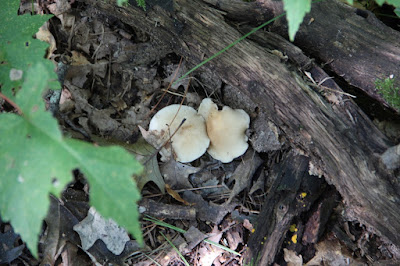
some mushrooms thrive on or near dead wood
Photo by J. Harrington

As of this morning, I’m adding to that list Aldo Leopold’s essay, A Mighty Fortress from A Sand County Almanac. I’ve read and reread his description of the benefits of tree diseases to many forms of wildlife, but it keeps slipping my mind every time there’s a new batch of broken branches covering the driveway and yard. Such was the case this morning after yesterday’s and last night’s storms. That’s when I get tempted to just "get rid of all these dead branches and diseased trees," forgetting once again that nature’s way is not the way of middle-class America’s tendency to excessive neatness.

brush pile and lightning-struck oak
Photo by J. Harrington

Most years by this time the brush pile in the backyard would have been reduced to ashes at least once and maybe twice. The folks at the Xerces Society have educated me to the benefits of brush piles for pollinators and other creatures. We’ll let the brush pile stand throughout winter and, barring the unexpected, let the dead oaks stay as they are. The pileated woodpeckers seem to appreciated that and, no doubt, so do a number of other critters we haven’t noticed.


The Nurse Tree


Why waste away in a box
when you could be a nurse tree?
That’s what they call dead logs:
mushroomeries of the woods.

Your living room’s a wood
of couches, books, and chairs.
You’re dead not at all, but
could you be preparing

for things to grow inside
the chest of the log
you plan to become:
cherished compost heap

where heat turns the brown
mess of feelings, sorry,
that’s peelings, into comp-o-
sition? For we who love

our hands in dirt, a leaf skirt
decomposing seems an ideal
station between this life and
next: I visit your room

as on a forest walk. Passing
a fallen log — is that you? — 
I see a scarlet fungus cap
pop up from friable bark.


********************************************
Thanks for visiting. Come again when you can.
Please be kind to each other while you can.
Tuesday, September 7, 2021

Autumn: color of phenology or phenology of color?

Before we even arrive at noteworthy color change in the local leaves, purple-lovegrass (a.k.a. tumble grass) has ripened. Now, with autumn’s breezes, florets with seeds attached are carried tumbling across fields and spiraling into the air like micro-tornados. Soon they’ll accumulate along fencerows or in corners, waiting to be collected with the season's fallen leaves. Those that are left for spring cleanup can sometimes be blown loose around Halloween to float through the air like lost spirits.

purple-lovegrass in summer
Photo by J. Harrington

airborne tumble grass florets
Photo by J. Harrington

We’re pleased to report that last week’s seeking for potted aster plants was successful. We now have a pair perched in all their purple plumpness on the stoop steps. This all reminds us of the many  shades of purple listed on the color thesaurus by Ingrid Sundberg.


shades of purple, color thesaurus

Although we have tumble grass seed heads in abundance, we can’t report the same for milkweed. There are lots of stems that didn’t develop any seed pods, perhaps due to the summer’s drought? This, among other reasons, may help account for our lack of monarch butterflies this year. [The linked study attributes monarch  population declines to the consequences of "climate change.”] We’ve only seen a few monarchs all summer. Next spring we’ll make an effort to plant some joe pye weeds and blazing star plants to attract any monarchs  that may make it to our neighborhood. The biggest challenge we keep facing is remembering to order or buy plant before nurseries are all sold out.


Lullaby


 - 1916-1992


Purple,
Purple,
Twilight
Sky light.

Purple as a king's cape
Purple as a grape.

Purple for the evening
When daylight is leaving.

Soft and purry,
Gentle and furry,
Velvet evening-time.

Purple,
Purple.
Sky light
Goodbye light.

Dusky
Musky
Into night.


********************************************
Thanks for visiting. Come again when you can.
Please be kind to each other while you can.
Tuesday, August 17, 2021

Some Truth Is Out There!

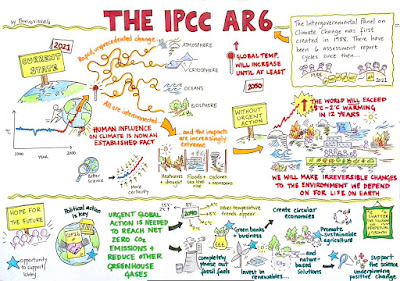
Earlier this month we promised (threatened?) to share more resources related to understanding and responding to the Intergovernmental Panel on Climate Change’s [IPCC] recent report. Yesterday we suggested that taking a careful look at YES! magazine’s How Much Is Enough? online coverage is strongly recommended. Today we spent some time looking at some of the sources they cite because, quite frankly, we have no idea what in hell per capita use of 1300 watts, compared to 9000 watts, actually translates to in the real world. In the process, we found some interesting, and potentially helpful, resources. But, before we get to them, here’s a resource that was shared in response to a Tweet we made yesterday about communicating science so real folks can understand what’s the message.

IPCC AR6
click to bigify and see source

Now, one information and analysis source of which we weren’t previously aware is the International Energy Agency’s World Energy Model, in particular the Sustainable Development Scenario which relates energy development to the United Nation’s Sustainable Development Goals. (To be candid, we’ve read some allegations that  the IEA isn’t always the sharpest tool in the shed, so we take their conclusions with some skepticism.) Closing this particular loop, the YES! assessment notes

For energy distribution, researchers at the International Institute for Applied Systems Analysis say the minimum global energy flow required to achieve universal decent living standards could be as low as 500 watts per capita. Less draconian, the International Energy Agency projects that the U.N.’s Sustainable Development Goals can be achieved worldwide with an energy flow of about 1,300 watts per capita—about what Cuba uses.

Being the curious type, and long a student and proponent of Systems Analysis, we went to  the IIASA web site and discovered, inter alia, their Defense of the natural realm. It’s among the few pieces of better, if not actually good, news we’ve encountered this week. [We know, it’s only Tuesday.]

Options Magazine, Summer 2021: At a crucial moment for beleaguered nature, IIASA research is showing that we can reverse biodiversity loss. It will need an effort that is grand in scale and focused where rewards are greatest.

Perhaps it is a coincidence, perhaps a sign of changing times, but we don’t find it to be too much of a stretch to conclude that the IIASA biodiversity showing aligns nicely with information we learned last night during a webinar hosted by Trout Unlimited [TU], an organization to which we’ve belonged for most of our adult life. TU was announcing their strategic plan update. Here’s a hint

A New Direction.

The harder we work, the more we realize how much work remains.   

So we’re retooling, recruiting, and reinforcing. With a new strategic direction over the next five years and beyond, we will build on the great work of those who came before us.

We will recruit a larger, younger, and more diverse array of communities and conservation advocates willing to roll up their sleeves.

 It’s beginning to look as though there may be more of US than there are of those who would do little more than exploit the Earth to enrich themselves. That’s something I want to believe!


Trout


I do my best 
to keep pointlessness 
at bay. But here, 
wet above my 
knees, I let it fly. 
Here, hot and cold, 
fingers thick with 
thinking, I try to 
tie the fly and look 
for the net, loosening 
the philosophical   
knot of why I came 
here today, not yet 
knowing whether 
I’ll free or fry 
the rainbows 
and browns once 
they’re mine.


********************************************
Thanks for visiting. Come again when you can.
Please be kind to each other while you can.

Sunday, April 11, 2021

Layers upon layers upon ...

In the interest of full disclosure, I confess to being back on a bioregional binge. A few days ago I began rereading Kirkpatrick Sale's Dwellers in the Land. Before that there were encounters with some intriguing resources via Plantmaps. Even when enlarged, it's challenging to determine specifically where our property lies, because it's near the edge(s) of:


Geology of Minnesota, Stillwater Region
Photo by J. Harrington


Many of these borders / boundaries will shift over the next decades or century as climate weirding affects precipitation and climate patterns. What is unlikely to change is that the property will remain within the:
All of which is before we begin to consider soils, political and related boundaries, foodsheds and other cultural geography. This is part of why Dwellers in the Land is being read again. The more I learn about the concept of bioregions and its application, the more I feel like good old Winnie, a bear of very little brains. But I'm also becoming more and more convinced that we need a broader understanding and use of bioregions if we want to have a fulfilling life for our remaining years and the same for our descendants.

national poetry month


Map


This is the world
so vast and lonely
without end, with mountains
named for men
who brought hunger
from other lands,
and fear
of the thick, dark forest of trees
that held each other up,
knowing fire dreamed of swallowing them
and spoke an older tongue,
and the tongue of the nation of wolves
was the wind around them. 
Even ice was not silent.
It cried its broken self
back to warmth.
But they called it
ice, wolf, forest of sticks,
as if words would make it something 
they could hold in gloved hands,
open, plot a way
and follow.

This is the map of the forsaken world.
This is the world without end
where forests have been cut away from their trees.
These are the lines wolf could not pass over.
This is what I know from science:
that a grain of dust dwells at the center
of every flake of snow,
that ice can have its way with land,
that wolves live inside a circle
of their own beginning. 
This is what I know from blood: 
the first language is not our own.

There are names each thing has for itself,
and beneath us the other order already moves.
It is burning.
It is dreaming.
It is waking up.


********************************************
Thanks for visiting. Come again when you can.
Please be kind to each other while you can.

Sunday, August 23, 2020

Is MNDNR's role on invasive species just information and enforcement?

Have you read the recent article about a new invasive species that threatens Minnesota's forests? ("University of Minnesota botanist discovers feared invasive Japanese stiltgrass in Wisconsin") It appeared shortly after I took some pictures of nearby wild cucumber and Joe Pye weed and some other local wild flowers. On the way home, I noticed some purple / lavender streaks in the rushes along the Sunrise River in Carlos Avery Wildlife Management Area South  of County Road 36. I fear the streaks may be made by sizable stands of purple loosestrife.


is that a purple loosestrife stripe?
Photo by J. Harrington


I've noticed over the course of a number of internet searches, that the Minnesota Department of Natural Resources [MnDNR] provides lots of information to Minnesotans to help us manage invasive species, but I've yet to find a description of their own invasive species management programs for state parks, wildlife management areas and similar public properties for which DNR is responsible. And yet, since we live at the edge of a large wildlife management area, and near several state parks and Scientific and Natural Areas, we frequently see stands of buckthorn and loosestrife(?). According to one of DNR's web pages

Common buckthorn and glossy are listed as Restricted noxious weeds (link is external) in Minnesota. It is illegal to import, sell, or transport buckthorn in Minnesota.

But, apparently, there is no requirement to eradicate it although a number of responsible conservation organizations do organize buckthorn removal activities.

Perhaps it's just me but I find it more than mildly annoying and hypocritical that DNR' s aquatic invasive species [AIS] program is focused on enforcement of the prohibition of transporting such species, but DNR does not seem to feel obligated to remove AIS, or terrestrial invasive species, from their own properties. As long as major reservoirs of invasive species exist in Minnesota, we'll constantly be playing catch up and our efforts to manage invasive species are likely to be further hindered by the effects of climate breakdown.


Japanese Knotweed Killers 


By Jan Wrede


We smote and killed.

No broken needle.

Some chemical remains.

Needle too large for small stalks.

Injector refill problematic.


Victim mortally wounded.

Time for mercy

And finishing spray?

When is the coup de gras?

Killers are ready


********************************************
Thanks for visiting. Come again when you can.
Please be kind to each other while you can.

Tuesday, July 28, 2020

Are Minnesota's woodchucks a protected animal?

There's an abode in the neighborhood that would be described as, at best, a "fixer-upper." A new neighbor has moved in sometime during the past week or so. We've not spoken yet but today we got a picture as s/he was bringing in some of the materials to make the place more homey.

our new neighbor, Mr. / Ms. Woodchuck
Photo by J. Harrington

According to Minnesota's St. Croix Valley and  Anoka Sandplain, A Guide to Native Habitats, there's no record of woodchucks in Isanti County  (really?), but they are recorded in the other five counties covered, including Chisago. I was surprised to find woodchucks listed under "Squirrels" and not under "Pocket Gophers and Pocket Mice." I was also surprised to find no listing of either woodchuck or gopher in the book's index. The Minnesota Department of Natural Resources web site page on woodchucks informs us that they are deemed an unprotected wild animal but, when following the links on the page to the statute language, we learn that gophers, not woodchucks, are listed as unprotected. Further, the linked page on the DNR site is to a historic language version. The Revisor's Office most current (2019) language for the relevant section doesn't list either gopher or woodchuck as an unprotected animal. (There seems to be a similar problem with red squirrels, which don't appear to be listed as either protected nor unprotected.)

one of many red squirrels that live in the neighborhood
Photo by J. Harrington

I'm not sure how much the sources of this confusion lie with the DNR, with whichever legislator(s) were the chief authors of the bills in the House and Senate, or with the Revisor's Office staff. I am sure that it doesn't take a genius to realize that conflicting, vague, ambiguous statutory language doesn't incline the public to respect the regulatory agency involved nor it's employees who are expected to enforce such poorly constructed laws. If you think this posting is unfair, take a look at DNR's own web page guidance on Taking a nuisance animal. Feel free to comment if you find woodchucks, red squirrels or groundhogs listed there. Whatever you do, don't search for Minnesota gophers on Google, Duck Duck Go or any other internet search engine. You'll find yourself trying to drain an athletic swamp.


A Drumlin Woodchuck


One thing has a shelving bank,
Another a rotting plank,
To give it cozier skies
And make up for its lack of size.

My own strategic retreat
Is where two rocks almost meet,
And still more secure and snug,
A two-door burrow I dug.

With those in mind at my back
I can sit forth exposed to attack
As one who shrewdly pretends
That he and the world are friends.

All we who prefer to live
Have a little whistle we give,
And flash, at the least alarm
We dive down under the farm.

We allow some time for guile
And don’t come out for a while
Either to eat or drink.
We take occasion to think.

And if after the hunt goes past
And the double-barreled blast
(Like war and pestilence
And the loss of common sense),

If I can with confidence say
That still for another day,
Or even another year,
I will be there for you, my dear,

It will be because, though small
As measured against the All,
I have been so instinctively thorough
About my crevice and burrow.

-Robert Frost


********************************************
Thanks for visiting. Come again when you can.
Please be kind to each other while you can.