Showing posts with label biomimicry. Show all posts

Wednesday, July 3, 2024

Happy Interdependence Day

As we approach yet another Independence Day, it may be wise to recall a wonderful quotation that Bill McKibben offered about 25 years ago:

The laws of Congress and the laws of physics have grown increasingly divergent, and the laws of physics are not likely to yield.

I offer his quotation because this morning I read an assessment that purports to explain why so much of the world is turning toward the right. A link is offered below in hopes you’ll consider following it and reading the article, not because I believe it’s entirely explanatory, but because so far it’s the only attempt I’ve seen that even tries to provide an explanation of what’s going on in our world. (I’m not including my theory of Martians hiding behind the moon with a ray that makes people even more stupid.) Here’s the link, courtesy of the good folks at Centre for the Advancement of a Steady State Economy: Democracy Trumped at the Limits to Growth. Our society is, and has been for a long time, based on the premise of perpetual growth to make things better. That’s inconsistent with living on a finite planet, as we’ve been experiencing the past few decades. Not only is there No Planet B, there is no “away” to which we can throw things. Perhaps it’s time for independence to be realized as interdependence day?


I am the People, the Mob

I am the people—the mob—the crowd—the mass.
Do you know that all the great work of the world is done through me?
I am the workingman, the inventor, the maker of the world's food and clothes.
I am the audience that witnesses history. The Napoleons come from me and the Lincolns. They die. And then I send forth more Napoleons and Lincolns.
I am the seed ground. I am a prairie that will stand for much plowing. Terrible storms pass over me. I forget. The best of me is sucked out and wasted. I forget. Everything but Death comes to me and makes me work and give up what I have. And I forget.
Sometimes I growl, shake myself and spatter a few red drops for history to remember. Then—I forget.
When I, the People, learn to remember, when I, the People, use the lessons of yesterday and no longer forget who robbed me last year, who played me for a fool—then there will be no speaker in all the world say the name: "The People," with any fleck of a sneer in his voice or any far-off smile of derision.
The mob—the crowd—the mass—will arrive then.

Friday, July 28, 2023

Some errors of our era

We finally got lots of rain last night. The telltale puddle in the driveway was close to full this morning. Yesterday brought several severe storms to our north with winds and hail bringing down lots of leaves and some trees. Meanwhile, the UN secretary general has announced that “the era of global boiling has arrived.” Nevertheless the Biden administration has chosen to not (yet?) declare a climate emergency. Neither have I read that there are any pre-established triggers or criteria for such a declaration.

Meanwhile, closer to home, yet another aquifer puncture has been discovered along Enbridge's Line 3. I’ve not yet learned how all the fines in the world will actually restore the environment, sort of similar to how long it’s estimated to take for earth’s climate to begin to return to “normal” if we ever minimize greenhouse gas discharges. The Wisconsin Department of Natural Resources is being sued to keep it from requiring approved manure management plans for Concentrated Animal Feeding Operations [CAFOs]. In Minnesota, I wonder if there’s any state agency that does as much to support metals recycling as the Minnesota Department of Natural Resources does to support metals mining.

recycling before extraction
Photo by J. Harrington

Back when Manifest Destiny was aspirational, the colonizing powers gave away land to get the country “developed.” In 1972, the Clean Water Act Amendments updated and expanded the “Rivers and Harbors Act (1899), the Federal Water Pollution Control Act (1948), the Water Quality Act (1965), and the Refuse Act (1970)” Folks are still debating the interpretation and coverage of that legislation. There has been no comparable update to the Mining Act of 1872. We have long “settled” and colonized the country from coast to coast. We no longer need to promote extractive industries as an economic development strategy. Protecting and restoring clean air, water, food sovereignty and, probably, manufacturing are more critical priorities if we wish to have a survivable future, let alone a sustainable one.

There’s an old saying in the planning profession: “More of the same never solved a problem.” The same is true of law and politics. We can and must do better and stop the “same old, same old” solutions.


Value Added


No one knew what the stones like squatting frogs
signified. There they were, fuming in rows, out
of the ground; every critic had his explanation
or hers. But—we had to remember—they
 
came to nothing, every one; those large stones
out of the earth served the systems
of those who considered them, as explaining
something about the past it was important
 
for the explainer to explain. And yet
no one had any idea truly; there was no
basis in fact for any view of them, and
they remained like their origins—or like
 
smiling Olmec babies, sweet but ominous figures
come from the earth to reproach us, almost
cheerfully, for our ignorance—a mystery, just
as the probe of our feelings came up with nothing.


********************************************
Thanks for visiting. Come again when you can.
Please be kind to each other while you can.

Friday, December 31, 2021

On the Eve of a New Year and New World

 Amanda Gorman has shared  a poem that challenges US, and everyone else, to, essentially, "do better.” After reading her poem, I found myself wondering how to apply that challenge to our collective future, beginning with tomorrow, New Year’s Day, 2022. I think I found some answers that satisfy me. See what you think.

The Challenge

'New Day's Lyric'

--by Amanda Gorman, Dec 31, 2021

May this be the day

We come together.

Mourning, we come to mend,

Withered, we come to weather,

Torn, we come to tend,

Battered, we come to better.

Tethered by this year of yearning,

We are learning

That though we weren't ready for this,

We have been readied by it.

We steadily vow that no matter

How we are weighed down,

We must always pave a way forward.

*

This hope is our door, our portal.

Even if we never get back to normal,

Someday we can venture beyond it,

To leave the known and take the first steps.

So let us not return to what was normal,

But reach toward what is next.

*

What was cursed, we will cure.

What was plagued, we will prove pure.

Where we tend to argue, we will try to agree,

Those fortunes we forswore, now the future we foresee,

Where we weren't aware, we're now awake;

Those moments we missed

Are now these moments we make,

The moments we meet,

And our hearts, once all together beaten,

Now all together beat.

*

Come, look up with kindness yet,

For even solace can be sourced from sorrow.

We remember, not just for the sake of yesterday,

But to take on tomorrow.

*

We heed this old spirit,

In a new day's lyric,

In our hearts, we hear it:

For auld lang syne, my dear,

For auld lang syne.

Be bold, sang Time this year,

Be bold, sang Time,

For when you honor yesterday,

Tomorrow ye will find.

Know what we've fought

Need not be forgot nor for none.

It defines us, binds us as one,

Come over, join this day just begun.

For wherever we come together,

We will forever overcome.

***

Its Application

The planetary boundaries concept presents a set of nine planetary boundaries within which humanity can continue to develop and thrive for generations to come

Planetary boundaries
J. Lokrantz/Azote based on Steffen et al. 2015.

A Response

What Does An Ecological Civilization Look Like?

A society based on natural ecology might seem like a far-off utopia—yet communities everywhere are already creating it.

May we all enjoy, create, and thrive this New Year and thereafter!


********************************************
Thanks for visiting. Come again when you can.
Please be kind to each other while you can.

Tuesday, October 26, 2021

A Modest Proposal for transforming Facebook

With apologies to Jonathan Swift and the genre of satire, today we offer a proposal that could exceed Zuck’s efforts to rule the metaverse. Transform Facebook, or create a competitor, that is similar to the original SimCity game but that allows multi-players on the internet to collaborate on creating a shared and shareable vision of the kind of world in which they, and, conceivably, we, might want to live.

What's envisioned would require a significant upgrade over SimCity BuildIt by incorporating some AI version of the various algorithms and models used to test various carbon sequestration techniques, to assess the intended and unintended consequences of various urban and rural mixes, such as eliminating dairy and meat sectors from agriculture, composting food waste and then what happens to the soils and is there enough or too much compost to provide year-round food for the 10 billion expected.

But, and it’s a huge but (no pun intended), such an approach offers options to test Republican versus Democratic social and economic approaches; ways and means to test bridging or closing the urban rural splits; vegan, vegetarian and plant-based diets; and a variety of policy-based options that are currently being debated with few, if any, actual assessments of how well any policy may or may not work in a complex, emergent, dynamic world. (Build  Back Better anyone?)

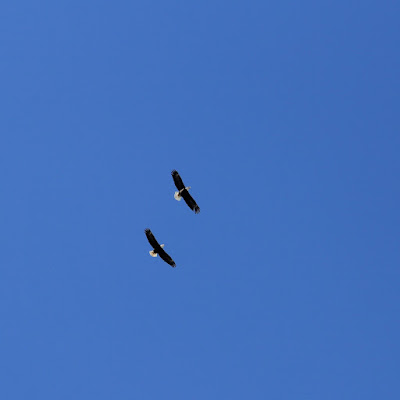
blue sky flight test
Photo by J. Harrington

At the moment, we have a number of places trying doughnut economics; the United Nations has proposed its 17 Sustainable Development Goals; Paul Hawken et. al. have brought us Drawdown and Regeneration; all of which, and other approaches, require societies and cultures and nations to kind of buy a pig in a poke. If folks had access to the kind of SimWorld that’s policy-driven and systems-based, we could avoid a lot of misinformation, disinformation and consequent debate by offering folks an opportunity to plug a proposed policy into the simulation and see what happens. When multitudes are doing it at the same time, we will, I believe, at a minimum, clearly eliminate economists’ hiding behind the skirts of “rational person.” Between that and eliminating the nonsense now served on Facebook, we’ll have made major progress at creating a newer and better world. Zuck could become the snake that swallowed its own tail.


            After reading a letter from his mother, Harry T. Burn cast the deciding vote to ratify the 19th amendment of the U.S. Constitution

My parents are from countries
where mangoes grow wild and bold
and eagles cry the sky in arcs and dips.
America loved this bird too and made

it clutch olives and arrows. Some think
if an eaglet falls, the mother will swoop
down to catch it. It won’t. The eagle must fly
on its own accord by first testing the air-slide

over each pinfeather. Even in a letter of wind,
a mother holds so much power. After the pipping
of the egg, after the branching—an eagle is on
its own. Must make the choice on its own

no matter what its been taught. Some forget
that pound for pound, eagle feathers are stronger
than an airplane wing. And even one letter, one
vote can make the difference for every bright thing.


********************************************
Thanks for visiting. Come again when you can.
Please be kind to each other while you can.

Sunday, September 5, 2021

The value of beauty

At least today the weather is a delight although, as usual, I could do with a gentler breeze, unless, of course, I’m trying to burn some of our dead, broken branches in the fire pit. Then a stronger breeze from a consistent direction is helpful. There I go again, reducing nature to its utility function.

Perhaps I’m just displaying my crass, self-centered side, but it seems to me that trying to value, in non-economic terms, the multiple values of nature, including other people, makes more sense than reducing ecosystem services to a dollar value. Where’s the dollar value of beauty? Seeing something beautiful, such as a flock of swans emerging from a cloud-filled sky, makes me feel good, makes me happy. I don’t have to put a dollar value on it. In fact, “paying" for beauty in terms other than time, effort, and attention, might well diminish its value to me.

The Quiet Music of Gently Falling Snow-cover

Recently, I’ve been reading a book by Jackie MorrisThe Quiet Music of Gently Falling Snow. It’s one of a number of books she’s written and / or illustrated, including several done to illustrate Robert MacFarlane’s writing, including The Lost Words and The Lost Spells. Each, and work based on them, have had a magical, transformative affect on me and many others.

The pleasure I’ve derived from reading those  books and ...Falling Snow is far greater than their purchase price. Meanwhile, back in the world that could use more magic these days, Morris’ web site shares a current posting about a different kind of purchase price, that for housing and the problems gentrification can create for artists in rural locations. (I suspect many of us are more familiar with the issues associated with urban gentrification.) The entire question of attaining any sort of balance between urban and rural, rich and un-rich, tinkers, tailors, soldiers and spies, seems to become more complex by the day. What ecosystem services do humans provide that there should be so many of us, and why do we keep reproducing at a rate that can’t be sustained? See what the past 50 years look like:

During the last 50 years
Project Drawdown: Setting the stage

In America, we often teach  children that they can grow up to be anything they want. Now, perhaps it’s time to teach them that they can’t grow up to be everything they want. Maybe, actually, we need to begin by teaching that to the  adults. We’re all in this together, like it or not.


The Lost Words Blessing


Composer & Copyright

Original song by Julie Fowlis, Karine Polwart, Seckou Keita, Kris Drever, Rachel Newton, Beth Porter, Jim Molyneux, Kerry Andrew.


Enter the wild with care, my love
And speak the things you see
Let new names take and root and thrive and grow
And even as you travel far from heather, crag and river
May you like the little fisher, set the stream alight with glitter
May you enter now as otter without falter into water

Look to the sky with care, my love
And speak the things you see
Let new names take and root and thrive and grow
And even as you journey on past dying stars exploding
Like the gilded one in flight, leave your little gifts of light
And in the dead of night my darling,
find the gleaming eye of starling
Like the little aviator, sing your heart to all dark matter

Walk through the world with care, my love
And sing the things you see
Let new names take and root and thrive and grow
And even as you stumble through machair sands eroding
Let the fern unfurl your grieving, let the heron still your breathing
Let the selkie swim you deeper, oh my little silver-seeker
Even as the hour grows bleaker, be the singer and the speaker
And in city and in forest, let the larks become your chorus
And when every hope is gone, let the raven call you home


********************************************
Thanks for visiting. Come again when you can.
Please be kind to each other while you can.

Monday, August 30, 2021

For every complex problem, a simple solution?

I absolutely agree that we are in the midst of a worldwide climate crisis. I don’t agree that the major solution to that crisis is to either “leave it in the ground” or “end the fossil fuel industry,” because neither of those approaches speaks to what else has to be done to reach drawdown on greenhouse gas emissions. Either of those approaches means we’ll stop being bad at some things, but not enough things to re-solve our climate problem. If we end the ff industry, does that include capping the wells that are currently leaking methane? Perhaps, but not necessarily.

We need to transition not only our energy system(s), we also need to substantially modify or replace just about every system on which the current global economy depends. If you think that’s a radical statement, take a look at Project Drawdown’s Framework for Climate Solutions. We can “leave it in the ground” without addressing many of the sources of greenhouse gasses [GHG] and leaving it in the ground certainly doesn’t do much to support sinks of GHGs.

emissions sources and natural sinks

If you’re at all willing to consider the third action area, improve society, you probably should take a look at the ideas behind doughnut economics. Think of it as the societal equivalent of walking and chewing gum concurrently.

The Doughnut consists of two concentric rings: a social foundation, to ensure that no one is left falling short on life’s essentials, and an ecological ceiling, to ensure that humanity does not collectively overshoot the planetary boundaries that protect Earth's life-supporting systems. Between these two sets of boundaries lies a doughnut-shaped space that is both ecologically safe and socially just: a space in which humanity can thrive.

Two other resource frameworks that are helpful in beginning to understand the challenges facing US are the United Nation’s Sustainable Development Goals and the World Resources Institute’s State of Climate Action.

If today’s title seems familiar, that’s because it’s a derivation of something H. L. Mencken wrote about one hundred years ago that’s since appeared in a variety of forms: "there is always a well-known solution to every human problem—neat, plausible, and wrong.” Leave it or end it seem like that kind of solution to our climate crises.


I knew something was wrong


I knew something was wrong 
the day I tried to pick up a 
small piece of sunlight 
and it slithered through my fingers, 
not wanting to take shape. 
Everything else stayed the same—
the chairs and the carpet 
and all the corners 
where the waiting continued.


********************************************
Thanks for visiting. Come again when you can.
Please be kind to each other while you can.

Monday, August 2, 2021

The resilience of nature

This afternoon we enjoyed a very pleasant surprise. After spending time during  the past couple of weeks wondering why we hadn't seen any swamp milkweed flowers, we looked out toward the wet spot in the back yard and noticed a small splotch of pink. A closer look through binoculars confirmed that, indeed, at least one bloom of swamp milkweed had emerged. Several other plants, such as blazing star, do seem to have vanished and it's questionable if the bee balm we transplanted a week or so ago will make it to the end of summer, let alone through the winter.

swamp milkweed in bloom
Photo by J. Harrington

Last winter's weather and this summer's drought look as though they've done in the last apple tree planted on the top of the slope across the back yard. Later today, or tomorrow, air quality advisories permitting, we'll wander up that slope and take a closer look. We may even haul a bucket of water for the apple sapling and the bee balm. [The air quality for the  past few days has limited our out outdoor exposure, let alone exertion.] Having faith that watering might help is better than prematurely conducting a memorial service, at least it will us feel better.

The longer we live in the country, the more we're learning that working with nature is much more  complicated than creating a monoculture in which we try to make nature work for us. We have a number of dead oaks with equally dead branches. Some creatures, like woodpeckers, make use of the dead trees by excavating nesting sites. We'd just as soon get the trees cut down and be done with picking up dead branches and worrying if the  tree will break anything when it eventually collapses, but then the woodpeckers we enjoy seeing at the feeders and suet wouldn't live around here. So far, none of the brochures on "healthy woodlands" have been all that helpful. Leaving snags "unless they pose a danger to humans" presumes a branch won't fall while I'm wandering under it or that I'll hear the cracking sound in time to scurry or that I'll stay out from under any dead tree branches. When I'm wandering in our, or any, woods, I'm usually looking ahead or down, not up at dead branches. That's just one example of how we often end up quite uncertain about an appropriate course of action. But, it all takes on a whole different complexion if we consider the whole thing a learning process with a goal of discovering how to live with an alive woodlot and fields and wet spot, instead of solving any number of discrete problems. That calls for a substantial attitude adjustment on our part. Nature will just continue to do what she's evolved to do and adjust to the new climate we've imposed on her. Our resilience will come with an adjusted attitude.


The Well Rising


The well rising without sound,
the spring on a hillside,
the plowshare brimming through deep ground
everywhere in the field—

The sharp swallows in their swerve
flaring and hesitating
hunting for the final curve
coming closer and closer—

The swallow heart from wingbeat to wingbeat
counseling decision, decision:
thunderous examples. I place my feet
with care in such a world.


********************************************
Thanks for visiting. Come again when you can.
Please be kind to each other while you can.

Sunday, April 11, 2021

Layers upon layers upon ...

In the interest of full disclosure, I confess to being back on a bioregional binge. A few days ago I began rereading Kirkpatrick Sale's Dwellers in the Land. Before that there were encounters with some intriguing resources via Plantmaps. Even when enlarged, it's challenging to determine specifically where our property lies, because it's near the edge(s) of:


Geology of Minnesota, Stillwater Region
Photo by J. Harrington


Many of these borders / boundaries will shift over the next decades or century as climate weirding affects precipitation and climate patterns. What is unlikely to change is that the property will remain within the:
All of which is before we begin to consider soils, political and related boundaries, foodsheds and other cultural geography. This is part of why Dwellers in the Land is being read again. The more I learn about the concept of bioregions and its application, the more I feel like good old Winnie, a bear of very little brains. But I'm also becoming more and more convinced that we need a broader understanding and use of bioregions if we want to have a fulfilling life for our remaining years and the same for our descendants.

national poetry month


Map


This is the world
so vast and lonely
without end, with mountains
named for men
who brought hunger
from other lands,
and fear
of the thick, dark forest of trees
that held each other up,
knowing fire dreamed of swallowing them
and spoke an older tongue,
and the tongue of the nation of wolves
was the wind around them. 
Even ice was not silent.
It cried its broken self
back to warmth.
But they called it
ice, wolf, forest of sticks,
as if words would make it something 
they could hold in gloved hands,
open, plot a way
and follow.

This is the map of the forsaken world.
This is the world without end
where forests have been cut away from their trees.
These are the lines wolf could not pass over.
This is what I know from science:
that a grain of dust dwells at the center
of every flake of snow,
that ice can have its way with land,
that wolves live inside a circle
of their own beginning. 
This is what I know from blood: 
the first language is not our own.

There are names each thing has for itself,
and beneath us the other order already moves.
It is burning.
It is dreaming.
It is waking up.


********************************************
Thanks for visiting. Come again when you can.
Please be kind to each other while you can.

Saturday, May 16, 2020

A day for "light" reading

We're pleased to announce that, after fussing some months ago about  the lack of options to acquire kernza flour, we now have some on order. In fact, we've signed up to be a commission-earning affiliate of Perennial Pantry. If you follow that link and order either flour or grain, I'm supposed to receive a reward through Kickbooster. Kernza has been developed as a perennial grain at the Land Institute in Kansas. I'm a long time fan of both Wes Jackson, Land Institute founder, and Wendell Berry's thinking about  how to make agriculture better for both humans and the environment. I'm looking forward to trying the kernza flour in artisan sourdough baking. Expect to read more about it here from time to time (whether or not I earn any commissions).

artisan sourdough bread, made from earth, air, fire and water
Photo by J. Harrington

In addition to announcing our  discovery of a source for kernza flour and grain, we're pleased to note that today is the International Day of Light (would that our internet connection were fiberoptic). Is it karma or was it planned that today would also be the day on which the folks who are espousing #DemocratizingWork arranged to have their op-ed published around the world? Some of each we suspect. The coincidence is too fortuitous to be entirely coincidental. For the most part, we are in agreement with the aspirations expressed by those who would democratize work but we then ponder: what if the workers are disproportionately like those who support tRUMP and the NRA and terrorize state legislatures? Can we reasonably expect science-denying racists to change their spots if their work environment is modified "By involving employees in decisions relating to their lives and futures in the workplace – by democratizing firms." It seems to me the challenge involves implementing systems that limit the damage done by either or both short-sighted, self-centered, greedy workers as it does capitalists. Those who have been portrayed as having lived at that point in the future when representatives of the Dark Side and The Force fought with light sabers seem to still contend with the yin and yang of good and evil. Two sides of irreducible reality?

no kernza in this crumb, but soon
Photo by J. Harrington

I'm getting befuddled even before I try to factor in William McDonough's "Less Bad" Is No Good. In his Five Goods, he writes:
Many companies are doing good work to reduce their negative impact on resources and workers, but often through a narrow perspective focused on piecemeal improvements. They improve transparency and traceability, and make some processes more efficient, but pay little attention to their heavy use of toxic chemicals. They develop complex recycling for hybrid materials, rather than redesign the product and delivery for full-value recycling. These efforts all focus on minimizing short-term damage, which is certainly important. But it can be done better by eliminating problems altogether with designs that optimize long-term gains.
As part of our "both, and" approach toward addressing climate breakdown and COVID-19, we think radical, perhaps total, changes are needed to our "food system." Supporting the development and use of kernza moves us, we hope, in a "more good" direction. For the moment, buying our pork from a local, sustainable, humane producer is the best we can do, but that is both less bad (no CAFO support) and more good (local agriculture support). We'll try to cast more light on this theme even when it's not Light Saber Day. 😉

What Work Is


We stand in the rain in a long line
waiting at Ford Highland Park. For work.
You know what work is—if you’re
old enough to read this you know what
work is, although you may not do it.
Forget you. This is about waiting,
shifting from one foot to another.
Feeling the light rain falling like mist
into your hair, blurring your vision
until you think you see your own brother
ahead of you, maybe ten places.
You rub your glasses with your fingers,
and of course it’s someone else’s brother,
narrower across the shoulders than
yours but with the same sad slouch, the grin
that does not hide the stubbornness,
the sad refusal to give in to
rain, to the hours of wasted waiting,
to the knowledge that somewhere ahead
a man is waiting who will say, “No,
we’re not hiring today,” for any
reason he wants. You love your brother,
now suddenly you can hardly stand
the love flooding you for your brother,
who’s not beside you or behind or
ahead because he’s home trying to   
sleep off a miserable night shift
at Cadillac so he can get up
before noon to study his German.
Works eight hours a night so he can sing
Wagner, the opera you hate most,
the worst music ever invented.
How long has it been since you told him
you loved him, held his wide shoulders,
opened your eyes wide and said those words,
and maybe kissed his cheek? You’ve never
done something so simple, so obvious,
not because you’re too young or too dumb,
not because you’re jealous or even mean
or incapable of crying in
the presence of another man, no,   
just because you don’t know what work is.


********************************************
Thanks for visiting. Come again when you can.
Please be kind to each other while you can.

Tuesday, December 3, 2019

What I really want for Christmas

Sun is shining; temperature's in the mid 30's; every so often a load of snow explodes off of an oak branch in the woods behind the house. Before I started this posting, I was struggling with my Christmas list. It was much easier when I was young to let Santa know what I wanted for Christmas. Since we never lived out in the real country, ponies stayed off the list but, over time, the puppy, the bicycle, the cowboy outfit, and other essentials showed up under the tree. One year there was even a Lionel train set which my Dad put together with only a modicum of swearing.

Not to rain on anyone's Christmas parade, but have you seen The Story of Stuff? I started with the original. A couple of things I saw online today put me in mind of all this. The first was "St. Croix River impairment underscores need for continued work."
Of the 30 major tributaries flowing to the St. Croix River, the seven which contribute the most phosphorus include the Apple, Snake, Willow, Kettle, Sunrise, Kinnickinnic, and Namekagon. Four of these enter the St. Croix River north of Taylor’s Falls.
As noted before in this blog, Yr. Obt. Svt. lives in the Sunrise watershed. We've also noted previously that, when Congress originally passed the Clean Water Act Amendments of 1972 (some 47 years ago), it adopted an interim goal that all the nation's waters were to be "fishable-swimmable" by 1983. We're not even close yet.

With that as background, how much credence should we give the international efforts to address greenhouse gas emissions and adaptation to climate breakdown? According to the consensus of climate scientists, we don't have 47 years to promise to "get to it tomorrow."

a home-grown white pine Christmas tree
Photo by J. Harrington

That brings me to the second thing I saw online. It's a statement attributed to Greta Thunberg, the teenage climate activist who just finished her second Atlantic ocean crossing in a small sailing craft.
"I am not traveling like this because I want everyone to do so," said Thunberg. "I'm doing this to sort of send the message that it is impossible to live sustainable today, and that needs to change. It needs to become much easier."
So, I'm convinced that, although we need to talk about how the people of the world will fix what we've broken, talk alone isn't going to cut it. What I'd like for Christmas is for Santa to whack all the naughty boys, girls and grups with a sock full of coal until each denier and nonparticipant agrees to pull their weight and stop being a free rider in the work needed to clean up our beautiful home, the only one we have. That won't exactly fit under our family's Christmas tree, but if each one of us did not a little, but a lot more, including doing a much better job with who we vote for, we may become ancestors whose descendants can have a white Christmas to enjoy 100 years from now.

100 years from now, will this be Home for Christmas?

We'll return to our regular programming tomorrow.

“Your Luck Is About To Change”


     (A fortune cookie)

Ominous inscrutable Chinese news 
to get just before Christmas, 
considering my reasonable health, 
marriage spicy as moo-goo-gai-pan, 
career running like a not-too-old Chevrolet. 
Not bad, considering what can go wrong: 
the bony finger of Uncle Sam 
might point out my husband, 
my own national guard, 
and set him in Afghanistan; 
my boss could take a personal interest; 
the pain in my left knee could spread to my right. 
Still, as the old year tips into the new, 
I insist on the infant hope, gooing and kicking 
his legs in the air. I won't give in 
to the dark, the sub-zero weather, the fog, 
or even the neighbors' Nativity. 
Their four-year-old has arranged 
his whole legion of dinosaurs 
so they, too, worship the child, 
joining the cow and sheep. Or else, 
ultimate mortals, they've come to eat 
ox and camel, Mary and Joseph, 
then savor the newborn babe.


********************************************
Thanks for visiting. Come again when you can.
Please be kind to each other while you can.

Friday, July 5, 2019

Trees for forests for climate? It's all in the details

There's a new report / analysis making the rounds. It's in The Guardian under this head:

Tree planting 'has mind-blowing potential' to tackle climate crisis

Research shows a trillion trees could be planted to capture huge amount of carbon dioxide

Let's start this response by saying we're very much in favor of trees. Even more so since we finished reading The Hidden Life of Trees, About TreesThe Overstory, and a few similar books during the past couple of years. The property where we live on has a number of trees, both evergreen and deciduous. We enjoy the shade, the birds, the windsong. We'd like it more if there were enough large maples to support sugaring in March but.... Anyhow, over the years, we've tried planting a number of trees on the property, mostly fruit trees, both apple and pear. Of the dozen or so trees we've planted over the years, only three remain: one apple, one pear, one red maple. Most of the others were lost to pocket gophers eating the roots.

deer seem to be very fond of black chokeberry bushes
Photo by J. Harrington

We haven't had much better luck with bushes / shrubbery. The deer keep nibbling on the black chokeberry (Aronia melanocarpa) we planted around the dog run and the rose bushes and flowers in the front gardens. What the deer don't eat from above, the rabbits gnaw on down below. I have no clue how the property ended up with oaks and pines and black cherries and maples. It would be wonderful if deer or rabbits or even pocket gophers ate buckthorn. No such luck.

The point we're wandering up toward is that, based on our experience, there seems to be a moderately high loss in tree re-plantings. That would seem to be consistent with nature's profligate distribution of seeds from existing trees in the wood lot or forest. There's a report on China's tree replanting program  of a billion trees per year that indicates a number of other issues complicate major reforestation programs, let alone engaging in restorative forestry.

this is a "deer-proof" enclosure in a Scientific and Natural Area
Photo by J. Harrington

Not terribly far from where we live is one of Minnesota's Scientific and Natural Areas. The first time we visited, we were taken aback to discover a large area surrounded by a very tall fence with multitudes of tree saplings in protective coverings planted within the fence. Being the inquisitive sort we are, we tracked down those who could tell us what was going on. It's a "deer-proof" fence to enable reforestation of an area that had been turned into a meadow.

We're not sure what kinds of issues were encountered by the green belt planter who won a Nobel Prize but then we haven't yet read the story of Wangari Maathai: The Woman Who Planted Millions of Trees. We do know that DrawDown, our "bible" for all things related to climate breakdown, ranks temperate forest restoration at #12 and afforestation at #15 in their list of solutions. Seems like we might want to be sure to find whatever ways are needed to bring back our forests and our trees. We just have to keep in mind that carbon capture and wood and fruit are not the only uses of trees and we aren't the only users.

Speaking Tree 


- 1951-


I had a beautiful dream I was dancing with a tree.
                                                                   —Sandra Cisneros

Some things on this earth are unspeakable:
Genealogy of the broken—
A shy wind threading leaves after a massacre,
Or the smell of coffee and no one there—

Some humans say trees are not sentient beings,
But they do not understand poetry—

Nor can they hear the singing of trees when they are fed by
Wind, or water music—
Or hear their cries of anguish when they are broken and bereft—

Now I am a woman longing to be a tree, planted in a moist, dark earth
Between sunrise and sunset—

I cannot walk through all realms—
I carry a yearning I cannot bear alone in the dark—

What shall I do with all this heartache?
The deepest-rooted dream of a tree is to walk
Even just a little ways, from the place next to the doorway—
To the edge of the river of life, and drink—

I have heard trees talking, long after the sun has gone down:

Imagine what would it be like to dance close together
In this land of water and knowledge. . .

To drink deep what is undrinkable.


********************************************
Thanks for visiting. Come again when you can.
Please be kind to each other while you can.

Saturday, February 16, 2019

Celebrating release by Our Native Daughters

We have been a fan of Rhiannon Giddens for quite some time now and were mightily impressed when we saw her in person at the O'Shaughnessy a year and a half ago. Now she's recorded a new album with a different group, Our Native Daughters, which also features Amythyst Kiah, Allison Russell and Leyla McCalla. We suspect that it's not a coincidence that the album is scheduled for release in about a week, on February 22, near the midst of Black History Month. But, perhaps that's just a coincidence, if you believe in coincidence. [The first link in this paragraph will take you to npr's write up on the album, including the ability to listen to the full album or any of the individual tracks. We're listening as we write this.]

the calm before the concert
Photo by J. Harrington

There's been a growing number of folks trying to make the case that "we're better than this" as more and more xenophobic, racist, hateful crap pours out of the White House these days. All we can say to that is those folks need to go back and do a better job studying American History 101. The "we" some of us claim we're better than are also citizens and/or residents of a country founded by adventuring religious dissidents who built a nation on the backs of those suffering from land appropriation, slavery and/or genocide, at a minimum. It looks unfortunately clear to us that the struggle for civil rights and equality is far from over. In fact, we behave like we're presently backsliding from the values and principles hashed out in many of our country's founding documents. [No, we're not including the 3/5 of a person provision. Maybe, though, we should apply that concept to corporate persons.]

Please don't misinterpret what we're claiming here. We CAN BE BETTER than the way too many of us are behaving these days but, to accomplish that, we have to change our ways and work at being better. It don't just come naturally. We've developed excessive hubris and and an overweening sense of entitlement. There is insufficient truth to the claim that "It can't happen here." Read about the Trail of Tears. Study the Dred Scott decision. Think about Citizens United and how we've fared since that SCOTUS decision. We continue to wonder why, if corporations really are to be considered "persons," they aren't subject to any form of the death penalty.

We could go on, and undoubtedly will some day soon. For today, we're gleeful that we live in a society that has a culture varied enough to include Our Native Daughters, Buffy Sainte-Marie, Robert Zimmerman, and Richie Valens. Perhaps we can be better than we've been if we let our native music's charms help soothe our savage breast, soften our hardened hearts, and bend our notted minds. Those who study them note that "Ecosystems with a lot of biodiversity are generally stronger and more resistant to disaster than those with fewer species." To that we would add that they're also more fun.

I, Too


I, too, sing America.

I am the darker brother.
They send me to eat in the kitchen
When company comes,
But I laugh,
And eat well,
And grow strong.

Tomorrow,
I’ll be at the table
When company comes.
Nobody’ll dare
Say to me,
“Eat in the kitchen,”
Then.

Besides,
They’ll see how beautiful I am
And be ashamed—

I, too, am America.


********************************************
Thanks for visiting. Come again when you can.
Please be kind to each other while you can.

Sunday, December 30, 2018

What world do we want?

Somewhere during the past several days, we came across a challenge to describe the world we want to live in. We've thought about that off and on since we read the challenge and have come to the conclusion that it's hard, despite having spent much of our working life doing just that kind of thing. Except, and it's a big except, when working, we often were critiquing someone else's proposal, or only dealing with a small segment of the world we live in. Here's the beginnings of what we've come up with so far:

image credit NASA
what does the world you want look like? (image credit NASA)

  • We want to see more, much more, emphasis on the creation of affordable local food systems.
  • We hope to see many more wildflowers planted under the local solar gardens that are being built helter skelter around the county. Solar panels, by themselves, are not attractive. We'd also like to see more microgrids developed and linked.
  • We would like to see the implementation of the solutions proposed in Project Drawdown, 100 solutions to reverse global warming.
  • We'd like to see the restoration of democracy, elimination of gerrymandering and citizens united and the only politicians supported be those who focus on win-win solutions rather than treating politics as a zero sum game.
  • Capitalism needs to be massively revised or eliminated so that we evolve to a circular economy consistent with the premises of donut economics.
  • Governments should become grateful if the birth rate is less than replacement, since we now require more than one planet to meet the needs of existing populations.
  • More and more people need to be educated about emergent, self-organizing, complex systems by teachers like Donella Meadows and Peter Senge.
  • We'd like to live in a world that uses the best knowledge currently available in a more collaborative process. One example would be to see Minnesota develop its own version of Vermont's New Economy.
  • Minnesota could also create public banks, true broadband statewide, and a single payer health system.
  • Everyone should read, and enjoy, more poetry.
  • Native American respect for Mother Earth and life based on reciprocity should become core values for all Americans.
There's obviously more that can be added to the list, For example, we should bring back the State Planning Agency and the Citizens Board that used to govern the Pollution Control Agency. Albert Einstein asserts that "We cannot solve our problems with the same thinking we used when we created them." Add to that R. Buckminster Fuller's observation that "We are not going to be able to operate our Spaceship Earth successfully nor for much longer unless we see it as a whole spaceship and our fate as common. It has to be everybody or nobody." I'd like to live in a world with everybody. How about you?

See what we mean about it's hard? This reminds us of the old saying about "Keep your eye on the ball, nose to the grindstone, shoulder to the wheel. Now, let's see you work from that position!"


A Song on the End of the World


Translated by Anthony Milosz
On the day the world ends
A bee circles a clover,
A fisherman mends a glimmering net.
Happy porpoises jump in the sea,
By the rainspout young sparrows are playing
And the snake is gold-skinned as it should always be.
         
On the day the world ends
Women walk through the fields under their umbrellas,
A drunkard grows sleepy at the edge of a lawn,
Vegetable peddlers shout in the street
And a yellow-sailed boat comes nearer the island,
The voice of a violin lasts in the air
And leads into a starry night.

And those who expected lightning and thunder
Are disappointed.
And those who expected signs and archangels’ trumps
Do not believe it is happening now.
As long as the sun and the moon are above,
As long as the bumblebee visits a rose,
As long as rosy infants are born
No one believes it is happening now.

Only a white-haired old man, who would be a prophet
Yet is not a prophet, for he’s much too busy,
Repeats while he binds his tomatoes:
There will be no other end of the world,
There will be no other end of the world.

Warsaw, 1944


********************************************
Thanks for visiting. Come again when you can.
Please be kind to each other while you can.

Wednesday, October 3, 2018

Too perfect?

A few evenings ago a pair of whitetail does were feeding under the pear tree. A day or two before that, there were four of them. A couple of times in between, we've seen one or three wandering through the field behind the house. They don't arrive consistently enough so that we can count on seeing them, but neither are sightings so infrequent that we never bother too look.

whitetail does under the pear tree
Photo by J. Harrington

We seem to recall, vaguely, that this inconsistent pattern was promoted by B.F. Skinner under the heading of "operant conditioning using intermittent variable rewards." Thinking about Mother Nature and her patterns, and our ability to observe them, she must be the mistress of operant conditioning. We remember when we were trap or skeet shooting, a not totally unrealistic goal was to break 25 straight clay targets. Mostly we shot in the high teens or low twenties, but the possibility of a perfect round was usually there, until the first miss. Hunting grouse or ducks, the idea of hitting two or three in a row never occurred to us, perfectionists though we are. In fact, we still remember going through several boxes of shells (50+) to bring home a couple of teal. At no point did we consider giving up hunting due to poor shooting.

ducks in flight
ducks in flight
Photo by J. Harrington

We think, based on the preceding, that the intermittent rewards of hunting and fishing derive from the opportunities earned or presented, more than from the fish and game "reduced to possession." If a loaf of bread turned out to be edible as infrequently as we catch fish these days, we'd probably give up baking. It's not entirely clear to us what creates these distinctions. On the other hand, we are beginning to suspect that exhibiting perfectionistic tendencies might well be counterproductive to living a rewarding life.

As we look at the leaves out our window, there is a large amount of monotonous green that was a delight to see last Spring. Now, however, it's the patches of russet and scarlet and lemon and gold that bring pleasure, even though they foretell the approach of Winter, a season we consider to be significantly less than perfect, but with its own rewards that appear occasionally. We're not sure, but we think we're in the process of circling around to a wonderful lyric by Joni Mitchell, from her song "Big Yellow Taxi." Don't it always seem to go, that you don't know what you've got, 'til it's gone? Enjoy the moment and what you have. It'll change soon enough.

How to Be Perfect


                                                  Everything is perfect, dear friend.
                                                  —
KEROUAC
Get some sleep.

Don't give advice.

Take care of your teeth and gums.

Don't be afraid of anything beyond your control. Don't be afraid, for
instance, that the building will collapse as you sleep, or that someone
you love will suddenly drop dead.

Eat an orange every morning.

Be friendly. It will help make you happy.

Raise your pulse rate to 120 beats per minute for 20 straight minutes
four or five times a week doing anything you enjoy.

Hope for everything. Expect nothing.

Take care of things close to home first. Straighten up your room
before you save the world. Then save the world.

Know that the desire to be perfect is probably the veiled expression
of another desire—to be loved, perhaps, or not to die.

Make eye contact with a tree.

Be skeptical about all opinions, but try to see some value in each of
them.

Dress in a way that pleases both you and those around you.

Do not speak quickly.

Learn something every day. (Dzien dobre!)

Be nice to people before they have a chance to behave badly.

Don't stay angry about anything for more than a week, but don't
forget what made you angry. Hold your anger out at arm's length
and look at it, as if it were a glass ball. Then add it to your glass ball
collection.

Be loyal.

Wear comfortable shoes.

Design your activities so that they show a pleasing balance
and variety.

Be kind to old people, even when they are obnoxious. When you
become old, be kind to young people. Do not throw your cane at
them when they call you Grandpa. They are your grandchildren!

Live with an animal.

Do not spend too much time with large groups of people.

If you need help, ask for it.

Cultivate good posture until it becomes natural.

If someone murders your child, get a shotgun and blow his head off.

Plan your day so you never have to rush.

Show your appreciation to people who do things for you, even if you
have paid them, even if they do favors you don't want.

Do not waste money you could be giving to those who need it.

Expect society to be defective. Then weep when you find that it is far
more defective than you imagined.

When you borrow something, return it in an even better condition.

As much as possible, use wooden objects instead of plastic or metal
ones.

Look at that bird over there.

After dinner, wash the dishes.

Calm down.

Visit foreign countries, except those whose inhabitants have
expressed a desire to kill you.

Don't expect your children to love you, so they can, if they want to.

Meditate on the spiritual. Then go a little further, if you feel like it.
What is out (in) there?

Sing, every once in a while.

Be on time, but if you are late do not give a detailed and lengthy
excuse.

Don't be too self-critical or too self-congratulatory.

Don't think that progress exists. It doesn't.

Walk upstairs.

Do not practice cannibalism.

Imagine what you would like to see happen, and then don't do
anything to make it impossible.

Take your phone off the hook at least twice a week.

Keep your windows clean.

Extirpate all traces of personal ambitiousness.

Don't use the word extirpatetoo often.

Forgive your country every once in a while. If that is not possible, go
to another one.

If you feel tired, rest.

Grow something.

Do not wander through train stations muttering, "We're all going to
die!"

Count among your true friends people of various stations of life.

Appreciate simple pleasures, such as the pleasure of chewing, the
pleasure of warm water running down your back, the pleasure of a
cool breeze, the pleasure of falling asleep.

Do not exclaim, "Isn't technology wonderful!"

Learn how to stretch your muscles. Stretch them every day.

Don't be depressed about growing older. It will make you feel even
older. Which is depressing.

Do one thing at a time.

If you burn your finger, put it in cold water immediately. If you bang
your finger with a hammer, hold your hand in the air for twenty
minutes. You will be surprised by the curative powers of coldness and
gravity.

Learn how to whistle at earsplitting volume.

Be calm in a crisis. The more critical the situation, the calmer you
should be.

Enjoy sex, but don't become obsessed with it. Except for brief periods
in your adolescence, youth, middle age, and old age.

Contemplate everything's opposite.

If you're struck with the fear that you've swum out too far in the
ocean, turn around and go back to the lifeboat.

Keep your childish self alive.

Answer letters promptly. Use attractive stamps, like the one with a
tornado on it.

Cry every once in a while, but only when alone. Then appreciate
how much better you feel. Don't be embarrassed about feeling better.

Do not inhale smoke.

Take a deep breath.

Do not smart off to a policeman.

Do not step off the curb until you can walk all the way across the
street. From the curb you can study the pedestrians who are trapped
in the middle of the crazed and roaring traffic.

Be good.

Walk down different streets.

Backwards.

Remember beauty, which exists, and truth, which does not. Notice
that the idea of truth is just as powerful as the idea of beauty.

Stay out of jail.

In later life, become a mystic.

Use Colgate toothpaste in the new Tartar Control formula.

Visit friends and acquaintances in the hospital. When you feel it is
time to leave, do so.

Be honest with yourself, diplomatic with others.

Do not go crazy a lot. It's a waste of time.

Read and reread great books.

Dig a hole with a shovel.

In winter, before you go to bed, humidify your bedroom.

Know that the only perfect things are a 300 game in bowling and a
27-batter, 27-out game in baseball.

Drink plenty of water. When asked what you would like to drink,
say, "Water, please."

Ask "Where is the loo?" but not "Where can I urinate?"

Be kind to physical objects.

Beginning at age forty, get a complete "physical" every few years
from a doctor you trust and feel comfortable with.

Don't read the newspaper more than once a year.

Learn how to say "hello," "thank you," and "chopsticks"
in Mandarin.

Belch and fart, but quietly.

Be especially cordial to foreigners.

See shadow puppet plays and imagine that you are one of the
characters. Or all of them.

Take out the trash.

Love life.

Use exact change.

When there's shooting in the street, don't go near the window.


********************************************
Thanks for visiting. Come again when you can.
Please be kind to each other while you can.