Showing posts with label environmental justice. Show all posts

Wednesday, June 28, 2023

Liz is right!

Skies are cloudy. Ground level air is smokey. Reports are that 80 million Americans are under air quality  alerts. We’re included. If we get lucky, local rainstorms may help clear the air, at least briefly, without lightning strikes igniting local wild fires. Nevertheless, governments worldwide continue to be insufficiently responsive to climate breakdown and too many are allowed to claim it’s all a hoax.

Meanwhile, one of the challengers for the Democratic presidential nomination triggers this question: “At least 100 million people are eligible to run for US president. Why are we left with Robert F Kennedy Jr?” 

No voting for idiots
Photo by J. Harrington

Even the remotest prospect of a 2024 presidential election contest between RFK, Jr and the twice impeached orange imbecile is enough to turn my stomach. That would make “Dumb and Dumber” look like Nobel prize material. Meanwhile, I believe Liz Cheney has nailed it, according to the Washington Post: “Liz Cheney on what’s wrong with politics: ‘We’re electing idiots’” I did a quick scan of the piece and couldn’t find an explanation of why we’re doing that. I have my own suspicion that a good part of the issue is the lack of qualifications required for the job.

Candidates for president must:

  •     Be a natural-born citizen of the United States
  •     Be at least 35 years old
  •     Have been a resident of the United States for 14 year

Ask any well-qualified Human Resources professional, or even Catbert, what they think of the list of minimum qualifications compared to the job responsibilities. A good way to stop electing idiots is to disqualify them from the job. That would be quicker and easier than providing the electorate with the amount and quality education necessary too keep voters from electing idiots.


Now for Instance the Idiot


Now for instance the idiot
who watches through the slit eye
and tilted head

a mouth that smiles without a sense of humor
watch him watching you
and know that he sees you

without smiling


********************************************
Thanks for visiting. Come again when you can.
Please be kind to each other while you can.

Wednesday, March 23, 2022

Do petitions to elected officials work?

 My email inbox is often filled with requests for donations to social and environmental organizations, probably because I’ve been a member of several and my email address was shared or stolen. In addition to outright requests, I often get asked to sign a petition or contact one or more of my elected representatives, often with a suggestion to add a personal note.

I’ve been watching more and more of my elected representatives send automated acknowledgements of receipt of an electronic communication and, occasionally, actually receive several days later, a substantive response along the lines of “I’ll keep your concerns in mind should I have to vote on this matter.” 

I Voted
I Voted
Photo by J. Harrington

One of the reasons I raise these points, in addition to a growing level of personal cynicism, is it’s unclear to me how our democracy actually works or can work these days. I can’t stand 99.9% of Republicans. The Democratic Party seems to be more and more urban oriented and less and less competent and/or liberal over the years. A recent example of the consequences of such focus is Analysis: In Face of National Apathy, Local Groups Lead Rural Democratic Efforts. Closer to home there’s Can the DFL reconnect with rural Minnesotans? and 'Can't lose any more ground': Democrats try to slow red wave in rural Minnesota.

My concerns are compounded by an apparent decline in functional literacy and critical thinking skills among adults. If someone needs to have a ballot read to them, are they really qualified to cast an informed vote in an election? Declines in literacy and critical thinking skills could go far to explain the current state of our government. (Aided and abetted by greed and malice at the oligarch and corporate level.)

So, since we are supposedly living in a representative republic claiming to be a democracy, where, thanks to Citizens United we’re becoming a corporatocracy and/or oligarchy or autocracy, how do we turn around the fact that ordinary individuals have less and less influence on the systems governing US and too many of US are less and less qualified to exert what little influence we have? Should we sign a petition? To whom would we send it? The best Congress Dark Money can buy?


Democracy


When you’re cold—November, the streets icy and everyone you pass
homeless, Goodwill coats and Hefty bags torn up to make ponchos—
someone is always at the pay phone, hunched over the receiver

spewing winter’s germs, swollen lipped, face chapped, making the last
tired connection of the day. You keep walking to keep the cold
at bay, too cold to wait for the bus, too depressing the thought

of entering that blue light, the chilled eyes watching you decide
which seat to take: the man with one leg, his crutches bumping
the smudged window glass, the woman with her purse clutched

to her breasts like a dead child, the boy, pimpled, morose, his head
shorn, a swastika carved into the stubble, staring you down.
So you walk into the cold you know: the wind, indifferent blade,

familiar, the gold leaves heaped along the gutters. You have
a home, a house with gas heat, a toilet that flushes. You have
a credit card, cash. You could take a taxi if one would show up.

You can feel it now: why people become Republicans: Get that dog
off the street. Remove that spit and graffiti. Arrest those people huddled
on the steps of the church. If it weren’t for them you could believe in god,

in freedom, the bus would appear and open its doors, the driver dressed
in his tan uniform, pants legs creased, dapper hat: Hello Miss, watch
your step now. But you’re not a Republican. You’re only tired, hungry,

you want out of the cold. So you give up, walk back, step into line behind
the grubby vet who hides a bag of wine under his pea coat, holds out
his grimy 85 cents, takes each step slow as he pleases, releases his coins

into the box and waits as they chink down the chute, stakes out a seat
in the back and eases his body into the stained vinyl to dream
as the chips of shrapnel in his knee warm up and his good leg

flops into the aisle. And you’ll doze off, too, in a while, next to the girl
who can’t sit still, who listens to her Walkman and taps her boots
to a rhythm you can’t hear, but you can see it—when she bops

her head and her hands do a jive in the air—you can feel it
as the bus rolls on, stopping at each red light in a long wheeze,
jerking and idling, rumbling up and lurching off again.


********************************************
Thanks for visiting. Come again when you can.
Please be kind to each other while you can.

Monday, February 21, 2022

It’s President’s’ Day

Federal holiday? No mail delivery, I think. Stock market closed. Different states celebrating different versions of the day. Snow storm on the way unless the forecast itself is a snow job. We’ll know on Wednesday or Thursday. February ends one week from today! Spring, the meteorological version, begins eight days from today! Will someone please let Mother Nature know?

rustic, artisan, sourdough bread
Photo by J. Harrington

We’re please to report that the artisan, sourdough, Irish flour bread we messed up and then salvaged the other day turned out Okay. Not as good as our first loaf, but that’s understandable, since our first loaf was an experiment rather than a salvage effort. This morning we bought some more all purpose flour: King Arthur, organic. It was, as we say in Minnesota, pricey. Driving home I thought about the fact that I bake bread not to save money but to satisfy some sort of inner urge. The industrial product, exemplified by “wonderbread,” leaves me cold and hungry. It has about as much soul as it does nutrition. Artisan, rustic, usually sourdough, bread holds up to a great stew or soup in the winter. Industrial bread basically collapses when such a meal depends on it.

The Universal Declaration of Human Rights, of which the US is a signatory, proclaims in Article 25 that

Everyone has the right to a standard of living adequate for the health and well-being of himself and of his family, including food, clothing, housing and medical care and necessary social services, and the right to security in the event of unemployment, sickness, disability, widowhood, old age or other lack of livelihood in circumstances beyond his control. 

I find it very unfortunate that nowhere in the entire declaration is there mention of the right to clean air, clean water, and an unpolluted, healthy environment. Should we try for an amendment, or do we need the likes of another Elinor and Franklin Delano Roosevelt before we attempt to rectify that oversight?

If it appears I’m less than enthused about President’s’ Day, you’re perceptive. There have been, in my opinion, too many scoundrels and incompetents elected to that high office, including a disproportionate number during my lifetime (that’s correlation, not causation).

This morning I engaged in an interesting exchange with someone about the need for a government agency such as the Center for Disease Control to be obligated to share all information with a public that’s largely lacking the ability to, or interest in, applying critical thinking to such data. We, and the institutions we’ve created or permitted, are failing ourselves. Presidents who exercised real leadership wouldn’t let US do that to ourselves. We were reminded of our strenths as well as our failings at the inauguration of the 46th President, Joe Biden, when Amanda Gorman, the inaugural poet, read her poem The Hill We Climb.


When day comes we ask ourselves,
where can we find light in this never-ending shade?
The loss we carry,
a sea we must wade
We've braved the belly of the beast
We've learned that quiet isn't always peace
And the norms and notions
of what just is
Isn’t always just-ice
And yet the dawn is ours
before we knew it
Somehow we do it
Somehow we've weathered and witnessed
a nation that isn’t broken
but simply unfinished
We the successors of a country and a time
Where a skinny Black girl
descended from slaves and raised by a single mother
can dream of becoming president
only to find herself reciting for one
And yes we are far from polished
far from pristine
but that doesn’t mean we are
striving to form a union that is perfect
We are striving to forge a union with purpose
To compose a country committed to all cultures, colors, characters and
conditions of man
And so we lift our gazes not to what stands between us
but what stands before us
We close the divide because we know, to put our future first,
we must first put our differences aside
We lay down our arms
so we can reach out our arms
to one another
We seek harm to none and harmony for all
Let the globe, if nothing else, say this is true:
That even as we grieved, we grew
That even as we hurt, we hoped
That even as we tired, we tried
That we’ll forever be tied together, victorious
Not because we will never again know defeat
but because we will never again sow division
Scripture tells us to envision
that everyone shall sit under their own vine and fig tree
And no one shall make them afraid
If we’re to live up to our own time
Then victory won’t lie in the blade
But in all the bridges we’ve made
That is the promised glade
The hill we climb
If only we dare
It's because being American is more than a pride we inherit,
it’s the past we step into
and how we repair it
We’ve seen a force that would shatter our nation
rather than share it
Would destroy our country if it meant delaying democracy
And this effort very nearly succeeded
But while democracy can be periodically delayed
it can never be permanently defeated
In this truth
in this faith we trust
For while we have our eyes on the future
history has its eyes on us
This is the era of just redemption
We feared at its inception
We did not feel prepared to be the heirs
of such a terrifying hour
but within it we found the power
to author a new chapter
To offer hope and laughter to ourselves
So while once we asked,
how could we possibly prevail over catastrophe?
Now we assert
How could catastrophe possibly prevail over us?
We will not march back to what was
but move to what shall be
A country that is bruised but whole,
benevolent but bold,
fierce and free
We will not be turned around
or interrupted by intimidation
because we know our inaction and inertia
will be the inheritance of the next generation
Our blunders become their burdens
But one thing is certain:
If we merge mercy with might,
and might with right,
then love becomes our legacy
and change our children’s birthright
So let us leave behind a country
better than the one we were left with
Every breath from my bronze-pounded chest,
we will raise this wounded world into a wondrous one
We will rise from the gold-limbed hills of the west,
we will rise from the windswept northeast
where our forefathers first realized revolution
We will rise from the lake-rimmed cities of the midwestern states,
we will rise from the sunbaked south
We will rebuild, reconcile and recover
and every known nook of our nation and
every corner called our country,
our people diverse and beautiful will emerge,
battered and beautiful
When day comes we step out of the shade,
aflame and unafraid
The new dawn blooms as we free it
For there is always light,
if only we’re brave enough to see it
If only we’re brave enough to be it


********************************************
Thanks for visiting. Come again when you can.
Please be kind to each other while you can.

Friday, December 31, 2021

On the Eve of a New Year and New World

 Amanda Gorman has shared  a poem that challenges US, and everyone else, to, essentially, "do better.” After reading her poem, I found myself wondering how to apply that challenge to our collective future, beginning with tomorrow, New Year’s Day, 2022. I think I found some answers that satisfy me. See what you think.

The Challenge

'New Day's Lyric'

--by Amanda Gorman, Dec 31, 2021

May this be the day

We come together.

Mourning, we come to mend,

Withered, we come to weather,

Torn, we come to tend,

Battered, we come to better.

Tethered by this year of yearning,

We are learning

That though we weren't ready for this,

We have been readied by it.

We steadily vow that no matter

How we are weighed down,

We must always pave a way forward.

*

This hope is our door, our portal.

Even if we never get back to normal,

Someday we can venture beyond it,

To leave the known and take the first steps.

So let us not return to what was normal,

But reach toward what is next.

*

What was cursed, we will cure.

What was plagued, we will prove pure.

Where we tend to argue, we will try to agree,

Those fortunes we forswore, now the future we foresee,

Where we weren't aware, we're now awake;

Those moments we missed

Are now these moments we make,

The moments we meet,

And our hearts, once all together beaten,

Now all together beat.

*

Come, look up with kindness yet,

For even solace can be sourced from sorrow.

We remember, not just for the sake of yesterday,

But to take on tomorrow.

*

We heed this old spirit,

In a new day's lyric,

In our hearts, we hear it:

For auld lang syne, my dear,

For auld lang syne.

Be bold, sang Time this year,

Be bold, sang Time,

For when you honor yesterday,

Tomorrow ye will find.

Know what we've fought

Need not be forgot nor for none.

It defines us, binds us as one,

Come over, join this day just begun.

For wherever we come together,

We will forever overcome.

***

Its Application

The planetary boundaries concept presents a set of nine planetary boundaries within which humanity can continue to develop and thrive for generations to come

Planetary boundaries
J. Lokrantz/Azote based on Steffen et al. 2015.

A Response

What Does An Ecological Civilization Look Like?

A society based on natural ecology might seem like a far-off utopia—yet communities everywhere are already creating it.

May we all enjoy, create, and thrive this New Year and thereafter!


********************************************
Thanks for visiting. Come again when you can.
Please be kind to each other while you can.

Wednesday, October 20, 2021

What did they know, and when?

One of my personal heroes is Gus Speth. He’s the author of a recently published book, They Knew: The US Federal Government’s Fifty-Year Role in Causing the Climate Crisis, and was recently interviewed in Orion magazine about the book and its background. We suggest you read the whole interview, followed by the whole book. As a teaser, here’s Speth’s optimistic response at the interview’s conclusion:

MMB: Looking at all this increasing urgency, where do you advise Orion readers to find hope? 

GS: I see hope coming from three possibilities. One is from a massive outpouring of civic action and activism, an unprecedented popular mobilization, strong and unrelenting. Definitely not the comfortable advocacy of the past. Bring it on! Second, we have witnessed continuing failure from the executive and legislative branches of our government, and the situation now demands judicial intervention. In particular, it demands a constitutional remedy that persists throughout coming administrations. That is what Our Children’s Trust is seeking in its litigation. And third, if we have learned anything, it is that our current political economy is not up to the climate challenge. Indeed, it is the source of the problem. What we have here is a fifty-year system failure. If we want fifty years of sustained solution, we are going to have to change the system, including its priorities. As the popular banner at climate marches says, “System change, not climate change!” There is hope, I find, in the number of people coming to see this imperative after all these years.


THEY  KNEW cover


Our Children’s Trust has a web site that summarizes the background and current status of Juliana V. United States.

Orion magazine provides access to some of Speth’s other writing, which they’ve previously published:


Mr. Speth is also a poet who creates poems such  as


Thinking Like a Mountain 


By Gus Speth


Aldo Leopold knew nature

like few before or after.

He urged those who listened

“to think like a mountain.” 

Well, hell, I say, I am a mountain!

I am Storm King, here beside the Hudson,

a sentinel with which to reckon.


From my shining east flank I 

often heard Pete Seeger singing,

notes forming tunes and rising

from the bow of the sloop Clearwater

as it tacked the Highland’s wind gate.

From far on my top I’ve seen

many times, way past when, 

Clearwater and Pete were strongest

sailing upstream against the wind.


Pete sang to all the parts of me, 

not just my verdant slopes rising steep

from the fast-flowing river, but the parts that 

move around, rub brown fur against 

the parts that sink deep in me and share

my waters and my nourishment. 

I give it freely, as do critters too small to see.

They too are part of me.

My leaves shimmer in chartreuse,

for spring I am bringing back.

I want to hear the ovenbird again,

to help the goldfinch find its gold,

to see soon the evening grosbeak

dancing among my limbs and leaves.


If you want to think like a mountain,

you must come to see me whole.

Energy flows coursing through me;

life each day from entropy stole.         


Can you come to see me sacred,

all the beauty consecrated? 

I am alive and fertile and fecund,

providing sustenance and refuge.


I know then what I am, 

what I do in this world,

how to weather many threats,

how yet to sing back to the river, 

how I am old, yes also that.

But even now I, Storm King,

am not clear on all that we

mountains are supposed to think.

I have told what Aldo meant.

Perhaps that is enough. 

But there may be other thoughts,

thoughts waiting to be remembered.


********************************************
Thanks for visiting. Come again when you can.
Please be kind to each other while you can.
Tuesday, September 14, 2021

Tomorrow’s EQB meeting: Greenhouse Gas pilot project vote

 From the email announcement by the Environmental Quality Board:

EQB announcement

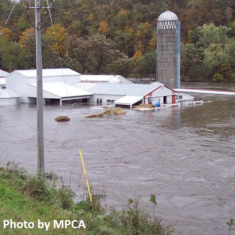
Flooding in Minnesota

Environmental Quality Board Meeting September 15, 2021 

We invite you to join the Environmental Quality Board (EQB) at their next meeting on September 15, 2021 from 1:00 pm - 4:00 pm.

In light of the COVID-19 pandemic, the EQB will convene its September Board meeting virtually through the Webex platform. Instructions for connecting to Webex are available here.

Access link to September 15, 2021 Board Meeting

September 2021, EQB Meeting Packet

Accessibility: This material can be provided in different forms, like large print, braille, or on a recording. Please contact EQB staff by email at least one week prior to the event at to arrange an accommodation.

From the Board Packet:

Environmental Quality Board meeting agenda item 

4. Approval of resolution to implement a pilot program for integrating climate change information into the Environmental Review Program**
The Board will consider passage of a resolution directing EQB staff to implement a pilot program to evaluate revisions to the Environmental Assessment Worksheet (EAW) form that include questions for
greenhouse gas quantification and assessment as well as adaptation and resiliency information.
Presenter: Denise Wilson, Environmental Review Director, EQB (denise.wilson@state.mn.us)Materials enclosed:
 Project background (page 5)

 Resolution (page 6)

 Revised EAW form – draft (page 10)

 Revised EAW guidance – draft (page 23)
 

Public comment on agenda item 4 
The Board welcomes public comment on the resolution. 

Procedure and guidelines for giving public comment: 

 If you wish to speak, please indicate in the WebEx chat that you would like to make public comment.
Commenters are taken on a first-come, first-served basis.

 Your remarks will be limited to two (2) minutes to ensure there is equal opportunity for the public to
comment. When necessary, due to the number of people who want to address the Board, the Chair
may limit commenters’ time for remarks.

 When the Chair calls on you to speak:

oIntroduce yourself before beginning your comment.

oPlease keep your remarks to those facts which are relevant and specific, as determined by the Chair, to the agenda item at hand.

oPlease be respectful of Board members, staff, and other meeting participants. Avoid questioning motives. Personal attacks will not be tolerated.

 Please note that the Chair will use their discretion for directing public comment to ensure the Board’s ability to effectively conduct business.
 You may also submit a written comment. Written comments will be reviewed after the meeting and included in the next Board meeting packet.

The latest perspective from our friends at the Minnesota Center for Environmental Advocacy:

Conversations we’ve had in the past week strongly suggest that the EQB is likely to approve a pilot project, rather than implement the changes broadscale right away. Although MCEA would still prefer immediate broadscale adoption, after gaining more information about the pilot, we think it is still a positive step.  The pilot proposal includes a revised climate analysis that is more robust than the last proposal and is consistent with the analysis MCEA has been pushing for all along. We have also been assured that the pilot is a step in implementation, not a delay tactic, and that environmental advocates will have the ability to be involved as the pilot proceeds. 

We still want to push the EQB not to delay, but we will also add some talking points about the pilot to ensure that if selected, it is completed quickly and is as robust and useful as possible. Ultimately, so long as a short-term pilot is adopted, we will still consider it a win. 

Remember, Minnesota is far from on track for meeting the goals of the 2007 climate legislation mandating reduction of greenhouse gas emissions.


Letter to Someone Living Fifty Years from Now

Most likely, you think we hated the elephant,
the golden toad, the thylacine and all variations
of whale harpooned or hacked into extinction.

It must seem like we sought to leave you nothing
but benzene, mercury, the stomachs
of seagulls rippled with jet fuel and plastic. 

You probably doubt that we were capable of joy,
but I assure you we were.

We still had the night sky back then,
and like our ancestors, we admired
its illuminated doodles
of scorpion outlines and upside-down ladles.

Absolutely, there were some forests left!
Absolutely, we still had some lakes!

I’m saying, it wasn’t all lead paint and sulfur dioxide.
There were bees back then, and they pollinated
a euphoria of flowers so we might
contemplate the great mysteries and finally ask,
“Hey guys, what’s transcendence?”   

And then all the bees were dead. 

Monday, September 13, 2021

Which should it be: the filibuster or the Senate

I am hereby proposing that we eliminate, in a legal fashion, the United States Senate. In its place we establish a Unicameral legislature. The Minnesota Legislative Reference Library has issued guides on the subject. I haven’t even skimmed through them yet, but I assume the issues would be comparable at a national and state level.

We have now reached the point where the Supreme Court of the United States has little to no credibility with much of the citizenry because of political chicanery and bias. Congress has been in gridlock for too long, and we’re at a point where the  Senate refuses to change its rules the allow legislation to be passed by a majority. Meanwhile, we’ve had several presidents serve who have won less than the majority of the popular vote. NO DAMN WONDER WE’RE AT EACH OTHERS’ THROATS! We’re constantly being conned and screwed by our  “political leaders.”

U. S. Capitol building

As an alternative, the Senate could modify its rules and eliminate the filibuster. One Senator should not be enabled to bring progress to a halt. That makes US ruled by men, not laws, and causes our shining city on a hill to slide downhill and sink in the swamp. If regulatory agencies are subject to regulatory capture, too many of our legislative bodies have been subject to corporate/oligarchic capture. It’s time to muck out the barns the politicians have fouled, unless they undertake the cleanup themselves.


A Poem for the Cruel Majority


The cruel majority emerges!

Hail to the cruel majority!

They will punish the poor for being poor.
They will punish the dead for having died.

Nothing can make the dark turn into light
for the cruel majority.
Nothing can make them feel hunger or terror.

If the cruel majority would only cup their ears
the sea would wash over them.
The sea would help them forget their wayward children.
It would weave a lullaby for young & old.

(See the cruel majority with hands cupped to their ears,
one foot is in the water, one foot is on the clouds.)

One man of them is large enough to hold a cloud
between his thumb & middle finger,
to squeeze a drop of sweat from it before he sleeps.

He is a little god but not a poet.
(See how his body heaves.)

The cruel majority love crowds & picnics.
The cruel majority fill up their parks with little flags.
The cruel majority celebrate their birthday.

Hail to the cruel majority again!

The cruel majority weep for their unborn children,
they weep for the children that they will never bear.
The cruel majority are overwhelmed by sorrow.

(Then why are the cruel majority always laughing?
Is it because night has covered up the city's walls?
Because the poor lie hidden in the darkness?
The maimed no longer come to show their wounds?)

Today the cruel majority vote to enlarge the darkness.

They vote for shadows to take the place of ponds
Whatever they vote for they can bring to pass.
The mountains skip like lambs for the cruel majority.

Hail to the cruel majority!
Hail! hail! to the cruel majority!

The mountains skip like lambs, the hills like rams.
The cruel majority tear up the earth for the cruel majority.
Then the cruel majority line up to be buried.

Those who love death will love the cruel majority.

Those who know themselves will know the fear
the cruel majority feel when they look in the mirror.

The cruel majority order the poor to stay poor.
They order the sun to shine only on weekdays.

The god of the cruel majority is hanging from a tree.
Their god's voice is the tree screaming as it bends.
The tree's voice is as quick as lightning as it streaks across the sky.

(If the cruel majority go to sleep inside their shadows,
they will wake to find their beds filled up with glass.)

Hail to the god of the cruel majority!
Hail to the eyes in the head of their screaming god!

Hail to his face in the mirror!

Hail to their faces as they float around him!

Hail to their blood & to his!

Hail to the blood of the poor they need to feed them!
Hail to their world & their god!

Hail & farewell!
Hail & farewell!
Hail & farewell!


********************************************
Thanks for visiting. Come again when you can.
Please be kind to each other while you can.

Tuesday, August 17, 2021

Some Truth Is Out There!

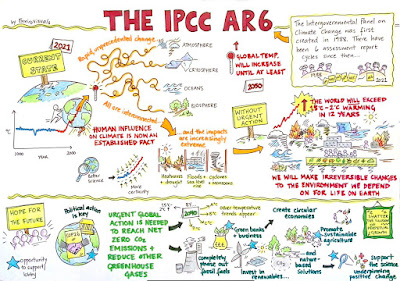
Earlier this month we promised (threatened?) to share more resources related to understanding and responding to the Intergovernmental Panel on Climate Change’s [IPCC] recent report. Yesterday we suggested that taking a careful look at YES! magazine’s How Much Is Enough? online coverage is strongly recommended. Today we spent some time looking at some of the sources they cite because, quite frankly, we have no idea what in hell per capita use of 1300 watts, compared to 9000 watts, actually translates to in the real world. In the process, we found some interesting, and potentially helpful, resources. But, before we get to them, here’s a resource that was shared in response to a Tweet we made yesterday about communicating science so real folks can understand what’s the message.

IPCC AR6
click to bigify and see source

Now, one information and analysis source of which we weren’t previously aware is the International Energy Agency’s World Energy Model, in particular the Sustainable Development Scenario which relates energy development to the United Nation’s Sustainable Development Goals. (To be candid, we’ve read some allegations that  the IEA isn’t always the sharpest tool in the shed, so we take their conclusions with some skepticism.) Closing this particular loop, the YES! assessment notes

For energy distribution, researchers at the International Institute for Applied Systems Analysis say the minimum global energy flow required to achieve universal decent living standards could be as low as 500 watts per capita. Less draconian, the International Energy Agency projects that the U.N.’s Sustainable Development Goals can be achieved worldwide with an energy flow of about 1,300 watts per capita—about what Cuba uses.

Being the curious type, and long a student and proponent of Systems Analysis, we went to  the IIASA web site and discovered, inter alia, their Defense of the natural realm. It’s among the few pieces of better, if not actually good, news we’ve encountered this week. [We know, it’s only Tuesday.]

Options Magazine, Summer 2021: At a crucial moment for beleaguered nature, IIASA research is showing that we can reverse biodiversity loss. It will need an effort that is grand in scale and focused where rewards are greatest.

Perhaps it is a coincidence, perhaps a sign of changing times, but we don’t find it to be too much of a stretch to conclude that the IIASA biodiversity showing aligns nicely with information we learned last night during a webinar hosted by Trout Unlimited [TU], an organization to which we’ve belonged for most of our adult life. TU was announcing their strategic plan update. Here’s a hint

A New Direction.

The harder we work, the more we realize how much work remains.   

So we’re retooling, recruiting, and reinforcing. With a new strategic direction over the next five years and beyond, we will build on the great work of those who came before us.

We will recruit a larger, younger, and more diverse array of communities and conservation advocates willing to roll up their sleeves.

 It’s beginning to look as though there may be more of US than there are of those who would do little more than exploit the Earth to enrich themselves. That’s something I want to believe!


Trout


I do my best 
to keep pointlessness 
at bay. But here, 
wet above my 
knees, I let it fly. 
Here, hot and cold, 
fingers thick with 
thinking, I try to 
tie the fly and look 
for the net, loosening 
the philosophical   
knot of why I came 
here today, not yet 
knowing whether 
I’ll free or fry 
the rainbows 
and browns once 
they’re mine.


********************************************
Thanks for visiting. Come again when you can.
Please be kind to each other while you can.
Monday, August 16, 2021

When enough is...

If you’ve been following the news recently, you may have noticed the consequences of the lack of an effective transition plan for Afghanistan. Lots of innocent folks are likely to get hurt because of that failure, regardless of whose responsibility it was.

During the past several weeks there also have been significant communication failures related to vaccination, masks, public health, COVID-19 and school reopening. We’ve been exposed to a confusing mixture of guidance versus mandatory; the role and effectiveness of vaccines compared to masks; protecting an individual compared to those around them; and the significance of the Delta variant.

Too many professionals seem insufficiently aware of the number of people with limited attention spans and comprehension of issues, especially if they’re complex.

Fortunately, there are communicators who appear to be doing a better and better job of connecting the dots in ways that make it easier for ordinary folks to understand. (Unfortunately, these days, that often means that more of those folks won’t / don’t like the information they’re now able to comprehend.) An organization that, in my opinion, excels at presenting problems and solutions for the world in which we live is YES! magazine. Their Fall 2021 issue focuses on How Much Is Enough? It is definately worth your time and  effort to read and think about because, I believe, one way or another that’s a question each of US is going to have to find an answer to and then see how much similarity there is among US. The vastly increased levels of inequity that have been created during the past several decades are likely to complicate our ability to find common ground among our answers. The sooner we start, the more time we’ll have to work out our differences.


Enough (credit YES! magazine)


The World Is Too Much With Us


 - 1770-1850


The world is too much with us; late and soon,
Getting and spending, we lay waste our powers;
Little we see in Nature that is ours;
We have given our hearts away, a sordid boon!
This Sea that bares her bosom to the moon;
The winds that will be howling at all hours,
And are up-gathered now like sleeping flowers,
For this, for everything, we are out of tune;
It moves us not.—Great God! I'd rather be
A pagan suckled in a creed outworn;
So might I, standing on this pleasant lea,
Have glimpses that would make me less forlorn;
Have sight of Proteus rising from the sea;
Or hear old Triton blow his wreathèd horn.


********************************************
Thanks for visiting. Come again when you can.
Please be kind to each other while you can.
Tuesday, June 29, 2021

Climate crisis grows water woes

Yesterday, for the first, but we hope not the only, time this year, we saw a male scarlet tanager at the feeders. His fiery red plumage made us glad we were in Minnesota and not the normally cool and wet northwestern states currently suffering temperatures well in excess of 100℉. Up until we saw him, we feared his kind might have suffered a climate crisis triggered fate similar to the bluebirds that are still missing from our nesting boxes this year.

male scarlet tanager
Photo by J. Harrington

Today's Star Tribune flags another climate crisis issue that may spill over into Minnesota, The new water wars. The linked story references  California and Oregon battling over the water remaining in the Klamath River. Then it notes

President Joe Biden and congressional leaders should be sounding a national alarm. Biden is supporting a $973 billion Bipartisan Infrastructure Framework that allocates $55 billion for clean drinking water infrastructure to eliminate lead in the nation's service lines and pipes — an essential investment. Yet the framework allocates only $5 billion for Western water storage — an inadequate sum for upgrading aging dams, canals and pipelines to improve flows and reduce losses.

Nowhere does there appear to be a mention of the need to stop polluting what has become an increasingly critical and limited resource: our water supply, both surface and ground. As lead pipes are to urban water systems, nitrates from fertilizer and manure from CAFOs are to water sources and supplies on which those urban systems depend. If we consider the environmentalists' phrase "reduce, reuse, and recycle" and apply it to water, we need to substantially reduce the wastes that prevent almost half of our surface waters from meeting water quality standards. That's a less dangerous tactic than reusing and recycling contaminated water, even after it's been treated.

Ask yourself these questions if you think Minnesota and the rest of the country have approached adapting to our climate crisis in a sensible way. Will the Great Lakes Compact be able to withstand the political power of "Big Ag" when the Ogallala aquifer is gone and California's Central Valley isn't growing avocados and almonds due to permanent drought? As an foreshadow, when the climate crisis is producing unprecedented heat waves on the west coast, and much of Minnesota is experiencing drought, has Minnesota's state government allowed a foreign company to draw excessive water from our state's wild rice lakes, lakes supposedly protected under treaty rights, so that a demonstrably unnecessary tar sands pipe line can be constructed? Are the state and federal governments doing little to nothing to stop that pipe line? Is this the kind of governance than can get many of US killed prematurely as the climate crisis worsens? Don't we need to do better with whom we elect?

[UPDATE: New rules for Minnesota’s large animal feedlots to be relaxed under compromise legislation]


The Drought


The clouds shouldered a path up the mountains
East of Ocampo, and then descended,
Scraping their bellies gray on the cracked shingles of slate.

They entered the valley, and passed the roads that went
Trackless, the houses blown open, their cellars creaking
And lined with the bottles that held their breath for years.

They passed the fields where the trees dried thin as hat racks
And the plow’s tooth bit the earth for what endured.
But what continued were the wind that plucked the birds spineless

And the young who left with a few seeds in each pocket,
Their belts tightened on the fifth notch of hunger—
Under the sky that deafened from listening for rain.


********************************************
Thanks for visiting. Come again when you can.
Please be kind to each other while you can.

Thursday, June 17, 2021

Minnesota H2O: who's in charge?

It's been quite awhile since we've had any rain around here. From what I can read, it's much worse west and south of here. Meanwhile, many states, including Minnesota, continue to let agriculture pollute the crap (sorry, couldn't resist) into their surface and groundwaters. In Minnesota, and a number of other  states, we compound the problem by failing to adopt and apply rigorous discharge and design standards for mining activities. The last time I took a look, the Great Lakes Compact states were interpreting and applying policy kind of loosely deciding who's eligible to tap into that fresh  water resource.

who's responsible for protecting Minnesota waters
Photo by J. Harrington

Once upon a time, both Will Rogers and Mark Twain shared a sentiment about the value of buying land. Fresh water in potable, swimmable, or fishable condition is an even rarer resource. So, back in 2011, the Water Resources Center responded to a 2009 directive from the Minnesota Legislature by developing and publishing The MINNESOTA WATER SUSTAINABILITY FRAMEWORK.

The Framework identifies ten major issues that present the challenges, and solutions to those challenges, that must be addressed if water sustainability is to be achieved in Minnesota. These issues (labeled A – J) fall within the three areas that define sustainability: environmental, economic, and social. 

One of those major issues proposes a desired future described as "Governments, institutions, and communities working together to implement an overarching water sustainability policy that is aligned with all other systems policies (land use, energy, economic development, transportation, food and fiber production) through laws, ordinances, and actions that promote resilience and sustainability." The problem is that:

Minnesota’s waters are governed by hundreds of laws, regulations, rules, and ordinances involving more than 20 federal agencies, seven state agencies, and hundreds of local units of government. 

I doubt very seriously that we're much, if any, closer to the desired future proposed than at the time the Framework was drafted. In fact, what we're seeing more and more of is the Minnesota Legislature attempting to act as both the legislative and the executive branch of government. Check it's actions in regard to mining and environmental regulations; the governor's emergency powers; mutual aid support among local units of government; and, no doubt, other issues legislators find critical to their reelection (Clean Cars, anyone?).

Meanwhile, if anyone can point me toward specific legislative action taken in support of implementing the Water Sustainability Framework that body directed be prepared, I'll be pleasantly surprised. Do you remember the old advice about the time to lock the barn door? Perhaps we should require candidates for elective office to sign a pledge at least acknowledging their familiarity with that advice before they can be considered a legitimate candidate for any office.


Water


The water understands 
Civilization well; 
It wets my foot, but prettily, 
It chills my life, but wittily, 
It is not disconcerted, 
It is not broken-hearted: 
Well used, it decketh joy, 
Adorneth, doubleth joy: 
Ill used, it will destroy, 
In perfect time and measure 
With a face of golden pleasure 
Elegantly destroy.


********************************************
Thanks for visiting. Come again when you can.
Please be kind to each other while you can.

Monday, June 14, 2021

On Flag Day

‘Patriotism is the last refuge of a scoundrel.’ 

Patriotism having become one of our topicks, Johnson suddenly uttered, in a strong determined tone, an apophthegm, at which many will start: ‘Patriotism is the last refuge of a scoundrel.’ But let it be considered, that he did not mean a real and generous love of our country, but that pretended patriotism which so many, in all ages and countries, have made a cloak for self-interest.


The Short, Fraught History of the ‘Thin Blue Line’ American Flag 

thin blue line flag
thin blue line flag


Trigger Guard

Everyone I ever loved is standing 
on a platform with a gun. 

In the cartoon version, a flag pops 
with the word 'bang.' 

In the soap opera version, 
my face turns the color of merlot. 

In the haiku version, 
metal gleams in the narrow shadow.

In the Republican version, 
two guns wrap themselves in a single flag.

In the Langpo version.
idolatry yips yaps paradigm the. 

In my diary version,
I wonder why everyone hates me.

In the indie film version,  
a gun flickers over a mumbled tune.

In the Chekhov version, 
(well, you already know.) 

In the 10 o'clock news version,
the crisis in violence is rising.

In the action film version,
a shot means profits are rolling.

In the catalog version,
the smoke's hue is a burnished moss. 

In the teen movie version,
a nerdy gun removes her glasses.

In the lucid dream version,
I kiss a muzzle and it blossoms.

In the music video version,
a gun turns into a mouth.


********************************************
Thanks for visiting. Come again when you can.
Please be kind to each other while you can.

Tuesday, April 27, 2021

Too little? Too late? Too bad?

Today we're going to begin with a request to turn on your imagination full power. The poem we're sharing was written more than two centuries ago, before neoliberalism, before global capitalism, before space flight, before the invention of the internet and social media platforms and cell phones. 

In the time since the poem was written, humans have triggered climate breakdown; a sixth extinction; worldwide pandemics which, fortunately, haven't yet approached mortality levels comparable to the Black Death; and the pollution and/or destruction and/or disruption of much of the natural systems on which all life on earth depends.

Thus far humanity and its global leaders are failing miserably to meet the greenhouse gas reduction targets set in 2015; failing to share essential resources to bring the pandemic under control; failing to institute adequate safeguards on mining and agriculture to enable critical, essential, supplies to be safely delivered in adequate quantities. increasingly failing to teach tolerance and critical thinking to those in school; and providing, misguidedly, too much emphasis on individual freedom and not enough on each individual's responsibility to family and community and home planet.

So, to accompany the words of an exceptional poet of two centuries back, we think it might help to add the words of a contemporary young woman, Greta Thunberg, in her recent testimony before US Congress:

The gap between what we are doing and what actually needs to be done in order to stay below the 1.5 degrees Celsius targets is widening by the second. And the simple fact, an uncomfortable fact is that if we are to live up to our promises and commitments in the Paris Agreement, we have to end fossil fuel subsidies, stop new exploration and extraction, completely divest from fossil fuels, and keep the carbon in the ground now. Especially the US taking into account the fact that it is the biggest emitter in history.

In your now warmed up imaginations, what do you imagine Wordsworth would write these days?


national poetry month


The World Is Too Much With Us


The world is too much with us; late and soon,
Getting and spending, we lay waste our powers;—
Little we see in Nature that is ours;
We have given our hearts away, a sordid boon!
This Sea that bares her bosom to the moon;
The winds that will be howling at all hours,
And are up-gathered now like sleeping flowers;
For this, for everything, we are out of tune;
It moves us not. Great God! I’d rather be
A Pagan suckled in a creed outworn;
So might I, standing on this pleasant lea,
Have glimpses that would make me less forlorn;
Have sight of Proteus rising from the sea;
Or hear old Triton blow his wreathèd horn.


********************************************
Thanks for visiting. Come again when you can.
Please be kind to each other while you can.