Showing posts with label wild rice. Show all posts

Sunday, February 10, 2019

How Minnesotan!

At Boom Island Park on the Mississippi River in Minneapolis, with the temperature hovering in the single digits and snow falling, Senator Amy Klobuchar, one of Minnesota's two woman US senators, has announced her candidacy for US president in the 2020 election. Here's some very interesting perspectives on her candidacy from two of Minnesota's leading political pundits, David Schultz and Eric Black. We're going to watch closely as the Democrats proceed to move toward selecting a nominee. As far as we're concerned, they self-destructed and lost the 2016 presidential election and they continue to rehash the same damn issues.

Sigurd, an essence of Minnesota, at risk to mining with Sen. Klobuchar's help?
Sigurd, an essence of Minnesota, at risk to mining with Sen. Klobuchar's help?
Photo by J. Harrington

We haven't lived in Minnesota long enough to have watched the Vikings lose the Super Bowl any of their four appearances (all in the 1970s), but we have followed politics long enough to remember Hubert Humphrey, Eugene McCarthy, and Walter Mondale all failed as presidential candidates, although two of them, Humphrey and Mondale, served as vice president.

We have long wondered if "Minnesota Nice" doesn't play all that well outside Minnesota, but then our East Coast brashness doesn't play that well with Minnesotans. The older we get, the more impatient we become with those who's observance of "the niceties" interferes with moving the ball down the field. But maybe the concept of being Minnesotan grows on one very slowly. We were reading Minnesota's quintessential poet, Robert Bly, before we started this posting and will return to his Collected Poems as soon as we push publish. Don't hold us to it but we're starting to wonder if this Minnesota or New England as home is actually a both / and rather than an or. We're not sure how that may play out on the political scene. We do believe that Minnesota has moved more toward the right than it was when we first moved here. We also recognize that we may have correspondingly moved toward the left as neoliberalism replaced the real thing.

The Great Society


Dentists continue to water their lawns even in the rain:
Hands developed with terrible labor by apes   
Hang from the sleeves of evangelists;
There are murdered kings in the light-bulbs outside movie theaters:   
The coffins of the poor are hibernating in piles of new tires.

The janitor sits troubled by the boiler,
And the hotel keeper shuffles the cards of insanity.   
The President dreams of invading Cuba.   
Bushes are growing over the outdoor grills,   
Vines over the yachts and the leather seats.

The city broods over ash cans and darkening mortar.   
On the far shore, at Coney Island, dark children   
Playing on the chilling beach: a sprig of black seaweed,   
Shells, a skyful of birds,
While the mayor sits with his head in his hands.


********************************************
Thanks for visiting. Come again when you can.
Please be kind to each other while you can.

Thursday, March 15, 2018

A plan for Minnesota's North Country

This morning we stumbled onto an essay that we believe has a whole lot of relevance for the Iron Range and the rest of Minnesota's Eighth Congressional District: THE BIG PICTURE: RESOURCE EXTRACTION. The author provides what we find to be a very telling analysis of the problems facing places like the Iron Range, and offers what we find to be an excellent core for any solutions [we would include Minnesota as a "...purple, resource-rich state..." along with the four specifically mentioned]:
To show up with a plan, I think, means this: Blue voters and politicians in the cities, state governments, and federal delegations of purple, resource-rich states like West Virginia, Pennsylvania, Michigan, and Colorado have to seize the political moment to issue a vocal, organized demand for three things: (1) ambitious, transformative investments (including for tuition relief) in community colleges and universities in declining urban and rural areas, (2) capital investments in small businesses as a foundation for economic development, and (3) a jobs program (expanded from the American Recovery & Reinvestment Act model) that meets urgent needs in these regions: such as rebuilding decaying water and wastewater infrastructure, thinning the overstocked western forests that threaten rural counties with wildfires, decontaminating waterways and land sullied by fossil fuel extraction, and treating the opioid addiction crisis.
not all treasures are underground
Photo by J. Harrington

As the Democrats move through their candidate nominating process this Spring, we hope they'll query those running to represent MN CD 8 in  Congress about what kinds of solutions they envision for the economy of northern Minnesota. We think they'd be well advised to compare answers with the plan outlined above. Then, come November, vote for the candidate, DFL or GOP, who they believe is most likely to pursue a course of better access to better education; providing small business better access to capital; and, funding for infrastructure improvements and better management of our remaining natural resources.

Although not specifically mentioned in "The Big Picture," we would also strongly recommend a two-fold approach for those who wish to see resource extraction jobs continue as at least a limited part of the economic base of the area. First, resource extraction industries should be required to implement their industries best practices, and do so in a third party certified program. This is not a complete solution to environmental impacts, but it is a more transparent solution than provided by Minnesota's underfunded, politically whip-sawed regulatory agencies. Second, the Minnesota legislature could go a long way to improving both the economy and the environment or northern Minnesota by requiring that materials used in publicly funded projects come from sustainably-sourced providers, mines, wood, and maybe even agriculture, some day. No one wins a race to the bottom, most of all those with the fewest resources to begin with. We need an economy for the rest of us.

                     Once the World Was Perfect


Once the world was perfect, and we were happy in that world.
Then we took it for granted.
Discontent began a small rumble in the earthly mind.
Then Doubt pushed through with its spiked head.
And once Doubt ruptured the web,
All manner of demon thoughts
Jumped through—
We destroyed the world we had been given
For inspiration, for life—
Each stone of jealousy, each stone
Of fear, greed, envy, and hatred, put out the light.
No one was without a stone in his or her hand.
There we were,
Right back where we had started.
We were bumping into each other
In the dark.
And now we had no place to live, since we didn't know
How to live with each other.
Then one of the stumbling ones took pity on another
And shared a blanket.
A spark of kindness made a light.
The light made an opening in the darkness.
Everyone worked together to make a ladder.
A Wind Clan person climbed out first into the next world,
And then the other clans, the children of those clans, their children,
And their children, all the way through time—
To now, into this morning light to you.


********************************************
Thanks for visiting. Come again when you can.
Please be kind to each other while you can.

Monday, February 12, 2018

Their Salmon, Our Wild Rice?

Washington State has a recovery program for Pacific salmon. Salmon are an iconic species in Washington. Mendocino California has the Salmon Restoration Program. Oregon has the Wild Salmon Center. That's the source of this assessment:
Billions of taxpayer dollars have been spent on salmon restoration efforts in the United States and Canada but few success stories have emerged. Some may yet succeed; it is still too early – only a few salmon generations’ worth of time – to discount them. But most salmon restoration efforts have failed so far because they were implemented only after salmon stocks reached low levels of abundance.
St. Louis River at Jay Cooke State Park
Photo by J. Harrington

The "Anishinaabeg have changed their management practices. The tribes routinely restore lake habitats and seed wild rice beds to ensure there is a harvest to be had the next year." That helps to protect what we currently have. It does not necessarily bring about restoration to areas where wild rice may once have been abundant but is no more. Wild rice is the official state grain of Minnesota. There is growing evidence that wild rice needs protection. A web site, Protect Our Manoomin, lists a Protect Our Manoomin Council. There are, as of this writing, more than 700 signatories to a petition to protect wild rice. We are not aware of major public relations or outreach campaigns to generate support for protecting what we have, let alone restoring what we've lost, although Winona LaDuke, of the White Earth Recovery Project, has written extensively about the significance of wild rice to her people. Is it not time to consider finding additional ways to enhance and expand the work already being done to protect and restore a Minnesota icon?


A delegation from Amnesty International is visiting Duluth today and tomorrow. Part of their agenda is to share the effects of the Mount Polley tailings dam failure and call attention to the fact that government regulators were ill prepared to protect citizens from such disasters. The wild rice that is slowly returning to the St. Louis River would be put at risk should the proposed PolyMet NorthMet project proceed as proposed. Minnesota can and should do better.

In honor of the time of year and today's theme, please enjoy both Original Local and today's poem:

                     Last Snow


Dumped wet and momentary on a dull ground
that’s been clear but clearly sleeping, for days.
Last snow melts as it falls, piles up slush, runs in first light
making a music in the streets we wish we could keep.
Last snow. That’s what we’ll think for weeks to come.
Close sun sets up a glare that smarts like a good cry.
We could head north and north and never let this season go.
Stubborn beast, the body reads the past in the change of light,
knows the blow of grief in the time of trees’ tight-fisted leaves.
Stubborn calendar of bone. Last snow. Now it must always be so.


********************************************
Thanks for visiting. Come again when you can.
Please be kind to each other while you can.

Thursday, October 19, 2017

Tired of seeing red?

The areas in red indicated rivers and lakes that have been classified as "impaired." These waters don't meet the standards necessary to support the uses, such as swimming, designated for them. About 40% of Minnesota's waters fail to meet required standards, and the amount of red (not counting Lake Superior) generally increases from north to south and east to west.

impaired waters, 2018 draft

Western and southern Minnesota are where agricultural land use predominates. Public waters in Minnesota are required, as of the beginning of next month, to have a 50 foot buffer (or alternative conservation measures) to reduce the amount of pollutants getting into our public waters from farm fields. The map below shows, in shades of blue, the estimated percent of parcels in each county meeting buffer requirements. Lighter shades denote lower/lesser levels of compliance. The degree of blue is sort of the inverse of the amount of red. The press release noted that the total compliance is estimated at 94%. Unfortunately, many of those counties where agriculture predominates are also those with the lowest percentage compliance.

estimated compliance with buffer requirements

The Minnesota Pollution Control Agency has proposed a revised water quality standard for wild rice waters. Public comments can be submitted until November 22 and public hearings start next week. (If you're an activist advocate for water quality and/or wild rice, you're entitled to wonder if there's a conspiracy, since hearings for Enbridge's proposed "Line 3" pipeline are going on now.) The proposed standard, if adopted, will be more complex and labor intensive to establish for each wild rice water.

Since the Agency is already under review by the US Environmental Protection Agency because
"The Minnesota Pollution Control Agency (MPCA) and the EPA agreed in 2013 that Minnesota had a significant problem with expired and out - of - date NPDES permits that failed to control pertinent parameters. Despite a formal Metallic Mining Joint Priority Agreement with EPA, MPCA has made virtually no progress in addressing the backlog of out - of - date mining permits that provide inadequate control of pollutants."
we're hesitant to assume the Agency would have the staff and other resources needed to implement an more complex version of a standard that's been on the books for years, but wasn't enforced until recently. The intent of federal legislation enacted in 1972, with a Minnesota Congressman as a chief author, was that the discharge of toxic pollutants in toxic amounts would cease by 1985. Forty-five years after enactment, more than three decades after the 1985 deadline, are we still moving backwards? Some of us, but, we hope, far from the majority, wonder if this philosophy means we should post speed limits, but eliminate all traffic cops, and then see what happens. Maybe we can turn more of northeast Minnesota's waters red on the maps. Is that what we really want?

Let Muddy Water Sit and It Grows Clear


It’s clear when, in membranous
              predawn blue
I enter pines, mind on
              embryo in amnion,
my tracks preceded
              by those of the dog,
his by a doe’s, hers by six
              hours of snow, it’s clear then
the distance between
              my affections and ability
to touch their sinuosity
              is itself a felt silence
called sun. Sun rises
              without provocation
over a frozen stream that frustrates
              reflection, but will
by the time a pulse is palpable,
              have thawed and grown
clear again, permitting me to see
              a tree surface, distort, flow.


********************************************
Thanks for visiting. Come again when you can.
Please be kind to each other while you can.

Thursday, January 26, 2017

Gloom, doom, degraded water quality and #phenology

Late last year, I read Kurt Fausch's For the Love of Rivers. It was an early Christmas present from the Better half. One of the fascinating things I learned is that "on average, fully a quarter of the annual energy needs (calories) for the ten species of birds that feed in the riparian forest were supplied by the small adult aquatic insects that emerged from Horonai Stream." [p. 63] Maybe one of you can bring this to the attention of Minnesota Audubon? The crossover between air and water, birds and fish, needs more engagement by local environmental organizations that too rarely talk to each other.

does Minnesota have too many trout streams?
Photo by J. Harrington

Since the book was published fairly recently, it's not clear whether Minnesota Pollution Control Agency staff took such factors into account when they proposed downgrading 101 stream reaches and their ability to support aquatic life (macroinvertebrates and fishes). (I suspect not.) If enough people (more than 25) don't request a public hearing, these resources will be lost, probably forever, and the waters to which they are tributary may remain forever degraded without due consideration and public input.

If you care about such things, follow this link and request that a public hearing on these, and related changes, be held. As Water Legacy notes in their suggest hearing request language "The Public Notice for the proposed TALU rules did not say that any water bodies would be downgraded if the rules were approved, let alone more than 100 waters. (SONAR, Attachment A)."

One of my concerns is that, as Minnesota's water quality classifications become more fragmented and complex (think proposed wild rice standards and classifications), the harder it becomes for the Agency to fund and assign adequate staff resources, the easier it becomes for industry to challenge a particular designation, and the harder it becomes for the public (think swimmers, anglers, families) to understand and affect these rules intended to protect our environment. It seems to me that's kind of like setting up something like a "Citizens United" for environmental protection rules.

As long as I'm back in an Eeyore mode, I noticed this announcement today:
Jan. 20 -25 has been the gloomiest since solar radiation records began at the St. Paul campus observatory at the U of MN in 1963.
That doesn't even begin to account for the events in Washington, D.C. It is easier to affect governmental events closer to home in Minnesota, at least on a good day. Click on this link and ask for the hearing. Agriculture and mining are attacking the quality of Minnesota's waters. Don't give them a free ride. Thanks. (Yes, I did fill out the form and send it off asking for a hearing.)

In Blackwater Woods


By Mary Oliver


Look, the trees
are turning
their own bodies
into pillars
of light,
are giving off the rich
fragrance of cinnamon
and fulfillment,
the long tapers
of cattails
are bursting and floating away over
the blue shoulders
of the ponds,
and every pond,
no matter what its
name is, is
nameless now.
Every year
everything
I have ever learned
in my lifetime
leads back to this: the fires
and the black river of loss
whose other side
is salvation,
whose meaning
none of us will ever know.
To live in this world
you must be able
to do three things:
to love what is mortal;
to hold it
against your bones knowing
your own life depends on it;
and, when the time comes to let it
go,
to let it go.

********************************************
Thanks for visiting. Come again when you can.
Please be kind to each other while you can.

Tuesday, August 9, 2016

August update #phenology

I'll concede this first item is a little questionable. It's definitely seasonal, but maybe not so natural, more's the pity. Today is Primary Election Day in Minnesota. I voted. Although I arrived after the "morning rush," I was only number 30 in our small township. I've long been an adherent of the precept "If you didn't vote, you can't complain." I keep finding so much to complain about that I don't want to loose my complaining ticket. If you need info, try the Secretary of State's site.


The second item in our update is an internet discovery found while looking for something else. (Such serendipity is also one of the reasons I love visiting independent bookstores.)  The Great Lakes Indian Fish & Wildlife Commission [GLIFWC] has a 2016 phenology calendar. Since the GLIFWC is both indigenous and local, we hereby update our August 1 listing of Sturgeon Moon to the GLIFWC's manoominike-giizis, Ricing Moon. We've already mentioned goldenrod blooming, but now we can also know to look for nighthawks migrating.

August goldenrod
August goldenrod
Photo by J. Harrington
As additional Minnesota phenology resources, we can add that the Freshwater Society's 2017 Minnesota Weatherguide Environment calendars are now available! You no doubt are already familiar with the Minnesota Phenology Network's web site.

The format of the GLIFWC phenology calendar seems like it would be a good framework to build a Northern Rivers phenology. (I'm not sure how far south of Minnesota we need to go before we're free of rivers that ice up.) Events that I can think of of the "top of my head" include:
  • Spring -- ice out, flow increase
  • later Spring, early Summer -- snow melt, high water, flooding
  • Summer -- torrential rains, flooding
  • Autumn -- low flows
  • late Autumn, early Winter -- ice up
These need refinement and revision, but they're a start. Events like fish spawning will vary by species but can be added as we go along. Suggestions for improvement and additions gratefully accepted.

Speaking of refinements and additions, no sooner had we proposed curating a list of River poems, that the Academy of American Poets released their curated list of Poems on Water for Teachers. There must be more than humidity in the air this August.

My Mother Goes to Vote


By Judith Harris


We walked five blocks
to the elementary school,
my mother’s high heels
crunching through playground gravel.
We entered through a side door.

Down the long corridor,
decorated with Halloween masks,
health department safety posters—
we followed the arrows
to the third grade classroom.

My mother stepped alone
into the booth, pulling the curtain behind her.
I could see only the backs of her
calves in crinkled nylons.

A partial vanishing, then reappearing
pocketbook crooked on her elbow,
our mayor’s button pinned to her lapel.
Even then I could see—to choose
is to follow what has already
been decided.

We marched back out
finding a new way back down streets
named for flowers
and accomplished men.
I said their names out loud, as we found

our way home, to the cramped house,
the devoted porch light left on,
the customary meatloaf.
I remember, in the classroom converted
into a voting place—
there were two mothers, conversing,
squeezed into the children’s desk chairs.


********************************************
Thanks for visiting. Come again when you can.
Please be kind to each other while you can.

Monday, August 8, 2016

Undermining Water Quality #CleanWaterWednesday

I know it's only Monday, but AGATE magazine published yesterday a Stephanie Hemphill story that Minnesota tweaks wild rice rule, a version of which had appeared in MinnPost in late July, and on Saturday, the Minnesota DFL Central Committee deferred action on a resolution opposing sulfide mining. I need to get this off my chest.

Although we're pleased that the Minnesota Pollution Control Agency (MPCA) is working to improve the scientific validity of its sulfate formula to protect wild rice, we are reminded of some concerns expressed in My Minnesota when MPCA proposed a site specific approach to water quality standards. Let's take a moment to elaborate on the situation:
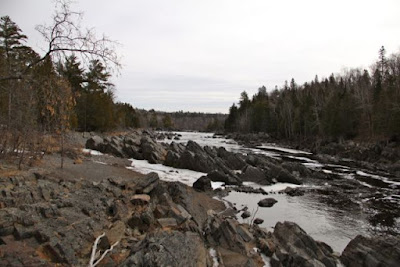
St. Louis River, Jay Cooke State Park
Photo by J. Harrington

  • MPCA "has put most of the agency’s mining permitting work 'on pause' to concentrate on the sulfate standard review." [AGATE, 8/7/16] This suggests resource constraints that could well hinder site specific water quality standards setting. Will Minnesota's legislature fund the positions needed if the new and improved sulfate standard is adopted?

  • MPCA already has a notable backlog of taconite mining related discharge permits that need to be updated or rewritten. How many more years will go by while standards for each site are set to enable mining permits to be updated?

  • The Clean Water Act amendments became law in 1972. MPCA is still working on setting water quality standards with Total Maximum Daily Loads for most of Minnesota's waters.
    PLEASE NOTE: through the rest of this month, you can comment on MPCA's latest update to Minnesota's impaired waters list. Will Minnesota, despite Legacy Act funding be faced with several more generations delay in attaining the 1983 interim water quality goal of "fishable-swimmable" waters?

  • The Minnesota Legislature, particularly the Iron Range delegation, is being scrutinized for their participation in MPCA's water pollution control activities. There's reason to question whether this will change if MPCA retains its federally delegated authority to issue discharge permits or set water quality standards.


Minnesota's North Shore of Lake Superior
Photo by J. Harrington

Back in 1980, The Minnesota Pollution Control Agency approved a statewide water quality management plan in accordance with Section 208 of the Clean Water Act amendments. That document noted:
6. Mining: The mining study was very limited in scope. It consisted mainly of a field survey by the MPCA to investigate possible sedimentation from abandoned waste piles. This narrow scope was chosen because other mining non-point source issues--active iron ore and taconite mining, peat mining, and potential cop- per/nickel mining--were already under investigation by other state agencies. The strategy adopted by the MPCA staff was to wait for the results of these other studies and follow up, if necessary, in future 208 planning.
As this is being written, My Minnesota awaits a response from the Legislative Reference Library to learn if they know of any updates to the 1980 plan. It would seem, however, that Minnesota has a long-standing tradition of deferring action on mining-related water pollution issues. How long did it take to resolve the Reserve Mining discharges? In Massachusetts, local environmental organizations had to sue the federal Environmental Protection Agency and the state government to help protect Cape Cod's fresh water supply. Will it come to something like that in Minnesota?

I wish I felt we had made progress. We might if we would stop trying to win a race to the bottom on a global scale. The public sector in Minnesota alone has spent hundreds of millions of dollars to treat polluted water. It faces similar costs in the future. Those investments will be wasted if industry and agriculture continue to evade their responsibilities to protect our water resources. It's time for more leaders like Judge Lord on Reserve and Governor Perpich, who hoped Minnesota would lose a Wisconsin law suit requiring the Twin Cities to clean up its combined sewer overflows. The Twin Cities rose to the challenge. In 1974, Reserve Mining's Chairman answered Judge Lord's request to clean up their discharge "We don't have to, we won't." More than 40 years later, Governor Dayton "said that U.S. Steel had told state regulators they 'wouldn’t accept a 10 mg/l sulfate standard.'” Clearly, the mining industry continues to evade their environmental and social responsibilities, aided and abetted by Minnesota's legislature. I'm not sure that a Minnesota water ethic will do much to change industry's, or the legislature's attitude.That's not fair to those who meet and go beyond in their efforts to make Minnesota a sustainable state with clean water that supports the state's official grain.

The Theft Outright


By Heid E. Erdrich


          after Frost

We were the land's before we were.

Or the land was ours before you were a land.
Or this land was our land, it was not your land.

We were the land before we were people,
loamy roamers rising, so the stories go,
or formed of clay, spit into with breath reeking soul—

What's America, but the legend of Rock 'n' Roll?

Red rocks, blood clots bearing boys, blood sands
swimming being from women's hands, we originate,
originally, spontaneous as hemorrhage.

Un-possessing of what we still are possessed by,
possessed by what we now no more possess.

We were the land before we were people,
dreamy sunbeams where sun don't shine, so the stories go,
or pulled up a hole, clawing past ants and roots—

Dineh in documentaries scoff DNA evidence off.
They landed late, but canyons spoke them home.
Nomadic Turkish horse tribes they don't know.

What's America, but the legend of Stop 'n' Go?

Could be cousins, left on the land bridge,
contrary to popular belief, that was a two-way toll.
In any case we'd claim them, give them some place to stay.

Such as we were we gave most things outright
(the deed of the theft was many deeds and leases and claim stakes
and tenure disputes and moved plat markers stolen still today . . .)

We were the land before we were a people,
earthdivers, her darling mudpuppies, so the stories go,
or emerging, fully forming from flesh of earth—

The land, not the least vaguely, realizing in all four directions,
still storied, art-filled, fully enhanced.
Such as she is, such as she wills us to become.


********************************************
Thanks for visiting. Come again when you can.
Please be kind to each other while you can.

Wednesday, March 25, 2015

Environmental justice: sustainable wild rice?

Do you know that wild rice is Minnesota's state grain, or that Renewing America's Food Traditions identifies Minnesota, Wisconsin, Michigan and part of southern Canada, as Wild Rice Nation? Are you aware that many of the Native Americans in that region depend on wild rice (Manoomin) harvesting as a way to sustain their culture? Do you think it's reasonable that highly profitable mining companies, that can afford to pay their executives millions of dollars, claim they can't afford to meet water quality standards that would protect wild rice, because the global market for iron ore is down. Do you know that taconite processing is a measurable contributor (p 18) to Minnesota's mercury water quality issues? These questions, and many like them, are going to become more and more important over the next few years. The answers aren't always going to be simple and straight forward, because the issues and the science are complex. We're going to need to learn how to better address these kinds of complex concerns as we build a sustainable Minnesota.

MPCA's Minnesota wild rice waters

One of the issues that I find particularly worrisome is how, if the site specific approach proposed by MPCA is accepted, can they then justify not using similar site specific standards for all the other parts of the state that are economically affected by water quality requirements, or air quality requirements for that matter. Do we let a huge hog farm off the hook because it would cost too much to treat the hogs' raw sewage and it only discharges to a ditch? How can the same governor propose buffers to protect agricultural waters from polluted runoff and think that  the Minnesota legislature will ever approve the funding needed for MPCA to staff this new approach? And finally, at least for now, how will this new approach fit with the federally authorized and approved water quality standards on Native American reservations in Minnesota?

I think the steel companies are headed for some notable corporate social responsibility concerns and the Dayton administration is looking at some interesting environmental justice issues. Responsible mining companies are becoming more aware of their need for a "social license to operate." It seems to me that Minnesota could use some education from those familiar with that concept.

early Spring, bud growth
Photo by J. Harrington

On a brighter note, I just noticed that the red maples in front of the house are opening their buds. They're reddish now but will turn green soon. Maybe one or more of today's shades of green will soon appear? Maybe Wendell Berry's correct about our Real Work?

The Real Work


It may be that when we no longer know what to do
we have come to our real work,

and that when we no longer know which way to go
we have come to our real journey.

The mind that is not baffled is not employed.

The impeded stream is the one that sings.  


********************************************
Thanks for visiting. Come again when you can.
Please be kind to each other while you can.

Monday, November 17, 2014

Is Another Minnesota Miracle possible?

You may have seen the news that the US and China have reached agreement on reduction of greenhouse gases, climate change and clean energy. Promptly thereafter, Republicans, who had argued that the US couldn't do anything without China's participation, found fault with the agreement. This has become of increasing interest to me since the outbreak of Arctic air we're experiencing here in Minnesota, while neither a Polar Vortex nor directly attributable to Anthropogenic Climate Disruption, follows last Winter's Polar Vortex in making life less pleasant and comfortable than typical. But, and here's the real point, based on some research being done right here in Minnesota, and elsewhere, I've started to wonder how much we could accomplish for both jobs and the environment if we stopped treating them as an either / or situation and had politicians that wanted to actually solve problems.

Minnesota North Shore River
Photo by J. Harrington

I just learned this morning that the University of Minnesota, Duluth, is doing some promising research on bacteria that might be able to consume sulfates from our northern rivers. This could, if true, help both wild rice production and mining jobs. That made me wonder if something similar could work with mercury. I'd much rather have mercury removed from the food chain than fiddle with whether the fish consumption advisories are conservative enough. The answer appears to be: possibly. There are mercury-eating bacteria. Now, all of this caused me to further wonder, in an uncharacteristically optimistic vein, what would happen if politicians acted to solve problems other than getting (re)elected? How about genetically-modified politicians who try to actually accomplish something? I could probably support that kind of GMO. After all, bacteria solving some of our notable environmental problems seems consistent with the concept that humans are simply one way bacteria reproduce themselves, sort of like the chicken and the egg. Something to think about and look forward to being thankful for some day, wouldn't you say? Maybe the upcoming Republican majority in the Minnesota House could take a lead on being sure the studies being done are adequately funded, and the Senate could think it's a great idea to support. Another Minnesota Miracle?