Showing posts with label transport. Show all posts

Tuesday, June 13, 2023

Dear Minnesota Democrats:

It’s once again road construction season. That means detours but, there’s little, if any, evidence that the various and sundry publics works, highway and transportation departments do much of anything to coordinate in order to make life easier for the taxpayer / voter / driver. Here in Chisago county, there’s one map for “County Transportation Improvement Plan” projects and a separate, different map for "Seal Coat Projects” and yet another for “Mill and Overlay” projects. On the latter, there’s instructions "For latest updates please visit www.chisagocounty.us , click on Road Construction” There is no “Road Construction" to click on at the linked page which is actually https://www.chisagocountymn.gov/. And the web site provides contact info for each of the cities and townships, but THERE IS NO COORDINATED MAP OF HIGHWAY PROJECT CONSTRUCTION IN THE COUNTY.

local? county? state? whose?
Photo by J. Harrington

So, DFL controlled government, how about if you mandate that the Minnesota Department of Transportation, before each road construction season, work with the 87 counties and all the cities and townships to prepare a county by county map showing all the road construction, of all types, in each county, AND THE ESTIMATED CONSTRUCTION TIME STARTS AND FINISHES, UPDATED WEEKLY.

You see, the taxpaying drivers don’t have the privilege of only detouring around projects at one level of government. We have to navigate them all. 


Palinode


O dove, fly to Aleppo with my Byzantine ode
And take my greeting to my kinsman.  
                                                –Mahmoud Darwish

Before I was born, I saw a tissue of ingenious detours, an inextricable tangle

wreathed with mistake.


Perhaps the ghost does not limp away, but rather forests flee me, frightened.

Look, they are setting a place for loss, clearing the table for the first glow of

antiquity.


Here we see William T. Walters in his little library illuminated, carefully

smoothing the lip of the continent.


What form bounds forward from behind but The Atlantic Railroad Coastline Co.?

The whole Roman Empire was sold by ascending auction in 193 A.D.


A globe enclosed. Bottomless years. The train has stopped on the platform and no

one is there, for these are the Public Days, when the “Poor Association” claims the

museum’s building.


As if bound by the knots of invention, I found a wrong road dotted with weeds

and sorrows.


********************************************
Thanks for visiting. Come again when you can.
Please be kind to each other while you can.

Tuesday, August 24, 2021

What problem would low-carbon fuel standards solve?

Way back in the last millennium, when I was in school, I was taught that “the proper definition of a problem is half the solution.” Based on something I read this morning, it appears that a number of our Minnesota legislators never took that lesson to heart.

In  today’s MinnPost, the following article caught my attention: 

Minnesota lawmakers look to low-carbon fuel standards as a way to address transportation emissions

Unlike the Clean Cars regulations — a controversial mandate from Gov. Tim Walz’s administration — the low-carbon fuel standard is noteworthy for its broader political support.

The fuel standard bill introduced in Minnesota would require a 20 percent reduction in the “aggregate carbon intensity” of transportation fuel supplied to the state by the end of 2035. The intensity measure takes into account more than emissions from a tailpipe. Pollution from electricity generation for EVs, or producing crops for biofuels, is counted, for instance.

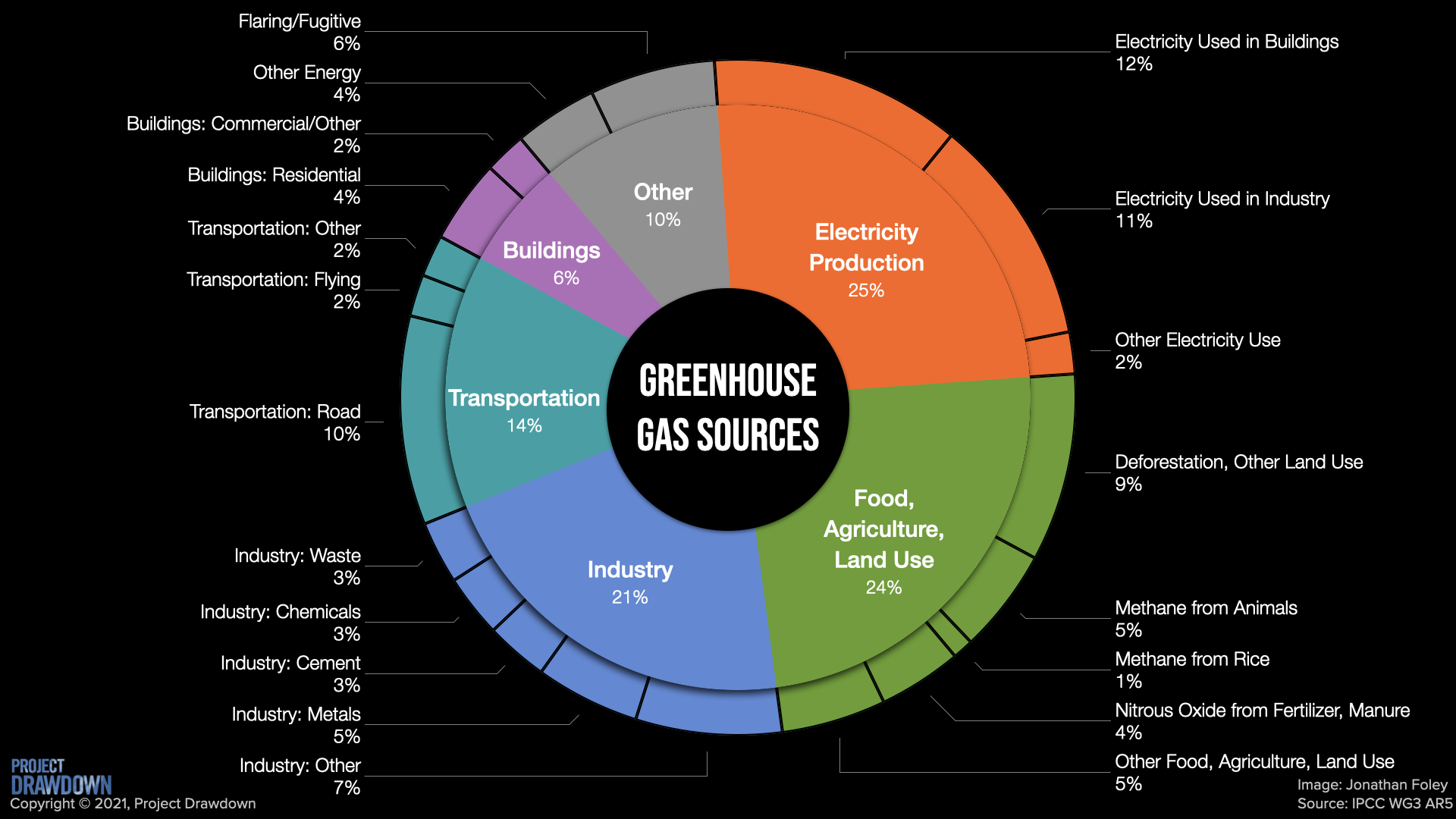
Some might be pleased that the legislature is endeavoring to be creative in its approach to transportation emissions. In fact, according to the article, some are. I believe the low-carbon fuel standards miss the point to an unacceptable degree. My belief is based on a review of work completed by Project Drawdown in Climate Solutions 101. Unit 3 of that package is “Reducing Sources.” Here’s the inventory they identify.

Project Drawdown’s Greenhouse Gas Sources

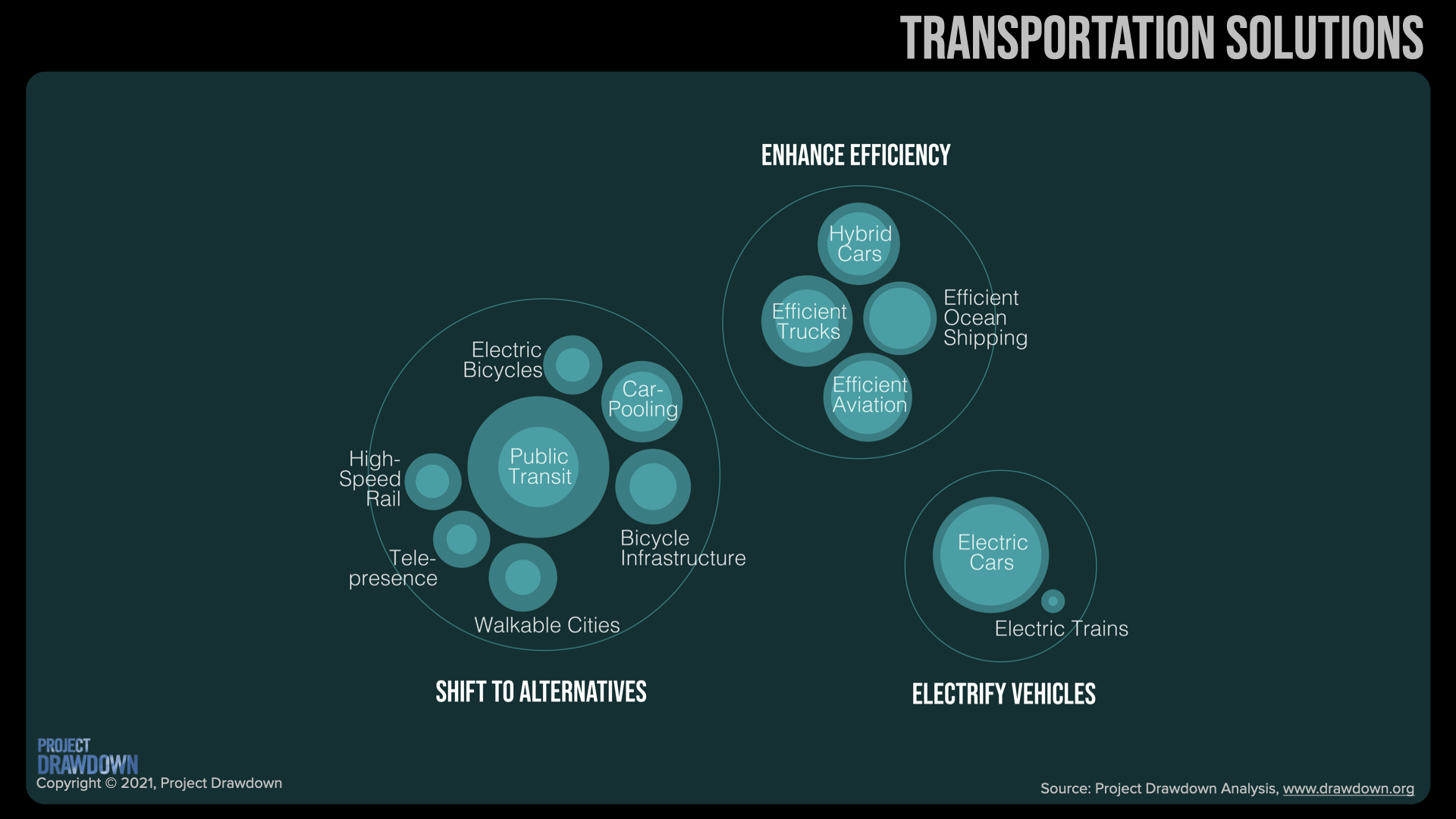
Let me call to your attention the fact that Transportation (teal), on a global basis, is a source of 14% of the greenhouse gases [GHGs]. Food, Agriculture, and Land Use (olive), the source of biofuels such as ethanol, accounts for 24% of GHGs. It seems to me that continued reliance on some of the  products of a greater source of GHGs to reduce a lessor source of GHGs has a distinct potential to be counterproductive. Project Drawdown also recommends a series of solutions for reducing GHGs from the Transportation sector.

Project Drawdown’s Transportation Solutions
Project Drawdown’s Transportation Solutions 

A careful review fails to find any reference to a low-carbon fuel standard. I wonder if anyone in the Minnesota Legislature has heard of Project Drawdown, let alone reviewed its problem definition and proposed solutions. I would concede I’m being nit-picky in this posting except that experts such as the Intergovernmental Panel on Climate Change and the World Resources Institute tell US that we’ve less than a decade to cut our GHG emissions in half. We can’t afford to be like the grasshopper that jumped halfway to the fence each hop. We’ll never get there and our descendants will, quite properly, curse US.


The Problem


You are trying to solve a problem.
You’re almost certainly halfway done,
maybe more.

You take some salt, some alum,
and put it into the problem.
Its color goes from yellow to royal blue.

You tie a knot of royal blue into the problem,
as into a Peruvian quipu of colored string.

You enter the problem’s bodegas,
its flea markets, souks.
Amid the alleys of sponges and sweets,
of jewelry, spices, and hair combs,
you ponder which stall, which pumpkin or perfume, is yours.

You go inside the problem’s piano.
You choose three keys.
One surely must open the door of the problem,
if only you knew only this:
is the quandary edible or medical,
a problem of reason or grief?

It is looking back at you now
with the quizzical eyes of a young, bright dog.

Her whole body pitched for the fetch,
the dog wants to please.
If only she could ascertain which direction,
what object, which scent of riddle,
and if the problem is round or elliptical in its orbit,
and if it is measured in foot-pounds, memory, or meat.


********************************************
Thanks for visiting. Come again when you can.
Please be kind to each other while you can.

Thursday, May 6, 2021

Are we putting ourselves in an electric chair?

Today's posting will be relatively short but not so sweet. Do you rememberer what happened in Texas last winter? How the Texas power grid failed and what could stop it from happening again.

A couple of decades ago, around 2013, there were a number of articles about power grid failures in the United States. Here's an example: Comparison of major power grid failures in US and around the world (1). You can search for more using your favorite search engine. The terms I used are: US grid failure. If you do a separate search and add the word "response" I don't think you'll find much coverage of solutions to grid failure that have already been started, let alone completed, and that was before we started putting almost all our eggs in the electric basket.


generation, transmission and distribution are all necessary
Photo by J. Harrington


So here's my version of where we're at:

  1. Our electric grid wasn't stable at the start of the millennium.
  2. We've done little to improve it.
  3. We're nowhere near close to reducing our greenhouse gases as much as we should.
  4. We're becoming increasingly reliant on a power grid that's subject to increasing amounts of severe storms and power demands due largely to our failure to respond to climate disruption.
  5. Our political system is breaking down.
  6. We have no where near the unified approach we once had toward "putting a man on the moon by the end of the decade."
  7. Those in positions of power have, for the most part, had it too easy for too long and don't know how to lead or respond to a real crisis.
  8. American exceptionalism has now come to stand for exceptionally shortsighted and self-centered.
Superstorm Sandy made US aware that generators need fuel. If we leave it all in the ground, on what will our generators run until the system is back up? If we continue to produce gasoline, will there be power to pump it into cans for the local generators? Will the grid system have sufficient battery backup to last for several days or weeks? I don't know the answers to these and related questions. This country has been reliant on for profit public utilities and has permitted situations such as Texas' grid isolation to occur. We believe it's past time for US to follow an "everyone for themselves" strategy. We are all in this together, just as with responding to COVID-19 and getting vaccinated. Much as I hate to agree with former president George Bush about anything, it's time we realized, on some issues, "if you're not for US, you're against US." That's especially true of today's Republicans.


Statement on Energy Policy


It’s true we have invented quark-extraction,
and this allows our aiming gravity at will;
it’s true also that time
can now be made to flow
backward or forward by

the same process. It may be true as well that
what is happening at the focal point,
the meristem of this process,
creates a future kind of space,
a tiny universe that has

quite different rules. In this, it seems,
whatever one may choose to do or be becomes
at once the case. In short,
we have discovered heaven and
it’s in our grasp. However,

the Patent Office has not yet approved and cites
less positive aspects of this invention. First, it
does not generate profit, and
it does make obsolete all present
delivery systems for our nukes. Then,

it will let private citizens do things that only
a chosen few, that is, OUR sort, should be allowed—
fly freely from one country
to any other, spreading diseases
and bankrupting transportation.

Home-heating, auto-making industries will be trashed,
employment shelled, depressions spread worldwide,
sheer anarchy descend.
For these and other reasons,
no one must know of this. . . .


********************************************
Thanks for visiting. Come again when you can.
Please be kind to each other while you can.

Wednesday, August 12, 2015

How you live -- public transportation

Although Chisago County is included in the now 16 county Minneapolis - St. Paul metropolitan area used by the Census Bureau, it is considered rural for transit planning purposes. The Greater Minnesota Transit Investment Plan 2010 - 2030 notes the continuation of unmet transit needs in greater Minnesota (80 counties) regardless of which urban-rural classification is used. I'm going to be thinking some more about the relationship between public transportation and bioregions and whether, in Minnesota, all of that bioregion / cultural region could come together better. I think that's what bioregionalism is supposed to do, get us to think outside our straight line administrative boundary thinking. In Minnesota, as elsewhere, counties are administrative units of the state and their role in transit and transportation continues to evolve.

Twin Cities 7 Metro map
By Davumaya (Own work) [CC BY 3.0 (http://creativecommons.org/licenses/by/3.0)], via Wikimedia Commons

What form of public transportation is closest to you?
When does it operate and where does it go?

The Chisago-Isanti area is served by Heartland Express which offers "demand responsive" [local] curb to curb service Monday - Friday from 8:00 a.m. to 4:30 p.m. and a local express bus to Metro Transit service connection at "Running Aces" race track in Columbus Township in Anoka County near Forest Lake, in Washington County, from which (very limited) express bus service to St. Paul or Minneapolis is available. Public transportation in the 7-county Twin Cities metro area can be considered underdeveloped but improving as light rail and express bus lines are added. The 80 counties not served by Metro Transit are even more reliant on private transportation.

Today, instead of sharing the usual poem that mirrors the posting's theme, I want to direct you to a CityLab page that has, already assembled, their idea of the ten best transit poems, and/or you can listen to the wonderful Simon and Garfunkel singing the delightful Poem Written on the Underground Wall. (I grew up with "heavy rail" and know how well this captures it. I once asked a "trackless trolley" driver in Boston why they didn't run after 1:00 a.m. He replied "'cuz no one rides then.")

Simon & Garfunkel: Wednesday Morning, 3 AM


********************************************
Thanks for visiting. Come again when you can.
Please be kind to each other while you can.

Wednesday, August 5, 2015

How you live -- miles to go before you sleep

My slightly obsessive record keeping makes it easy for me to answer today's bioregional quiz question, a two-parter.

What is the mpg of your vehicle?
How many miles per year does it travel?

Southwestern Minnesota fields
Photo by J. Harrington

Cumulatively, since the day I bought it, my Outback has averaged 28 mpg, 2 to 3 less during Winter and as many more in Summer. Yearly mileage has dropped significantly since I'm no longer working at a job that requires travel to all four corners of Minnesota. The first year I owned this Outback, I drove about 35,000 miles. Now it's closer to 15,000 (with a corresponding drop in my carbon footprint). Curious about how that compares to others in My Minnesota, I searched and found this report by the good folks at the Center for Rural Policy and Development. They raise some points that, at first thought, don't seem to neatly fit withe the old "drive 'til you qualify" approach to housing, nor do they seem to align automatically with the Center for Neighborhood Technology's Housing + Transportation Affordability Index. I agree that housing affordability needs to take into account trade-offs with transportation costs, but I wonder if we also need to take a further hard look at central place theory and some other systemic factors. If we are going to be successful at disbursing concentrated affordable housing, we have to look at transportation costs. If we are going to be successful at making workforce housing affordable and available, we have to look at regional economic patterns and activity. We also need better metrics so we can tell if we're being successful.

Northeastern Minnesota woods
Photo by J. Harrington

Back to the questions and answers. Clearly, I drove more than the average miles per year in a vehicle that got better than average mpg. Do you think if we all converted to electric vehicles, powered by renewable energy, anyone would care about any of these factors except $ per mile driven. That then gets us to the relative effects of fixed (vehicle and insurance) versus variable (maintenance and electricity) costs. It might also get us a lot closer to a zero carbon economy. The technology seems to be there, but the public policy and subsidies we need to change are probably going to require huge battles against entrenched interests. We need to win those battles and learn better how to align our home planet's interests and our own so we can avoid voting against either. Have you read This Changes Everything? It's out in paperback. Try it, you'll like it.

Twin Cities new St. Croix Bridge
Photo by J. Harrington

"Green building" can get us part way to where we need to be, but too many green buildings are in locations where it takes an inordinate amount of energy to get occupants to the building. Not exactly light Summer reading, but definitely worth at least a look if you're interested in improving the alignment of your interests with Gaia's are:
  • A Pattern Language, Christopher Alexander -- look especially at his thoughts on Towns.
  • Design with Nature, Ian McHarg -- will we ever learn not to pave over aquifer recharge areas? And, not to be missed,
  • Planet Drum, Peter Berg -- Bioregionalism

Driving Through

By Mark Vinz 
This could be the town you’re from,
marked only by what it’s near.
The gas station man speaks of weather
and the high school football team
just as you knew he would—
kind to strangers, happy to live here.

Tell yourself it doesn’t matter now,
you’re only driving through.
Past the sagging, empty porches
locked up tight to travelers’ stares,
toward the great dark of the fields,
your headlights startle a flock of
old love letters—still undelivered,
enroute for years.


********************************************
Thanks for visiting. Come again when you can.
Please be kind to each other while you can.

Thursday, January 15, 2015

It's the principle of the thing

Several times here at My Minnesota, we've observed that "Nature always bats last." Ron Meadore has a column in today's MinnPost that provides yet another example of how true that is, and how we often manage to "short-sheet" ourselves by looking for cheap inexpensive, simple, short term solutions to the symptoms of issues. Fortunately, if we want to start addressing root causes rather than symptoms, as we need to, there are several approaches we can follow. One of the most fundamental is called biomimicry, and it uses "Life's Principles." If we really want a sustainable society, and who wouldn't, more of us should become much more familiar with solutions based on biomimicry and systems thinking.

[UPDATE: at the time the preceding paragraph was written, the author hadn't seen this guardian story: Rate of environmental degradation puts life on Earth at risk, say scientists]

Driving to Green Buildings

Here's an example of why we need to become increasingly system-focused in defining and proposing solutions to our development problems. (One of the principles I remember from high school is "the proper definition of a problem is half the solution.") Most "green building" approaches incorporate energy efficiency in building design and construction. This reduces the building's green house gas emissions and operating costs. However, for the average office building, more energy is expended getting occupants to and from the building than operating the building itself. We need to spend more time thinking about where we need to define the system boundaries. Another example, closer to home, showed up on the streets.mn blog within the past few days. There are some very interesting and well done graphics that tell the story that most of greater Minnesota receives more in highway funding than they contribute. What isn't told in those graphics is the total dollars needed (something like $6 billion over ten years, based on an average from this MinnPost quotation: "In Minnesota, MnDOT reports that 50 percent of the state’s highway pavements and 35 percent of its bridges are more than 50 years old, and says the highway system faces a $12 billion funding gap over the next 20 years.")

gravel roads aren't capital intensive infrastructure
Photo by J. Harrington

Economists urge us to impose greater taxes tax on what we want less of and reduce taxes on what we want more of. That approach strongly suggests foregoing taxes on things like savings account interest, and taxing carbon emissions related to buildings and their transportation intensity. Of course, we can't be sure carbon taxes would enable us to meet green house gas emission targets so we should consider something like a cap-and-trade system to go with the taxes. I'd like to be able to claim ownership of this approach, but the governor of Washington is pushing for "a combination of carbon revenue and more traditional sources — the gas tax, license fees, etc. The carbon-funded portion of the transportation bill will be devoted to low-carbon alternatives (transit, electric cars, etc.) and maintenance, while new highway construction will be funded from the other sources." This is expected to address Washington's need for $12 billion in transportation funding over ten years. Even though Minnesota's need is only 50% Washington's over that same period, mightn't it make sense for our legislature and the Dayton administration to consider an approach similar to Washington's instead of relying on the same old, same old and little more creative than a sales tax on gasoline. What an impact that kind of creativity could have for a Minnesota governor who isn't running for reelection and wants to leave a legacy.

On Inhabiting an Orange

By Josephine Miles 

All our roads go nowhere.
Maps are curled
To keep the pavement definitely
On the world.

All our footsteps, set to make
Metric advance,
Lapse into arcs in deference
To circumstance.

All our journeys nearing Space
Skirt it with care,
Shying at the distances
Present in air.

Blithely travel-stained and worn,
Erect and sure,
All our travels go forth,
Making down the roads of Earth
Endless detour.


********************************************
Thanks for visiting. Come again when you can.
Please be kind to each other while you can.

Saturday, November 10, 2012

Safe harbor

photo of a freighter leaving Duluth harbor
© harrington
A ship in the harbor is safe, but that's not what ships are for. Thirty-seven years ago, on November 10,1975, the Edmund Fitzgerald sailed from Superior, Wisconsin. It was lost, together with its crew of 29, on the way to Zug Island on the Detroit River. It left behind a great mystery and greater miseries suffered by the crews' families and loved ones. Superior is one of the Twin Ports, the other Twin is Duluth. Taconite, grain and wind turbine blades are shipped through the Twin Ports contributing to the past and future economies of My Minnesota. I suspect many of us who daily commute by car to our jobs seldom give a thought to those who actually risk their lives to earn a living. With so many wonders and opportunities in our Minnesota, do we daily take safety and beauty for granted and so fail to appreciate what we have?